
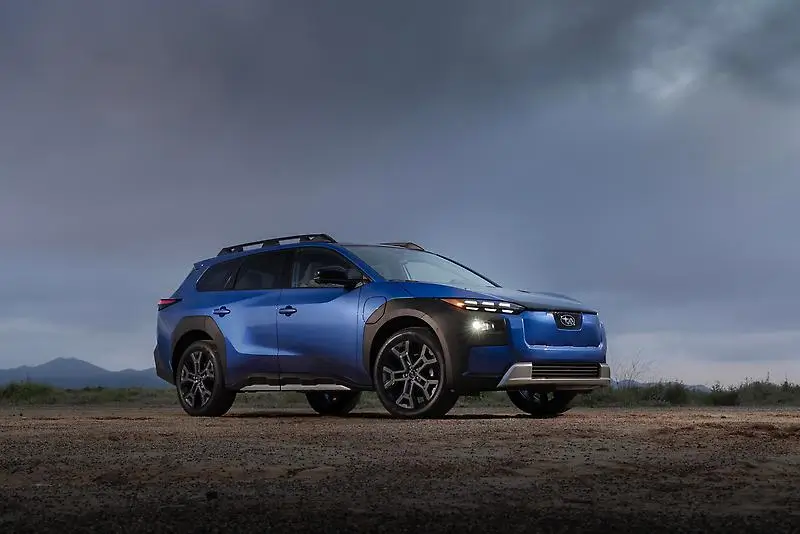
Subaru is refusing to blink in the electric vehicle price wars. The automaker just confirmed its 2027 Trailseeker EV will keep its $39,995 base MSRP for the Premium trim. That sub-$40k sticker gets you a genuinely capable machine.
It packs a 74.7 kWh battery pushing up to 281 miles of range. The official trim levels confirm the higher-end Limited model climbs to $43,995, while the flagship Touring tops out at $46,555 before destination fees.
But the performance is where things get genuinely fascinating. Generating a combined 375 horsepower, the Trailseeker hits 60 mph in just 4.3 seconds. That officially makes it the quickest production Subaru ever sold in the US. Period. No STI badge required.
And yes, Subaru is finally fixing the charging hardware situation. The 2027 model ships natively with a standard NACS charge port, skipping the clunky adapter phase entirely. That hardware enables a 10% to 80% fast-charge in roughly 28 minutes, and the updated cars are slated to hit retailers this fall.
This new model builds on a highly successful 2026 rollout. The Trailseeker outpaced the Solterra almost immediately to become Subaru’s best-selling electric SUV. Engineers essentially built an electric spiritual successor to the beloved Outback wagon. It retains 8.5 inches of ground clearance and standard Symmetrical All-Wheel Drive, heavily prioritizing its 31.3 cubic feet of cargo space over pure highway aerodynamics.
How Subaru’s Flat Pricing Targets the Tesla Model Y
The broader electric vehicle market has cooled down recently. That forces automakers to aggressively rethink their profit margins. Subaru deciding to freeze the Trailseeker’s base price is a highly calculated business decision. It puts the rugged SUV directly in the crosshairs of the Tesla Model Y.
Tesla currently prices its base Rear-Wheel Drive Model Y at exactly $39,990. By matching that dollar amount, Subaru offers buyers standard All-Wheel Drive and higher ground clearance for the exact same cash.
It is a clear pitch to outdoor enthusiasts. Subaru wants the buyers who need true off-grid capability but refuse to pay a premium for a dual-motor upgrade from a direct competitor.