
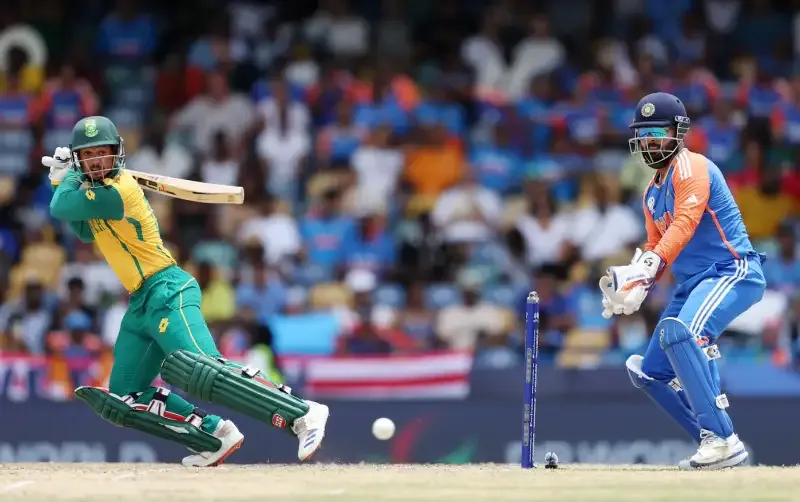
The T20 cricket knockout format strips away all group stage points and drops the remaining teams into a sudden-death bracket. Once a squad reaches the semi-finals, their previous win-loss record vanishes completely. It all comes down to a single high-stakes match governed by strict tiebreakers and rigid weather protocols.
According to analysis from SA Cricket Mag and UCFB, the format relies entirely on a clean slate approach. A national team could go undefeated for a solid month during the early tournament phases. But one poor bowling performance in the semi-final sends them packing. This structure ensures maximum entertainment for spectators, as every single delivery carries immense weight and immediate consequences.
But how do officials organize this final bracket? The ICC introduced a pre-seeding system for the 2026 T20 World Cup. While national teams must still qualify based on their raw on-field performance, their ultimate placement in the preceding “Super 8s” phase is often predetermined. SA Cricket Mag notes this is done strictly for logistical reasons. Broadcasters, travel agencies, and host venues need geographic certainty to sell tickets and schedule prime television slots. Once the Super 8s conclude, standard World Cup formats dictate that the top two teams from each group advance directly to the semi-finals, establishing the final four.
How The Super Over Tiebreaker Works
When a knockout match ends in a tie, officials do not rely on shared trophies or coin tosses. They use the Super Over.
Documentation from Britannica and Wikipedia confirms that the Super Over officially replaced the older “bowl-out” system back in 2008. The old bowl-out was basically cricket’s version of a hockey penalty shootout, where bowlers just aimed the ball at unguarded stumps. Players hated it. Fans found it boring. It felt entirely disconnected from the actual flow of a live cricket match. The ICC agreed and introduced the Super Over to give everyone a miniature, condensed version of the actual game.
The core rules are incredibly strict. Each team selects exactly three batters and one bowler. They get one single over—six legal deliveries—to score as many runs as possible. If a team loses two wickets, their Super Over ends immediately, regardless of how many balls remain unbowled. The team with the highest score wins the match.
But what happens if the Super Over itself ends in a tie?
Following heavy public criticism of the 2019 ODI World Cup Final, the ICC completely amended the rulebook. Fans were furious when the World Cup trophy went to England based on a boundary count-back rule. That old rule favored the team that simply hit the most fours and sixes during the regular innings, ignoring the actual run totals of the tiebreaker. Wikipedia documents that the ICC formally abolished this highly controversial rule in October 2019. Now, a tied match results in repeated Super Overs until one team scores more runs.
This introduces a grueling physical and tactical challenge. Reporting from Cricket World details specific turnover rules for these repeated tiebreakers. The team that batted second in the previous over must bat first in the next one. Furthermore, any batter dismissed in a prior Super Over is entirely ineligible to bat again. The same goes for the bowlers. A bowler cannot bowl consecutive Super Overs. Captains must dig deep into their rosters under immense pressure, matching up tired bowlers against middle-order batters who haven’t swung a piece of willow all afternoon.
Why Teams Must Plan For Strict Weather Protocols
Rain ruins cricket schedules. During the early group stages of a T20 tournament, officials only need a quick window of clear weather to get a result.
Group-stage T20 matches require just five overs per side to constitute an official match. However, the ICC mandates a minimum of 10 overs per side for World Cup knockout matches. According to coverage in The Hindu and The Federal, this rule exists purely to ensure a fairer contest. A five-over slogfest relies heavily on pure luck and wild swings. A ten-over match requires actual tactical planning and sustained execution. Officials decided that a spot in the World Cup final deserves a truer test of skill.
Organizers also build safety nets into the calendar. Journalists at Yardbarker and The Hindu report that reserve days are an exclusive luxury kept specifically for the knockout stage. Group matches and Super 8 games do not get reserve days at all. If it rains during week two of the tournament, the points are simply split. But the two semi-finals and the grand final each have a 24-hour backup plan.
If a heavy storm halts play, the match resumes the next day exactly where it left off. To help achieve a concrete result on these reserve days, match officials get 120 minutes of extra time beyond the standard scheduled hours, as outlined by The Federal. Ground staff work frantically to dry the outfield and prepare the pitch within this expanded two-hour window.
Famous Examples From Major Games: Washout Scenarios
Even with reserve days and extra time, bad weather sometimes wins out. So, what happens if a T20 World Cup knockout match is completely washed out over both days?
The ICC has specific contingency plans that do not involve coin tosses or bowl-outs. If rain washes out a scheduled semi-final and its subsequent reserve day without the minimum 10 overs being bowled, the tie is decided by previous tournament performance. Reporting from The Federal confirms that the team that finished higher in their respective Super 8 group automatically advances to the final.
This specific rule places huge importance on the late group-stage matches. A team that secures a semi-final spot early cannot simply rest their best fast bowlers in their final Super 8 game. They need to secure the number one seed in their group purely as an insurance policy against a bad weather forecast.
The rules change slightly for the ultimate game of the tournament. In the absolute worst-case scenario, where the World Cup Final is completely washed out on both the scheduled Sunday and the reserve Monday, officials do not look back at group standings. The Federal states that the two competing teams will be declared joint champions. They share the trophy, and their names both go into the history books.
Common Misconceptions: The IPL Page Playoff Difference
Many casual fans assume that all T20 knockout stages function exactly like the World Cup. This is entirely incorrect. Domestic franchise leagues operate under very different structural rules.
Unlike the straight sudden-death semi-finals used in international World Cups, franchise leagues like the Indian Premier League (IPL) use the Page playoff system. According to analysts at Sportsbet and Wikipedia, this format actively rewards the top two teams from the long league phase by giving them a built-in safety net.
Here is exactly how the franchise playoff bracket works:
- Qualifier 1: The teams that finished first and second on the regular-season points table play each other. The winner goes directly to the grand final. The loser does not go home. Instead, they drop down into Qualifier 2 for a second chance.
- The Eliminator: The teams that finished third and fourth face off in a pure sudden-death match. The loser is instantly eliminated from the tournament. The winner survives, but they must play again to reach the final.
- Qualifier 2: This is the final hurdle. The loser of Qualifier 1 faces the winner of the Eliminator. The winner of this match secures the second and final spot in the championship game.
This structure drastically changes team strategy during the final weeks of the regular season. In a standard format, a team might take their foot off the gas once they mathematically secure a top-four playoff spot. Under the Page playoff system, teams fight desperately to secure a top-two finish.
Earning that top-two spot means a team can afford to have one terrible game in the playoffs and still win the championship. They get a double chance. Meanwhile, the third and fourth-placed teams face a brutal path. They must win three consecutive sudden-death matches against the absolute best teams in the league just to lift the trophy. This format keeps the regular season highly competitive right down to the final delivery, while ensuring the strongest teams have a mathematically easier path through the mechanics of the Qualifier and Eliminator matchups.