
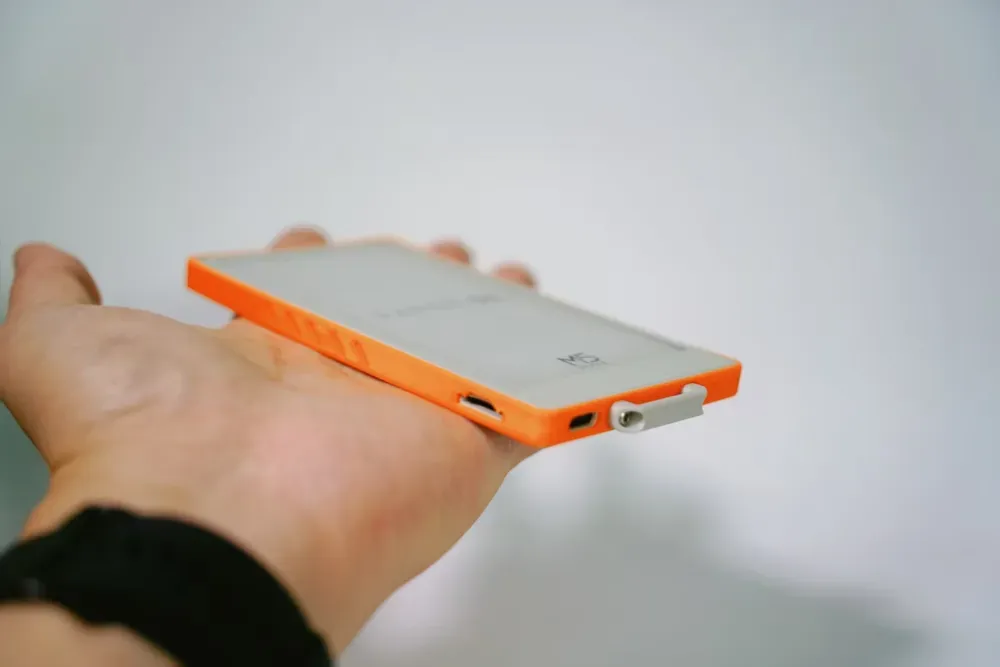
Hardware creator Wenting Zhang just solved one of the most frustrating limitations of e-paper displays. Through a custom engineering project dubbed the “Paper Boy,” Zhang successfully built a fully playable Game Boy emulator that runs on an e-Ink screen at a perfectly smooth 60Hz refresh rate.
Traditional e-paper panels are notorious for their sluggish response times and severe ghosting. That makes them excellent for static e-readers or smart home dashboards, but terrible for anything requiring real-time motion. But Zhang managed to bypass those hardware bottlenecks entirely using an ESP32-powered development board, turning a notoriously slow display technology into a viable retro gaming handheld.
Key Details
- The project is built on an M5Stack PaperS3, which combines an ESP32-S3 chip with a 4.7-inch e-Ink touchscreen.
- To achieve the high frame rate, the emulator renders at the Game Boy’s original 160×144 resolution, dedicating all processing power to a highly concentrated physical section of the display.
- The system uses intensive memory allocation alongside custom dithering techniques to force the screen to refresh without leaving trailing artifacts.
- The device’s onboard buzzer was manually tweaked to replicate the audio output of vintage Nintendo sound chips.
Bypassing the E-Ink Hardware Latency
Emulating games on e-paper at playable frame rates requires an intense amount of software optimization to overcome the inherent physical latency of the ink capsules. Zhang pulled this off by strictly limiting the render window. By forcing the M5Stack PaperS3 hardware to only update a small 160×144 pixel grid, the ESP32-S3 chip can push frames much faster than it could if it were refreshing the entire 4.7-inch panel at once.
That concentrated processing power is paired with custom greyscaling algorithms. The result? The screen updates rapidly enough to handle action platformers without the smeared, unplayable ghosting that usually plagues e-ink video playback.
How Four Years of Open-Source Display Engineering Made This Possible
This kind of performance doesn’t happen overnight. The 60Hz milestone achieved by the Paper Boy is the direct result of Zhang’s extensive background in display engineering. According to a breakdown of the creator’s four-year development history, Zhang previously spent years working on the Modos Flow.
The Modos Flow is a 60fps open-source e-Ink monitor project. By applying the aggressive memory management and custom dithering techniques developed for that larger monitor down to a microcontroller level, Zhang successfully ported professional-grade e-paper optimization to a $70 hobbyist board. This proves that with the right software architecture, e-ink hardware is physically capable of much faster refresh rates than commercial e-readers currently offer.