
World Cup group stage tiebreakers separate teams that finish with identical points by using a strict sequence of performance metrics, ensuring only the top performers advance to the knockout rounds. When multiple teams tie in the standings, the tournament rules deploy a specific ladder of tiebreakers, starting with head-to-head results and overall goal statistics before moving to disciplinary records and global rankings. Understanding these rules is essential for fans watching the group stage reach its final matches.
How World Cup Group Stage Tiebreakers Work
The system relies on a set sequence of rules to separate teams. In recent years, the priority shifted to look at how tied teams performed against each other before looking at the whole group performance. This structure ensures that direct competition takes precedence when group standings stall.
The evaluation follows this precise order to resolve any stalemate:
- Head-to-Head Points: The initial step measures the number of points obtained in the specific matches played only between the tied teams.
- Head-to-Head Goal Difference: If teams remain level, the margin is determined by subtracting goals conceded from goals scored in the games involving the tied opponents.
- Head-to-Head Goals Scored: The third metric looks purely at the highest number of goals scored in the matches played between the tied teams.
- Overall Goal Difference: If the head-to-head metrics yield no clear winner, the focus shifts to the entire group stage performance. This is the total number of goals scored minus total goals conceded across all three group matches.
- Overall Goals Scored: If the goal difference is identical, the team that scored the highest number of total goals across all three group matches wins the position.
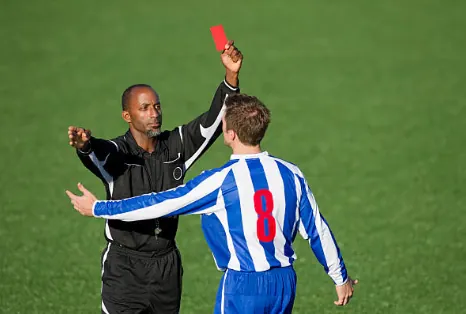
When teams are completely inseparable using on-field scoring metrics, the rules turn to behavioral records and institutional standing. The Team Conduct Score, often called the Fair Play score, ranks teams based on disciplinary points accumulated from cards received during the group stage. Points are deducted for every violation. A single yellow card costs a team 1 point. An indirect red card, resulting from a second yellow card, deducts 3 points. A direct red card results in a 4-point deduction. A yellow card followed later by a direct red card penalizes the team by 5 points.
If the disciplinary records are completely identical, the official FIFA Men’s World Rankings are used to break the tie. The edition published right before the tournament determines the seeding order. In the absolute rarest scenario where the global rankings are also tied, the final placement is decided through a random drawing of lots organized by the tournament committee.
Why Teams Use This / When It Applies
Tournament organizers implement tiebreakers because the group stage format frequently ends in statistical ties. The structure distributes 3 points for a victory, 1 point for a draw, and 0 points for a loss. With only three matches per team in the initial phase, multiple nations regularly finish with identical point totals. The rules must resolve these ties quickly to keep the tournament schedule on track.
The priority given to head-to-head results fundamentally changes how teams approach their matches. It prevents a team from advancing simply because they secured a massive victory against the weakest opponent in the group. Instead, a team must perform well against their direct rivals. Keeping overall goals scored high on the secondary list serves as a direct incentive for attacking football. Teams realize that scoring more goals provides a safety net if their point totals finish level.
The landscape of the tournament changed significantly with the expansion to a 48-team format. The competition features 12 groups of four teams each. The top two teams from each group automatically enter the Round of 32. To complete the knockout bracket, the eight best third-place teams across all 12 groups also earn qualification. This means a separate cross-group ranking system is required to compare teams that never faced each other on the pitch.
Because third-place teams come from completely different groups, head-to-head metrics are entirely useless. The cross-group comparison drops those steps entirely. Instead, the 12 third-place teams are ranked sequentially by total points, overall goal difference, and total goals scored. If a tie persists, the fair play conduct score and the official world rankings decide who secures the final spots in the knockout bracket.
Famous Examples from Major Games
Disciplinary points and tiny goal margins regularly decide the fate of major football nations during the final group matchdays. The fair play scoring system became a decisive factor in tournament history during the 2018 tournament in Russia. Japan and Senegal finished the group stage completely level on points, overall goal difference, and total goals scored. They had also drawn their direct match 2-2, meaning head-to-head tiebreakers could not separate them. Japan advanced to the knockout stage purely because they accumulated fewer yellow cards than Senegal over their three matches.
Historical outcomes show how heavily teams rely on scoring volume when goal differences match. In the 1994 tournament in the United States, Group E finished in an extraordinary four-way tie. Mexico, Ireland, Italy, and Norway all earned exactly 4 points. Every single team in the group finished with a net goal difference of zero. Mexico claimed the top spot in the group because they scored three goals in total, while Ireland and Italy scored two, and Norway was eliminated after scoring only one goal.
The mechanics of the third-place qualification system mean that small margins impact teams across different groups. In past tournaments that utilized twenty-four teams, minor variations in yellow cards or a single late goal altered which third-place teams survived. Teams often spend the final minutes of their group matches trying to avoid reckless tackles, knowing that a single yellow card can deduct the point that eliminates them from the competition.
Common Misconceptions
A frequent misunderstanding among casual fans is that overall goal difference is always the very first tiebreaker used by officials. While overall goal difference was the primary metric in several past editions of the tournament, the rules fluctuate between different tournament cycles. The current format prioritizes head-to-head points and head-to-head goal differences before looking at the total group stage statistics. Fans often calculate the total goal margins across the group first, forgetting that a direct head-to-head loss can invalidate a superior goal difference against other opponents.
Another common mistake is assuming that red cards are the only disciplinary actions that impact the fair play standings. Yellow cards are highly influential because they are far more common during intense tournament play. A team that receives four yellow cards across three matches faces the exact same point deduction as a team receiving a single direct red card. Disciplinary points accumulate quickly, and team managers frequently monitor the live fair play charts during simultaneous final group games.
Many fans assume that a drawing of lots happens immediately if the primary goal statistics are equal. A random draw is an absolute last resort that tournament officials heavily avoid. The inclusion of detailed head-to-head records, overall scoring tallies, exact yellow card counts, and official global rankings ensures that almost every structural tie is resolved through sporting merit or behavioral data long before anyone relies on a random draw.