
The World Cup third-place qualification system works by taking the top eight teams that finish in third place across all groups and moving them into the knockout bracket. In the expanded tournament format featuring 48 nations, teams are split into 12 groups of four. While the top two sides from each group go through automatically, those 24 teams do not fill the bracket completely. To get a perfect 32-team setup for the elimination rounds, tournament organizers gather all 12 third-placed teams into one single table and rank them against each other using points and tiebreakers to award the final eight open spots.
This structural change brings back a format that soccer fans have not seen on the global stage in decades. It alters how teams approach their final group games. A single goal or a yellow card can alter who stays and who goes home. Casual fans often find this setup confusing because teams in different groups never play each other directly. Yet, their fates are completely bound together in a single table.
How the World Cup Third-Place Qualification System Works
The core process kicks off the moment the group stage matches finish. When all games in the 12 groups conclude, the teams that finished in first and second place take their automatic spots in the Round of 32. This accounts for exactly 24 teams moving forward. The tournament then requires eight more teams to build a balanced knockout bracket of 32 sides. To find these remaining teams, officials separate the 12 third-place finishers from their original groups and place them into a temporary ranking table.
Since these 12 teams never face each other on the pitch, tournament rules use general tournament performance to sort them from top to bottom. The teams occupying positions one through eight in this table win a ticket to the knockout matches. The bottom four teams are instantly eliminated from the competition. This means a team can finish third in its group, pack its bags, and wait for days just to see if results in other groups allow them to stay in the tournament.
Sorting these teams requires a strict sequence of rules. Traditional head-to-head records do not apply here because these nations played in entirely separate environments. Instead, officials look at the total number of points won during the three group games. A win gives three points, a draw gives one, and a loss gives zero. If teams have the same number of points, the next step is to check the total goal difference. This is the number of goals a team scored minus the goals they let in during group play.
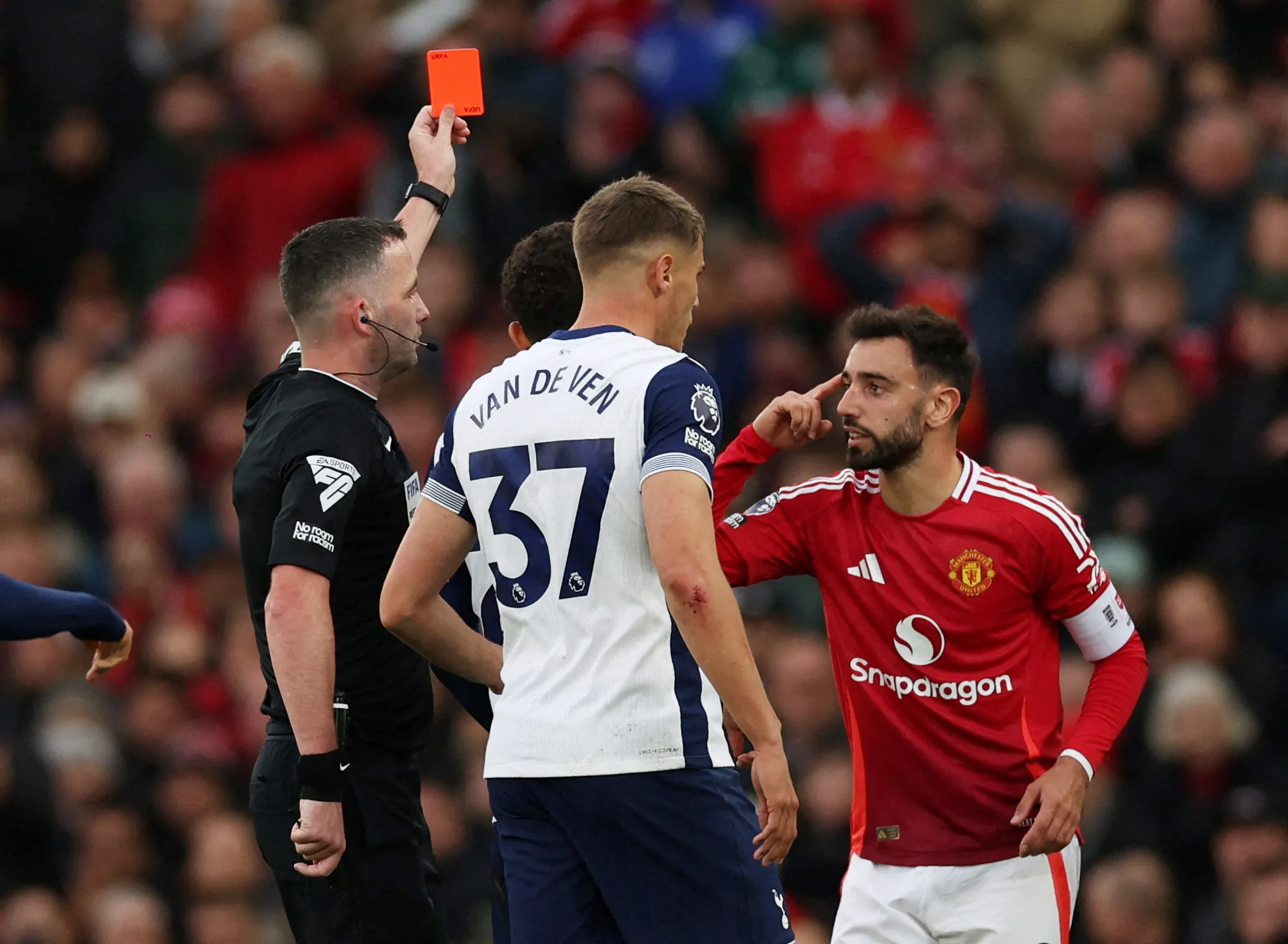
If teams are still level after checking goal difference, officials count the total number of goals scored by each team. And if that still does not break the tie, the system moves to team discipline. Teams lose points for every yellow card and red card their players and coaches receive during the group games. In the rare event that two or more sides are still completely equal, officials use the latest official tiebreaker metrics based on global team standings to split them. The side with the higher global rank advances.
The Math and the Four-Point Ceiling
The math behind a four-team group creates clear boundaries for what a third-place side can achieve. In a group where every country plays three matches, it is physically impossible for a third-place team to earn five or more points. To get five points, a team must win one game and draw two games. If a team secures that record, the point distribution ensures they will finish in the top two spots of their group. Therefore, four points is the absolute maximum a third-place team can ever get.
Earning four points usually happens when a team wins one match, draws one, and loses one. In past tournaments with similar rules, getting four points made a team almost entirely safe. But under the expanded structure, up to nine different groups could theoretically produce third-place teams with four points. Because only eight slots are open, goal difference remains highly relevant even for teams with strong point totals. A team with three points and a positive goal difference might easily outrank a team with four points that suffered a heavy defeat in one of its matches.
The system also creates complex paths for the knockout schedule. Tournament organizers cannot pre-determine which group winner faces which third-place qualifier until the entire group stage is finished. A complex matrix featuring hundreds of possible bracket variations dictates the matchups. The final combination of the eight qualifying third-place teams decides exactly where each country moves in the elimination bracket. This keeps teams and fans guessing until the final whistle of the very last group match.
Why Teams Use This / When It Applies
Tournament organizers use the World Cup third-place qualification system whenever a tournament expands to a number of teams that does not naturally divide into a perfect knockout bracket. A perfect tournament format uses 16, 32, or 64 teams. Those numbers allow for a clean tournament structure where the top two teams from every group advance, creating a flawless bracket without any extra math or wild card slots. For a long time, the global tournament used a clean 32-team format with eight groups of four.
When the tournament expanded to 48 teams, organizers faced an engineering dilemma. Dividing 48 teams into 12 groups of four leaves 24 teams if you only take the top two from each group. You cannot run a standard elimination bracket with 24 teams because the numbers do not halve cleanly down to a single final match. Organizers either had to reduce the field to 16 teams for the knockouts, which fans felt was too small, or expand it to 32 teams. Choosing 32 teams meant they needed eight more countries, which is why the wild card system applies here.
This setup changes how teams manage their strategy during the group matches. In a traditional format, losing your opening game puts a nation on the brink of total elimination. It forces coaches to take massive risks in their second and third matches. Under the third-place system, a single win can be enough to advance. Teams that suffer a loss early on know they still have a highly viable path forward if they can secure a win and maintain a decent goal difference in their remaining matches.
This system also prevents dead rubber matches where teams have nothing to play for. In older formats, a team that lost its first two games was completely out of the running before the third game even started. Now, that same team enters the final match knowing a dominant win could lift them into the top eight third-place spots. It keeps stadium audiences engaged and ensures every match on the schedule maintains competitive value. Teams must play hard until the final whistle because every single goal scored or conceded impacts the global third-place table.
However, the system also invites defensive tactics in certain scenarios. When teams know that a simple draw with a score of zero to zero gives them four points, they might refuse to attack. The final group matches can sometimes turn into cautious affairs if both sides realize a tie keeps them safe in the overall rankings. Coaches must constantly monitor live updates from other stadiums to see how the wild card table is shifting in real time. It turns the final days of the group stage into a multi-stadium chess match.
Famous Examples from Major Games
While the expanded 48-team tournament is a modern development, this qualification method has deep historical roots in international soccer. The global tournament previously used this exact setup from 1986 through 1994 when the event featured 24 teams split into six groups of four. During those tournaments, four of the best third-place teams moved into the Round of 16. The history books show that some of the most famous runs in soccer history happened because of this specific rule.
In the 1990 tournament held in Italy, Argentina entered as the defending champions but shocked fans by losing their opening match to Cameroon. They finished the group stage in third place with just three points under the old two-points-for-a-win rule. Under a strict top-two format, the reigning champions would have gone home immediately. Instead, they squeezed into the knockout rounds as a wild card team. They went all the way to the tournament final, where they eventually lost a close match to West Germany.
An even more dramatic example happened in 1994 in the United States. Italy found themselves in a bizarre group where all four teams finished with identical records of one win, one draw, and one loss. Italy finished third due to goals scored metrics. They barely advanced as a wild card team. Star player Roberto Baggio then found his form in the knockout rounds, scoring crucial goals that carried Italy all the way to the final match against Brazil. These historical data points prove that a slow start in the group stage does not stop a team from contending for the ultimate trophy.
Other major continental tournaments regularly employ this system. The European Championship expanded its format to 24 teams and used this method during its recent iterations. In the 2016 European tournament, Portugal failed to win a single match during the group stage. They picked up three consecutive draws against Iceland, Austria, and Hungary, finishing third in their group. They crept into the knockout section as the lowest-ranked third-place qualifier. They caught fire in the elimination rounds and won the entire tournament, beating France in the final.
The Africa Cup of Nations utilizes this exact mechanic as well. During the 2023 tournament, the host nation, Ivory Coast, suffered a terrible group stage. They lost two of their three matches, including a heavy four-goal defeat. Fans assumed the hosts were out of the tournament, and the team even parted ways with their head coach. But results in other groups went their way, and they slipped into the knockouts as the very last third-place qualifier. They went on to win the championship in front of their home crowd, showcasing how unpredictable the system can be.
Common Misconceptions
The biggest misconception among casual fans is that a team is entirely safe if they finish third with a positive goal record. Many people assume that winning one match out of three guarantees a spot in the next round. That is no longer true in an expanded tournament format. With 12 groups operating at the same time, the competition for the eight wild card spots is fierce. Squeezing through with three points depends entirely on how poorly teams perform in the other 11 groups.
Another common mistake is thinking that head-to-head results matter inside the third-place table. If two teams end up tied on points and goals in the wild card standings, fans often look to see if those teams played each other. But remember, these teams come from completely different groups. They never shared a pitch. That is why FIFA relies heavily on disciplinary records and global rankings to break deadlocks rather than on-field matches between the tied nations. A team can lose a spot in the Round of 32 simply because their substitute players received too many yellow cards on the bench.
People also confuse the third-place qualification table with the traditional third-place playoff match. The qualification table is a administrative tool used exclusively during the group stage to filter teams into the bracket. The third-place playoff is an actual physical match played at the very end of the tournament between the two teams that lose in the semifinal matches. They play this game to determine who wins the bronze medal. The two concepts have identical names but happen at completely opposite ends of the tournament timeline.
Finally, many fans think that the bracket positions are random or chosen by a committee behind closed doors. They see a third-place team get matched up against a specific group winner and assume organizers picked the game for television ratings. In reality, the entire process follows a strict mathematical grid laid out long before the tournament begins. The specific combination of qualifying groups triggers a fixed path in the bracket. It is a automated mathematical system that leaves zero room for human manipulation or scheduling bias.
Frequently Asked Questions
How many third-place teams qualify for the knockout stage?
Exactly eight out of the 12 teams that finish in third place will advance to the knockout rounds. The 12 groups produce 12 third-place finishers, meaning the bottom four teams in the wild card table are eliminated from the tournament. The top eight join the 24 automatic qualifiers to build a clean 32-team elimination bracket.
Can a third-place team win the World Cup?
No third-place team has ever lifted the official World Cup trophy in history. However, nations have come remarkably close under this system. Argentina did it in 1990 and Italy managed it in 1994, with both countries reaching the final match after starting the tournament as third-place wild card qualifiers. In other tournaments like the European Championship and the Africa Cup of Nations, third-place qualifiers have gone on to win the entire tournament.
What happens if two third-place teams are completely tied on points and goals?
When teams have identical points, goal differences, and total goals scored, officials use disciplinary points to break the tie. Teams are penalized for every yellow card and red card they receive during their three group games. If their disciplinary records are also identical, the final tiebreaker is the team’s position in the most recent official global soccer rankings published before the tournament started.
Why did the tournament switch back to using this system?
The tournament brought this system back because the number of competing nations grew from 32 to 48. To accommodate 48 teams cleanly, organizers created 12 groups of four teams each. The top two teams from those groups create a pool of 24 sides, which cannot form a balanced elimination bracket. Adding the eight best third-place teams brings the total to 32, allowing for a standard single-elimination tournament format all the way to the final.
Does a team with four points always qualify?
A team with four points is in an excellent position but is not mathematically guaranteed to advance. In a wild scenario where nine or more groups produce third-place teams with four points, officials must use goal difference and goals scored to eliminate the lowest-ranked sides. While historical trends show that four points almost always gets a team through, a terrible goal difference can still result in elimination.