
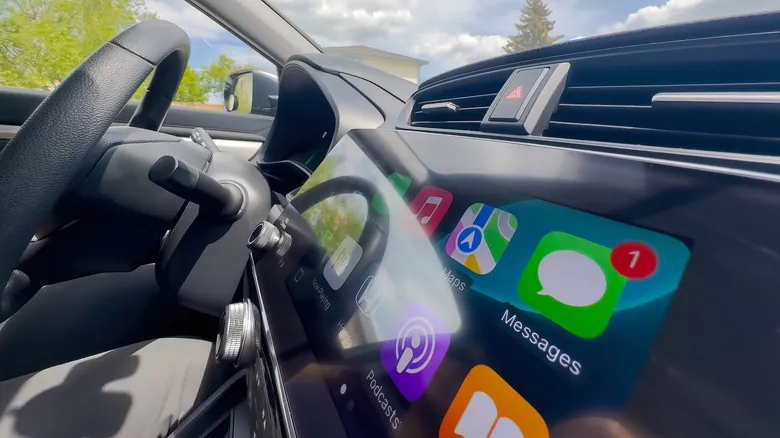
After a 30-day driving test covering long distances, Apple CarPlay offers a visibly superior dashboard experience compared to Android Auto. The defining factor is Apple’s deep interface polish and robust third-party widget support. This hardware showdown arrives against a ticking clock, as Google officially announced a foundational redesign for Android Auto at Google I/O 2026 but failed to deploy it in time for these real-world tests.
Without the promised update, Android Auto feels strictly functional next to Apple’s highly refined iOS extension. Drivers using CarPlay can maintain visual access to mapping software while simultaneously interacting with productivity widgets, an architectural advantage that currently leaves Google’s ecosystem playing catch-up.
What We Know
- Apple CarPlay utilizes a “Liquid Glass” design aesthetic with translucent panels and softer interface touches.
- Third-party productivity apps like Microsoft Outlook can surface alerts directly on the primary dashboard screen.
- Google’s highly anticipated software overhaul remains pending following its initial I/O 2026 reveal.
The most immediate difference behind the wheel is aesthetic. Apple built CarPlay using a “Liquid Glass” design language. The system layers translucent interface elements and soft, rounded panels to make the car’s screen feel like a natural physical extension of an iPhone. Android Auto relies on a flatter, more utilitarian layout that lacks the same visual depth.
Functionality separates the two platforms further. During extended driving stretches, CarPlay allows robust dashboard integration for third-party widgets. Applications like Microsoft To Do and Outlook project upcoming meetings and daily tasks right onto the screen. You can check these reminders without ever switching away from navigation tools like Google Maps during a month-long road test. Android Auto does not currently support this level of flexible, split-screen widget integration.
Why Google’s I/O 2026 Delay Surrenders the Dashboard
Google’s current disadvantage is entirely structural. By announcing a major foundational redesign at Google I/O 2026 without an immediate rollout, they created a gap in the market. Drivers are comparing a finished, highly optimized Apple product against an older Android framework waiting for replacement.
The battle for the dashboard is shifting from simple media playback to full-scale productivity multitasking. Apple’s ability to run Outlook alongside Google Maps proves that users want their cars to operate as mobile command centers. Until Google’s I/O update physically hits user hardware, Apple dictates the standard for in-car software.