
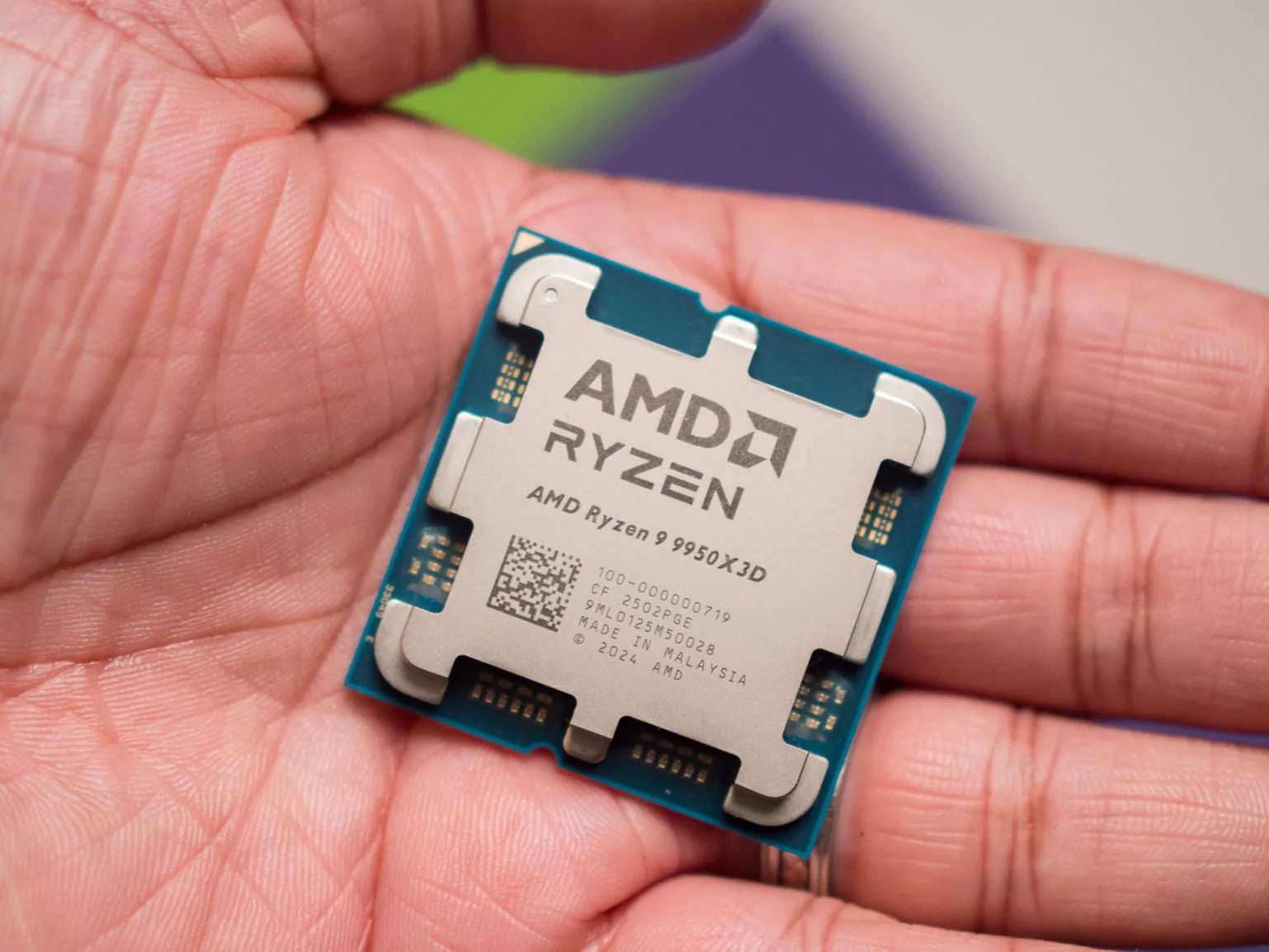
Recent 2026 benchmark leaks confirm AMD’s upcoming “Strix Halo” APUs completely eliminate the need for an entry-level dedicated graphics card. The flagship Ryzen AI Max+ Pro 395 and the Max Pro 390 feature an integrated RDNA 3.5 GPU that natively outperforms Nvidia’s dedicated RTX 3060 12GB desktop hardware. The booming enterprise demand for local AI processing and autonomous coding agents is forcing this aggressive hardware pivot.
Large-scale language models like Qwen 3.6 and Llama demand extreme amounts of video RAM to run locally. Consumers usually have to buy expensive, power-hungry discrete graphics cards to get that memory. AMD sidesteps this bottleneck by equipping the Strix Halo architecture with up to 128GB of unified LPDDR5X memory, allowing developers to run heavy local AI models natively on thin laptops without relying on costly cloud APIs.
Inside the RDNA 3.5 Performance Numbers
The silicon packed into these new processors is incredibly dense. The AI Max+ 395 pairs 16 Zen 5 CPU cores with a Radeon 8060S integrated GPU. In leaked 3DMark Time Spy tests, this integrated chip achieved a graphics score of 10,106. For context, an average desktop RTX 3060 tops out around 8,746 points. The APU also pushes 95 frames per second in Battlefield V at a 1440p resolution, according to a recent TechRadar breakdown.
These metrics are holding up across multiple testing environments. The Ryzen AI Max+ 395 and Max Pro 390 both generated roughly 16,663 points in standard PassMark benchmark scores. Those numbers put the integrated graphics directly on par with a dedicated RTX 3060 12GB card. I look at these numbers and wonder why anyone would buy a budget discrete GPU in a laptop ever again.
How 128GB Unified Memory Rewrites the PC Architecture Rulebook
This release democratizes local AI model deployment for everyday prosumers. PC architecture is moving rapidly away from discrete graphics dependencies and toward vast unified memory pools for x86 laptops. You get desktop-tier performance in a chassis you can throw in a backpack.
Competitors are scrambling to react. Nvidia recently announced its own Arm-based “RTX Spark” to try and capture a slice of the local AI laptop market. Intel is prepping its Panther Lake Arc B390 chips, but the performance gap looks severe. One AMD executive even dismissed the upcoming Intel hardware entirely, stating that comparing it to the Strix Halo architecture is “not even a fair fight” because AMD is supplying pure discrete-level performance on a single chip.