
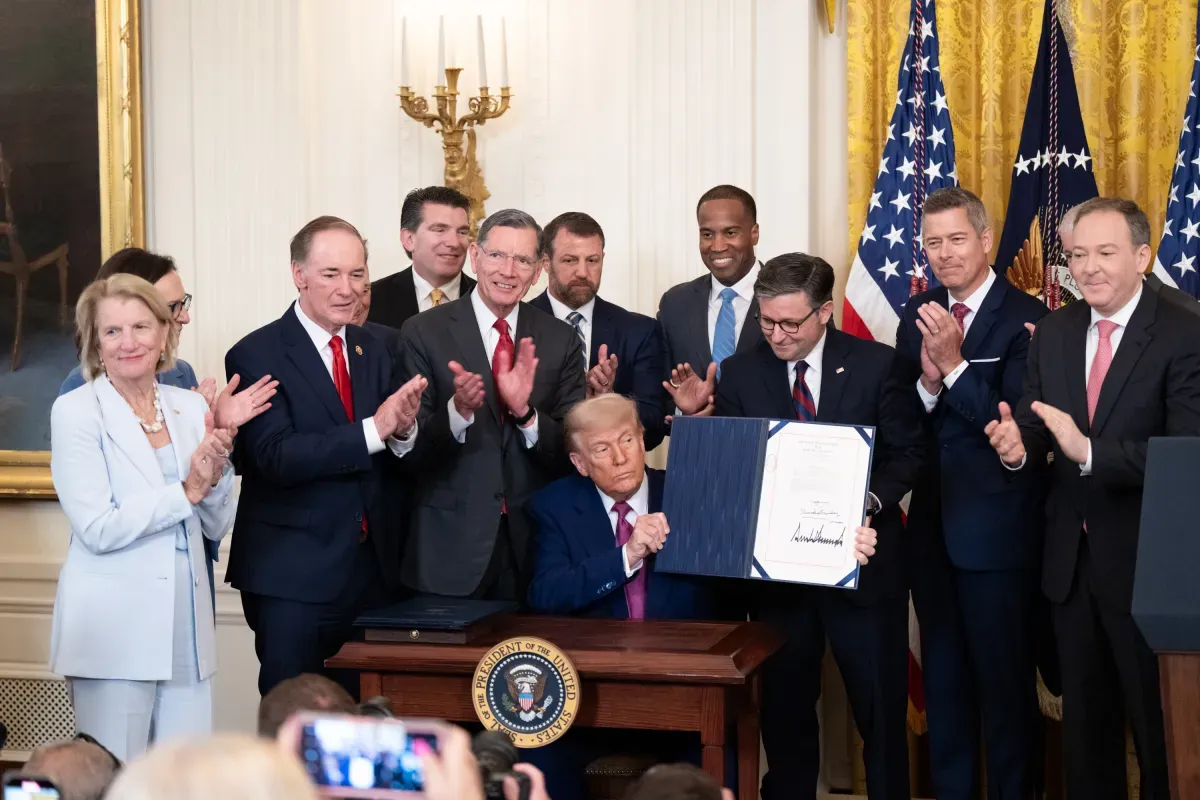
The United States government is racing to prevent a theoretical “Q-Day” before adversaries can break global encryption. On Monday afternoon, the Trump administration signed executive orders to rapidly accelerate the federal transition to post-quantum cryptography. The underlying fear driving this policy is “harvest now, decrypt later” espionage, a strategy where foreign powers stockpile encrypted U.S. communications and blockchain ledgers today, waiting for future quantum hardware to unlock them.
This updated National Cyber Strategy singles out the cryptocurrency market as a primary defense priority. The administration explicitly aims to protect blockchain networks as fault-tolerant quantum computers move closer to reality.
Security researchers warn that Bitcoin holds a fascinating but critical structural vulnerability. An estimated 6.65 million Bitcoin—valued at approximately $745 billion—are currently sitting in legacy Pay-to-Public-Key (P2PK) wallets or reused addresses. Because these specific public keys are permanently revealed on the public ledger, an advanced quantum machine running Shor’s algorithm could mathematically calculate the private keys directly from the public data, allowing attackers to forge signatures and drain accounts.
During the June 22 signing ceremony, officials outlined a post-quantum migration timeline across all federal networks. The orders also establish a strict perimeter around American intellectual property. The White House instructed the FBI and other intelligence agencies to protect quantum research from foreign spying.
How BTQ Technologies and the CHIPS Act Secure the Blockchain
The cryptocurrency industry is already building the technical defenses required to survive Q-Day. BTQ Technologies recently demonstrated “Bitcoin Quantum,” an implementation that replaces vulnerable ECDSA signatures with a 128-bit post-quantum security standard known as ML-DSA. This proves the network can achieve crypto-agility before quantum hardware scales up.
The federal government is simultaneously supplying the financial backing for the underlying domestic hardware. In May 2026, the Commerce Department allocated $2 billion from the CHIPS and Science Act, taking unprecedented minority equity stakes in nine domestic quantum computing firms rather than just handing out standard research grants.
Federal agencies are now legally bound to meet a rigid TLS 1.3 adoption deadline by January 2, 2030, setting a hard expiration date on legacy encryption across government infrastructure.