
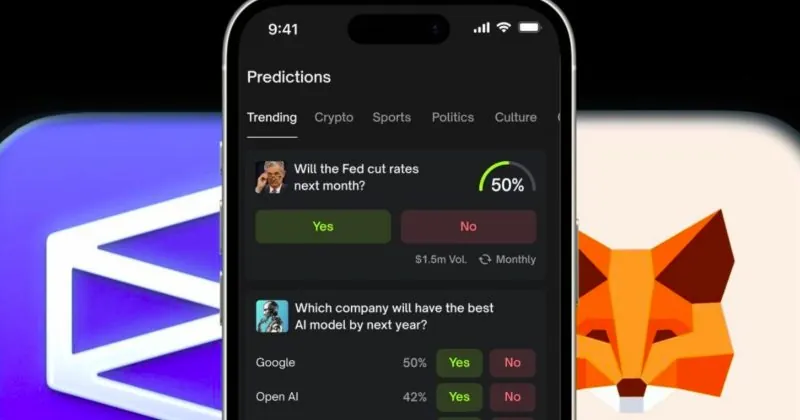
The Wall Street Journal published a new investigation revealing that decentralized prediction market Polymarket paid content creators to post deceptive social media videos. Ten creators working with a Polymarket contractor shared 1,105 videos between December 2025 and mid-May 2026. The videos displayed roughly $1.9 million in wagers. None of those bets were real.
The platform executed the campaign by building near-perfect technical copies of its actual trading interface. Creators were instructed to simulate trades on these duplicate websites. They never disclosed that the videos were paid promotions.
In 118 specific videos, the influencers recorded themselves reacting to outdated footage and phony news headlines. They claimed to have won nearly $900,000 through the platform. The WSJ analysis found that if those exact bets had been placed on the live market, the creators would have actually lost more than $166,000.
Polymarket officially restricts its services in the United States, but this specific social media campaign targeted American users. Many of those users bypass the platform’s geographical blocks using virtual private networks.
Following the investigation, Polymarket issued a statement confirming it will conduct an audit of its active promotional content. The company stated it remains “committed to maintaining accurate, fair, and transparent markets.”
The Push for Institutional Legitimacy
The revelations of wash-trading-style marketing arrive exactly as Polymarket faces intense pressure from fully regulated competitors. The U.S.-based rival Kalshi recently tripled its annualized revenue to $2 billion following a surge in sports betting around the NBA and World Cup. Kalshi is currently in early talks with banks to go public in late 2027 or 2028.
Polymarket is aggressively trying to legitimize its own platform for institutional use. Earlier this month, the company closed its first on-chain institutional block trade tied to AI compute infrastructure. The technical effort was designed to position its prediction markets as viable commodity futures mechanisms rather than just retail betting tools.