
European power grids are wasting billions of dollars right now. They constantly curtail and throw away excess wind and solar generation simply because the system lacks long-term capacity, forcing utility companies to rely on volatile, expensive gas-fired backup plants to survive multi-day generation gaps.
Netherlands-based startup Ore Energy just signed an agreement with Dutch energy supplier Budget Thuis to fix this bottleneck. The two companies are deploying 1 gigawatt-hour (GWh) of multi-day iron-air energy storage to capture that wasted electricity and feed it back into the grid exactly when it is needed most.
Key Details
- The project begins with a committed 400-megawatt-hour (MWh) first phase.
- Ore Energy plans to deliver the initial commercial units in 2028.
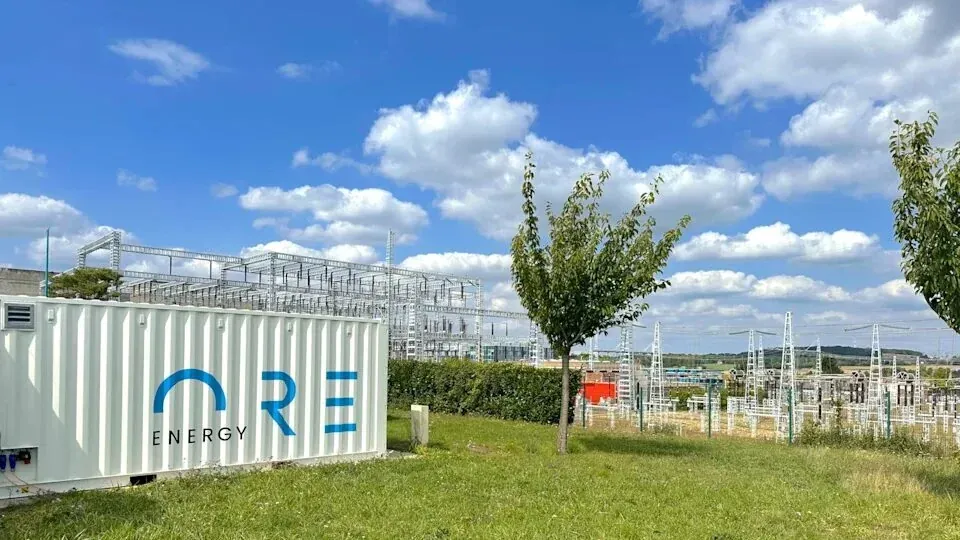
- The containerized batteries store electricity for durations ranging from 24 to 100 hours.
- The tech relies entirely on simple iron, water, and air, utilizing a 100% European supply chain.
- This marks the largest iron-air energy storage offtake in continental Europe to date.
Unlike standard lithium-ion batteries that provide only a few hours of localized power, these iron-air systems are built for endurance. They contain zero lithium or cobalt. This makes the physical hardware completely non-flammable and drastically cuts costs for grid-scale, long-duration storage.
The commercial launch follows a string of successful, grid-connected pilot projects. Ore Energy recently completed a four-day utility deployment with EDF in France in late 2025 and operates a dedicated testing installation in Delft. The companies officially confirmed the first phase delivery for 2028.
Why Budget Thuis Needs 100-Hour Storage
Budget Thuis services over 1 million customers across the Netherlands. The utility is executing this specific hardware rollout as a direct strategy to insulate its users from the highly unpredictable fossil fuel market as the Dutch power system becomes increasingly dependent on offshore wind energy.
Traditional energy storage completely fails during multi-day weather slumps when the wind stops blowing. By securing 100-hour iron-air capacity, Budget Thuis fundamentally changes its baseline economics. The supplier can now stockpile cheap, curtailed renewable energy over a windy weekend and discharge it steadily throughout an entire cloudy work week, cutting expensive natural gas out of the equation entirely.