
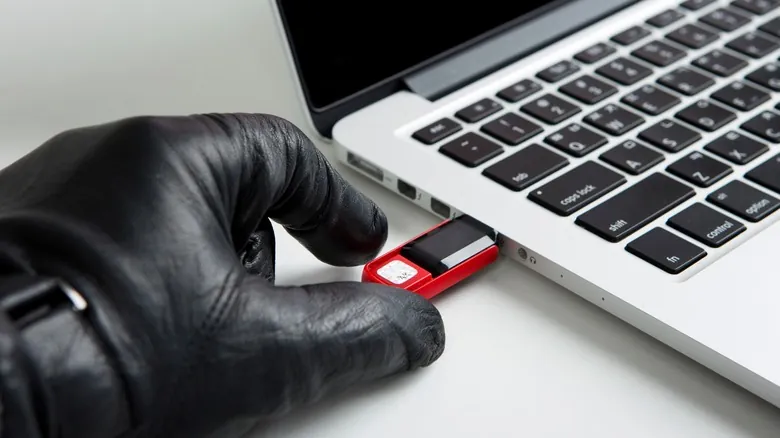
The global rise in organized digital theft, highlighted in the concurrent 2025/2026 INTERPOL Cyberthreat Assessment Report, just took a fascinating technical turn. Microsoft Threat Intelligence uncovered a highly sophisticated Windows-based malware strain called “CryptoBandits” that turns an ordinary USB thumb drive into a silent cryptocurrency thief. First detected in the wild in February 2026, this malicious code goes far beyond standard phishing techniques to establish a permanent, hidden connection inside infected computers.
The attackers built the software to specifically target crypto investors who rely on removable storage. When a user plugs in a compromised USB drive, the malware immediately hides legitimate documents and replaces them with malicious shortcut files, triggering an invisible infection chain.
Key Details
- Deceptive Files: The malware disguises itself by hiding real PDFs and Word documents, replacing them with fake
.lnkshortcut files that launch the infection. - Clipboard Hijacking: CryptoBandits monitors the Windows clipboard every 500 milliseconds, waiting to swap out copied wallet addresses.
- Data Theft: The virus actively captures seed phrases, private keys, and live desktop screenshots.
- Hidden Infrastructure: It deploys a localized Tor client on port 9050 to maintain a stealthy command-and-control connection.
The Mechanics of a Clipboard Hijacker
At its core, CryptoBandits functions as a hyper-vigilant cryptocurrency clipper. The software sits quietly in the background and watches the system clipboard multiple times per second. The moment a user copies a legitimate wallet address for Bitcoin, Ethereum, Tron, or Monero, the malware intercepts the action. It then stealthily replaces the intended destination with an attacker-controlled wallet address, according to a Microsoft security disclosure released on June 17.
Because cryptocurrency addresses are long strings of random characters, victims rarely notice the swap before hitting send. By the time the transaction completes, the digital assets are already routed to the attackers.
More Than Just a Thief
What makes the engineering behind this malware so interesting is how it handles communication. Instead of using standard web servers that antivirus programs easily block, CryptoBandits installs a lightweight, portable Tor client renamed as ugate.exe. It routes its command traffic through a local SOCKS5 proxy.
This setup allows it to function as a highly persistent backdoor. Attackers can bypass traditional IP-based detection tools to maintain long-term device access, execute remote code, and continuously extract desktop screenshots through the anonymized Tor network.
Why IT Teams Are Disabling AutoRun
This discovery forces an immediate change in how companies handle removable media. Security teams using Microsoft Defender XDR and Defender Antivirus are actively updating their systems to flag the specific Tor proxy behavior and suspicious PowerShell screen-capture commands.
Because the malware circulated successfully for months before Microsoft published the technical teardown, the software giant explicitly advises network administrators to implement strict mitigation policies right now. The primary directive requires IT departments to completely disable AutoPlay for all removable media and block the execution of .lnk files from USB drives entirely, shutting down the worm’s primary method of travel.