
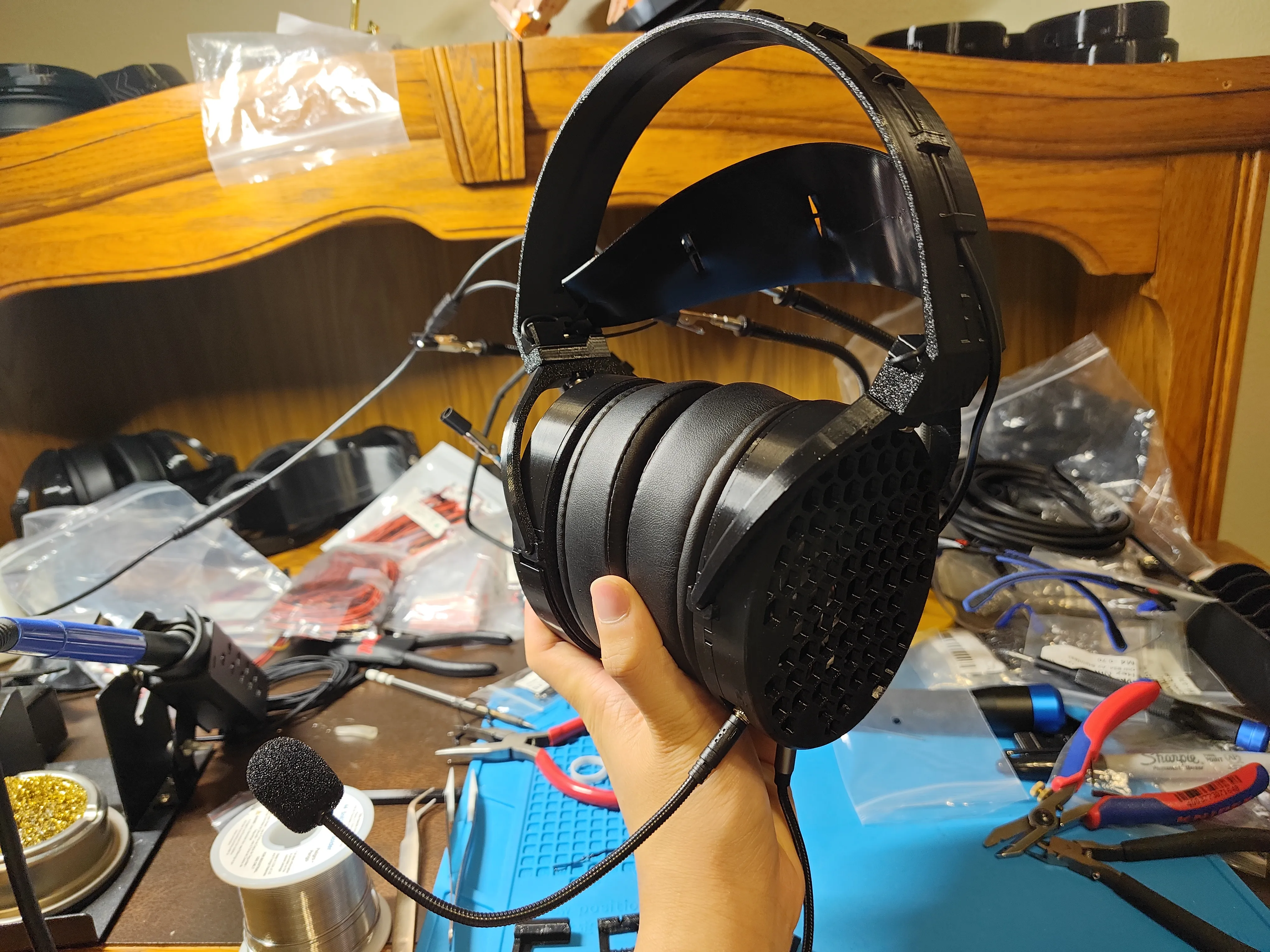
The 3D-Printed Audio Alternative
Consumer electronics are increasingly treated as fragile commodities that fall apart right as their warranties expire. One hardware enthusiast decided to opt out of that cycle completely by manufacturing a custom headset that competes directly with $750 commercial audiophile equipment. The DIY approach bypasses the traditional constraints of mass-market hardware, allowing the creator to repair components and acoustically tune the device indefinitely.
The project relies on a free design file known as the Variable Openmod. Created by the independent 3D designer Armored Soul, the structural blueprints are hosted publicly on maker repositories like Printables and MakerWorld. Users just need to supply their own 40mm to 52mm speaker drivers, copper cabling, and aftermarket earpads to complete the build.
Engineering Around Plastic Limitations
The original blueprint instructions recommended using fatigue-resistant ABS or PETG filaments to construct the structural band and earcups. The creator instead opted for standard PLA plastic, which is notoriously brittle under constant tension. To achieve the required clamping force without snapping the headband, altered the print orientation and adjusted the internal infill patterns to reinforce the weakest stress points.
The entire headset assembles with just 10 screws. The builder upgraded the fastening hardware from nylon to metal nuts and bolts to ensure long-term stability. Assembled initially in 2022, the headset has survived daily use for years, proving the viability of at-home manufacturing for high-fidelity audio equipment. The modular earcups give users complete physical control over the acoustic signature without the fear of voiding a corporate warranty.
How Open-Source Blueprints Defeat Planned Obsolescence
This headset project is part of a growing open-source hardware movement within the audiophile community. Independent creators are actively publishing files that allow anyone with a 3D printer to bypass the proprietary lock-ins of major tech brands. Similar successful initiatives like the Ploopy mouse project have proven that consumers want modular, repairable peripherals.
By hosting these files on platforms like MakerWorld, designers allow users to infinitely reprint degrading components like disintegrating ear cushion mounts or cracked hinges. The Right to Repair movement is shifting from demanding legislative access to simply building replacement hardware from scratch.