
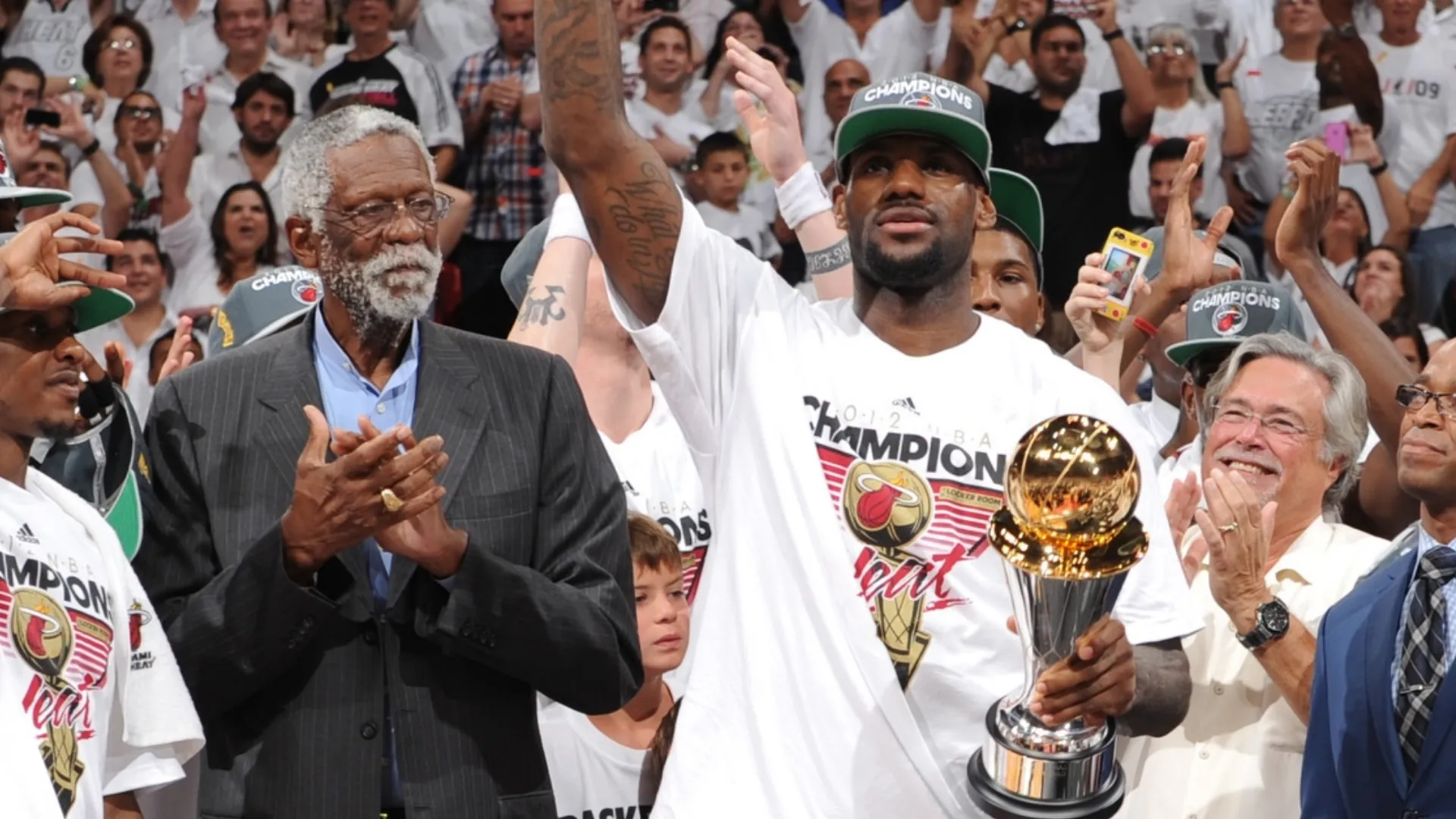
The NBA Finals Most Valuable Player award goes to the best performing player during the championship series. A curated panel of exactly 11 media members decides the winner. These voters cast their ballots right after the final buzzer of the clinching game. The player with the most votes takes home the trophy.
Fans watch the regular season MVP race for six months. They track daily points, complex ranking formulas, and shifting media narratives. The Finals MVP operates under a completely different set of rules. The league isolates this award entirely from regular-season performance. A player could sit on the bench from October to April, dominate the championship series in June, and win the award. The system is fast, highly subjective, and isolated to a maximum of seven basketball games.
How the Finals MVP Voting Panel Works
The NBA completely controls who gets a say in this process. Fans do not vote. Players do not vote. Coaches do not vote. The league office selects precisely 11 voters from the media credentialed to cover the championship series. They finalize this list before the first game tips off.
The panel features a specific mix of media professionals. You will find television broadcasters, color analysts, and journalists representing digital and print publications. The league intentionally builds a diverse geographic panel to prevent team biases from skewing the final tally.
- National Voices: The league includes reporters from major national outlets like ESPN and Yahoo Sports. These journalists cover the entire league throughout the year.
- International Journalists: Basketball is a global sport, and the voting panel reflects that reach. Recent panels featured journalists from overseas publications, including Portugal’s A Bola. This adds an outside perspective disconnected from American media narratives.
- Local Beat Writers: The NBA also includes reporters who cover the two competing teams daily. They know the specific rosters better than anyone else in the building.
Mixing local beat writers with international journalists ensures that no single region dictates the winner. If a local writer lets team allegiance influence their ballot, the national and international votes mathematically drown out that bias.
The Mechanics of the Ballot
The voting happens incredibly fast. The 11 selected media members must submit their choice immediately after the conclusion of the final game of the series. They do not get a week to review game tape or dig into advanced analytics. They make their decision based on the live action they just witnessed.
The voting structure is incredibly straightforward. It strips away all the math associated with regular-season awards.
- Single-Vote System: The regular-season MVP uses a weighted points system. Voters rank their top five players, and first-place votes carry more mathematical weight than second-place votes. The Finals MVP ignores all of that. The 11 panel members cast a single vote for one player.
- No Points Tally: There are no second-place or third-place points to calculate. The league simply counts the 11 names submitted.
- Tie Prevention: Because the NBA sets the panel at exactly 11 members, a tie between two players is mathematically impossible. A player needs a minimum of six votes to guarantee the trophy. If the panel splits votes among three different players, someone can win the award with fewer than six votes.
Historical Context and the Bill Russell Trophy
The physical trophy underwent a major rebranding halfway through the league’s history. From the award’s creation in 1969 through the 2008 season, the hardware did not have an official player namesake attached to it. It was simply the Finals Most Valuable Player award.
In the middle of the 2008-2009 season, the league decided to honor Boston Celtics legend Bill Russell. They officially renamed the hardware the Bill Russell NBA Finals Most Valuable Player Award. Later that year, Kobe Bryant led the Los Angeles Lakers to a championship. He became the first player in history to win the newly titled trophy.
Winning this specific award drastically changes a player’s historical legacy. The Naismith Memorial Basketball Hall of Fame weighting treats the Finals MVP as a premium achievement. When sports analysts debate the greatest players of all time, they almost always use Finals MVP counts to separate the top tier from the rest of the pack. A player with multiple regular-season MVPs but zero Finals MVPs often faces heavy criticism from the media.
Famous Examples from Major Games
A few specific players dominate the history books for this award. Michael Jordan holds the all-time record. He won the Finals MVP six times during his championship runs with the Chicago Bulls. LeBron James sits directly behind him with four awards.
The most famous historical anomaly occurred during the very first year the league handed out the trophy. The NBA introduced the award at the end of the 1969 championship series. The Los Angeles Lakers played the Boston Celtics. Jerry West put up incredible numbers for Los Angeles, but the Celtics won the series. The voting panel decided to give the inaugural award to West anyway. He remains the only player in league history to win the Finals MVP while playing for the losing team.
Common Misconceptions and Debates
Fans frequently misunderstand the rules regarding players on the losing team. Many people assume the NBA rulebook explicitly states the winner must play for the championship roster. It does not. There is no written rule preventing a player on the losing team from winning the award.
The reality is entirely based on voter behavior. The media members simply refuse to vote for a player who just lost the series. Every single winner since Jerry West in 1969 played for the team holding the championship trophy.
This unwritten voter rule caused a long-running media debate following the 2015 NBA Finals. LeBron James played for a Cleveland Cavaliers team missing multiple key players due to injury. He carried the depleted roster to six games against the heavily favored Golden State Warriors. James statistically dominated the matchup. He led both the Cavaliers and the Warriors in points, rebounds, and assists for the entire series. No player had ever done that in a Finals before.
Despite that historic statistical output, the 11-person panel gave the award to Golden State’s Andre Iguodala. Iguodala played excellent defense against James and helped the Warriors secure the actual championship. The panel prioritized the series victory over individual statistical dominance. This specific vote remains a frequent talking point when analysts discuss whether the media should finally break their unwritten rule and vote for a losing player who outplays everyone else on the floor.
Frequently Asked Questions
How many media members vote for the NBA Finals MVP?
The award is decided by a panel of exactly 11 media members. The NBA selects journalists, broadcasters, and analysts to participate. The league office intentionally mixes national, international, and local media voices to balance the panel and prevent regional biases.
Has a player on the losing team ever won Finals MVP?
Yes, but it has only happened one time in league history. Jerry West of the Los Angeles Lakers won the very first award in 1969 despite his team losing the series to the Boston Celtics. Every single winner since 1969 has been a member of the championship-winning team.
Is the Finals MVP voting system the same as the regular-season MVP?
No. The two awards use completely different mathematical systems. The regular-season MVP relies on a weighted points system where a large pool of voters rank their top five players. The Finals MVP is much simpler. The 11 panelists cast a single vote for just one player immediately following the final game.
Who has the most NBA Finals MVP awards?
Michael Jordan holds the all-time NBA record with six Finals MVP awards. LeBron James is second on the historical list with four awards.