
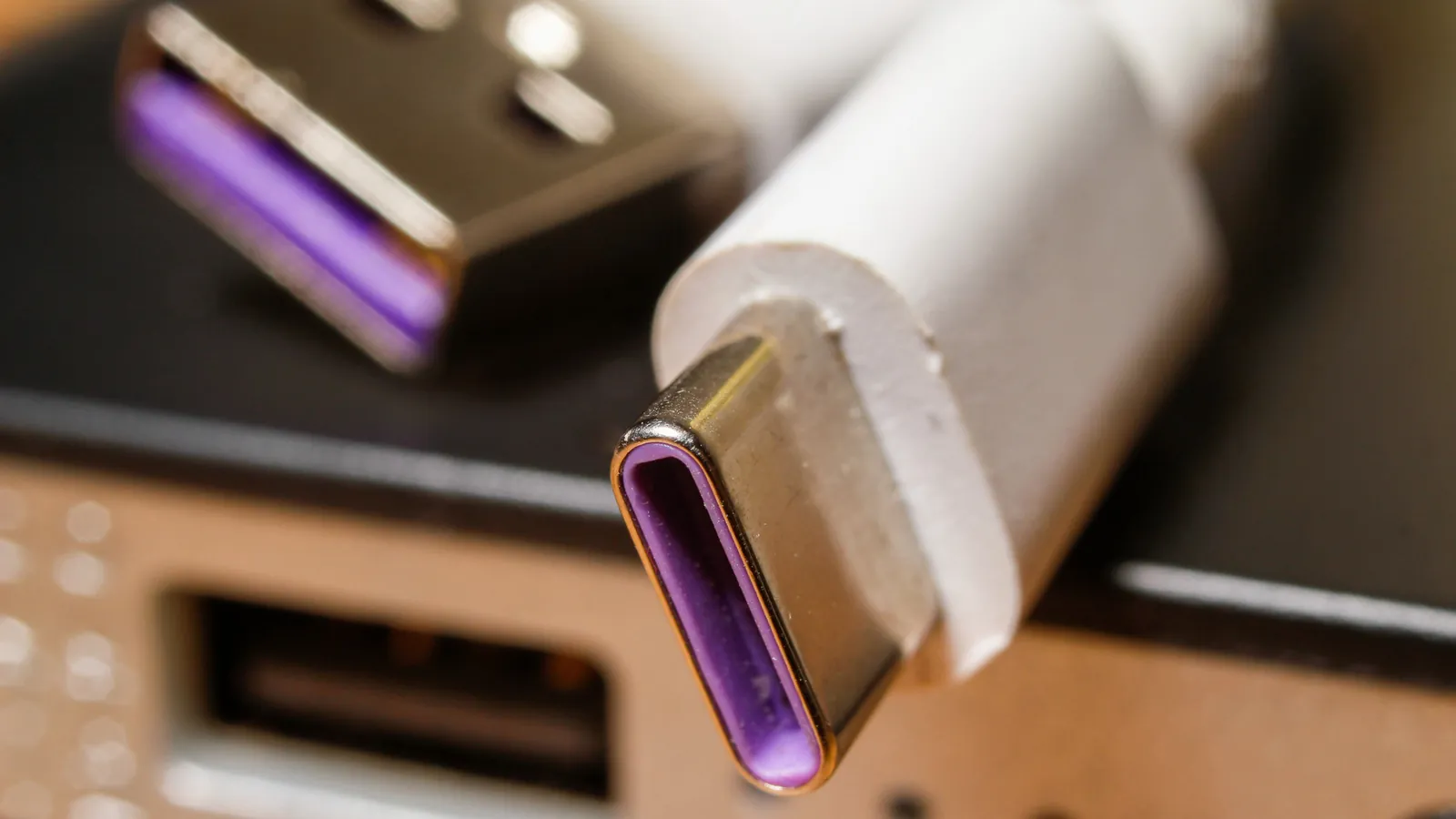
If you spot a purple USB port on a charger or cable, you are looking at hardware that officially operates outside recognized industry standards. These vibrant connectors primarily belong to Huawei’s proprietary SuperCharge ecosystem, delivering up to 66W of power. However, American consumers rarely encounter them today. The absence of these purple ports in the United States is the direct result of the Commerce Department’s ongoing embargo against Huawei, which placed the Chinese telecom firm on the Entity List and effectively banished its devices from American retail shelves.
This trade blockade, enacted following the government’s decision to classify the telecom giant as a national security risk, prevents the hardware from legally entering the domestic market. Because the purple SuperCharge accessories are heavily customized for the Huawei hardware ecosystem, attempting to use them on a MacBook Air or a non-Huawei smartphone yields frustrating results. Devices will either experience extremely slow baseline charging speeds or fail to charge altogether.
The Evolution of USB Color Coding
The emergence of custom connector colors fractures a long-standing organizational system. The USB Implementers Forum (USB-IF), the governing body regulating connectivity standards, recognizes a strict visual hierarchy for consumer clarity. The official chronology of USB color standards developed as follows:
- White Ports: Originally designated for legacy USB 1.0 baseline connectivity.
- Black Ports: Introduced to standardise USB 2.0 High-Speed hardware.
- Blue Ports: Officially established by the USB-IF to visually identify USB 3.0 SuperSpeed capabilities.
Any manufacturer using purple, green, or orange is doing so independently, as explained in a recent Engadget guide detailing the hardware limitations outside of their intended ecosystem.
The 10Gbps Exception
There is one rare exception to the Huawei rule. A handful of third-party cable makers occasionally use purple or teal blue inserts to indicate USB 3.1 Gen 2 functionality. These specific ports support 10Gbps data transfer speeds, doubling the 5Gbps threshold of standard USB 3.0, along with higher power delivery ceilings. Yet, these non-standard color choices remain entirely unregulated by the USB-IF.
What Huawei’s Isolation Means for Universal Compatibility
The persistent split between Huawei’s proprietary ecosystem and the rest of the global market creates tangible friction for users buying imported hardware. While companies like Apple and Samsung have increasingly aligned with standard USB-C Power Delivery protocols, Huawei’s forced isolation keeps its specific 40W and 66W charging architecture siloed. Maintained by severe US export restrictions, this divergence means international travelers and hardware importers must maintain separate cable systems to achieve maximum charging speeds.