
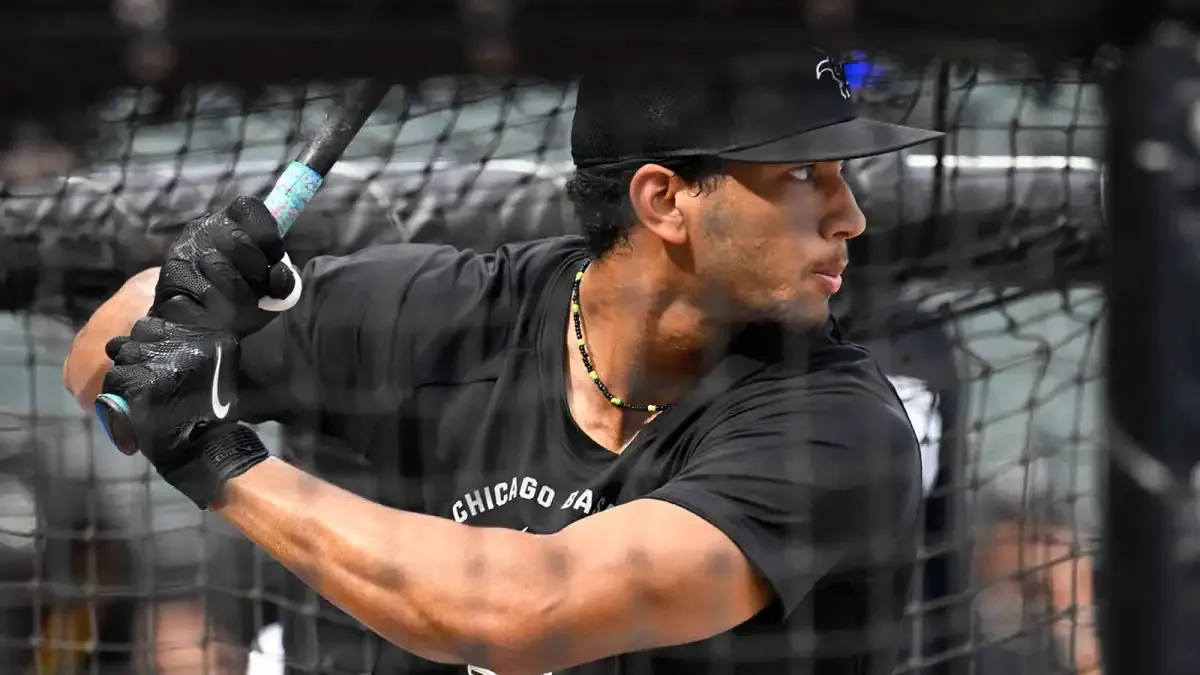
The Chicago White Sox are building serious momentum. They defeated the Los Angeles Dodgers 8-2 on Friday night using a brand new configuration: the “2 Montgomery” lineup. Forbes reporter Bernie Pleskoff noted the team paired recently promoted top prospect Braden Montgomery with unrelated shortstop Colson Montgomery to anchor the middle of the order. Colson hit cleanup, while the switch-hitting Braden batted directly behind him in the fifth spot.
The foundation for this dual-threat combination traces back to December 2024. Chicago acquired Braden Montgomery from the Boston Red Sox as the centerpiece of the blockbuster trade that sent ace Garrett Crochet out of town. That transaction is paying off right now as the White Sox offense catches fire against National League pitching.
What We Know
- The Chicago White Sox defeated the Los Angeles Dodgers 8-2 on Friday using the “2 Montgomery” lineup.
- Braden Montgomery hit a 10th-inning walk-off home run against the Atlanta Braves in his historic MLB debut.
- The team waited until June 9 to call up the prospect, securing an extra season of club control.
Braden Montgomery forced his way onto the major league roster after dominating minor league pitching. He posted a combined .314/.422/.548 slash line with a .970 OPS, 10 home runs, and 41 RBIs across Double-A and Triple-A this season. The front office officially called him up on June 9, and he delivered an immediate return.
During his debut against the Atlanta Braves, Braden stepped to the plate with two outs in the 10th inning. He connected on an 0-1 changeup from Braves closer Raisel Iglesias and launched a walk-off, two-run home run to give the White Sox a 6-5 extra-inning victory. With that swing, he became only the fifth player in Major League Baseball history to hit a walk-off home run in his MLB debut. He joins a short list that includes Billy Parker, Josh Bard, Miguel Cabrera, and Carlos Pérez.
The timing of the call-up carries significant contractual weight for the franchise. By holding Braden in the minor leagues until the second week of June, the White Sox manipulated his service time. Assuming he does not finish in the top two of American League Rookie of the Year voting, he will fall short of a full year of big-league service time. This maneuver grants Chicago six full years of club control over the outfielder beyond the current 2026 season.