
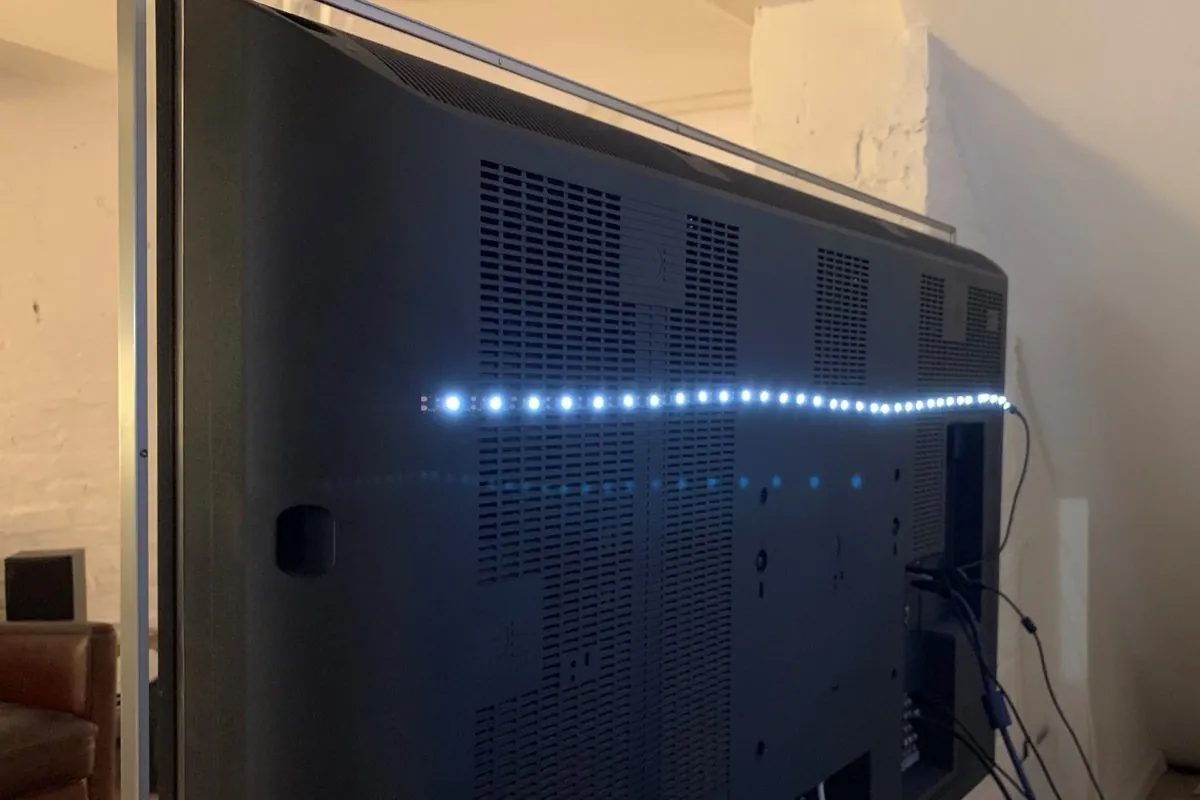
Pitch-black rooms and blindingly bright modern televisions are a recipe for visual exhaustion. If you are watching a 1,000-nit HDR smart TV in the dark, the extreme difference between the screen and the surrounding wall creates contrast glare. This forces your pupils to rapidly dilate and constrict with every scene change. The result is optic nerve fatigue, dry eyes, and lingering headaches that ruin movie nights.
The most effective upgrade for your home theater setup is not a new soundbar or a premium streaming subscription. It is bias lighting. By attaching a dedicated LED strip to the rear perimeter of the TV, you cast a soft halo of light against the back wall. This neutral reference point stabilizes your pupil size and tricks your brain into perceiving deeper black levels and richer contrast on the screen.
The Science of Contrast Glare and 6500K Light
Not just any glowing strip will fix the problem. The industry standard for true bias lighting requires a pure white light tuned to exactly 6500 Kelvin, often referred to as D65. If you slap a cheap RGB strip behind your television, the unnatural colors will distort your perception of the image, making the screen look too yellow or too blue.
Professional calibrators and the Imaging Science Foundation (ISF) mandate strict metrics for proper backlighting. The light must hit the 6500K color temperature, feature a Color Rendering Index (CRI) of 90 or higher, and maintain a luminance level that does not exceed 10 percent of the display’s maximum brightness. For a typical HDR television, this caps the rear light at roughly 5 nits.
This 10 percent maximum brightness rule is a long-standing home theater standard dating back to the era of LaserDiscs. It provides just enough illumination to ease the ocular mechanics of contrast glare without washing out the room.
Why Calibrators Reject Standard Smart LED Strips
The market is flooded with inexpensive color-syncing lights that claim to enhance movie watching. These RGB models actually degrade the viewing experience. By constantly shifting colors to match the screen, they force your eyes to constantly readjust, which completely defeats the purpose of adding a neutral reference light.
If you want accurate color grading, you need dedicated 6500K strips from specialized brands. Calibrators specifically recommend units from MediaLight, Scenic Labs with their LX1 series, and the higher-end white-light variants from Govee. These lights lock in at pure D65 white, ensuring your eyes relax and the director’s intended colors pop off the screen.