
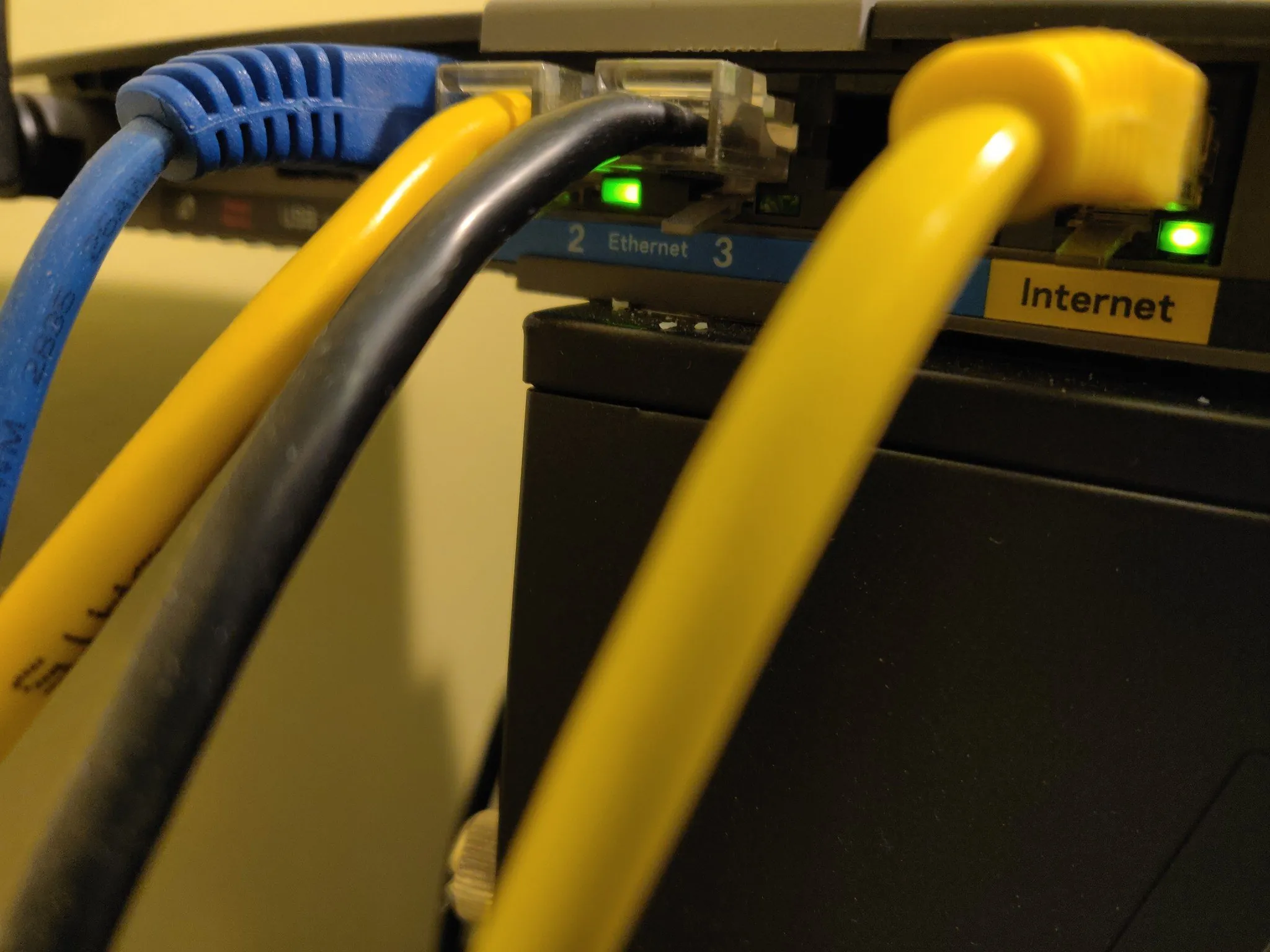
The consumer tech accessory market thrives on upselling high-margin add-ons to buyers upgrading their hardware. Retailers constantly push consumers toward premium networking gear, but purchasing expensive Ethernet cables rarely yields any tangible improvement in home internet performance. As long as a wire meets the basic IEEE standard for a specific speed tier, paying extra for marketing claims like gold-plated connectors or extreme braided shielding is a complete waste of money.
Tech peripheral brands regularly market Cat 7 or Cat 8 cables with promises of massive bandwidth capabilities and flawless streaming. These specifications far exceed the physical bottlenecks of typical consumer internet plans and residential router hardware. A standard Cat 6 unshielded twisted pair cable is officially certified to carry 10-Gigabit speeds up to 55 meters, easily handling the demands of a modern 2.5GbE setup without breaking a sweat.
Digital signals operate on a strict binary system. The data packets either reach their destination entirely intact or they drop completely. There is no varying scale of digital clarity based on the wire’s cost, a scientific reality that validates recent hands-on testing with 2.5GbE equipment. Any certified Cat 5e or Cat 6 cable delivers the exact same packet transfer rates as a boutique alternative over standard home distances.
This upselling strategy closely mimics the audiophile cable controversies of the early 2000s. Electronics retailers successfully sold high-priced HDMI and optical audio cables on the false premise of delivering better picture and sound quality. Consumers eventually realized that digital transmission does not benefit from analog-style shielding upgrades. That exact same physics lesson applies directly to modern Ethernet sales today.
How the IEEE Standards Expose the Premium Networking Market
The performance of Ethernet is strictly governed by Institute of Electrical and Electronics Engineers (IEEE) standards, completely ignoring brand prestige. Tech peripheral brands that rely on high profit margins from premium networking accessories are increasingly vulnerable as buyers realize budget-friendly cables perform identically. Manufacturers cannot invent a “better” digital signal using expensive metals; they can only meet the standard or fail it.
For everyday consumers, the takeaway is entirely financial. Upgrading a home lab or office to 2.5GbE or 10GbE speeds requires investing in better switches and high-capacity network interface cards, not boutique wires. Sticking to bulk Cat 6 wire guarantees maximum theoretical throughput without funding unnecessary manufacturing excess.