
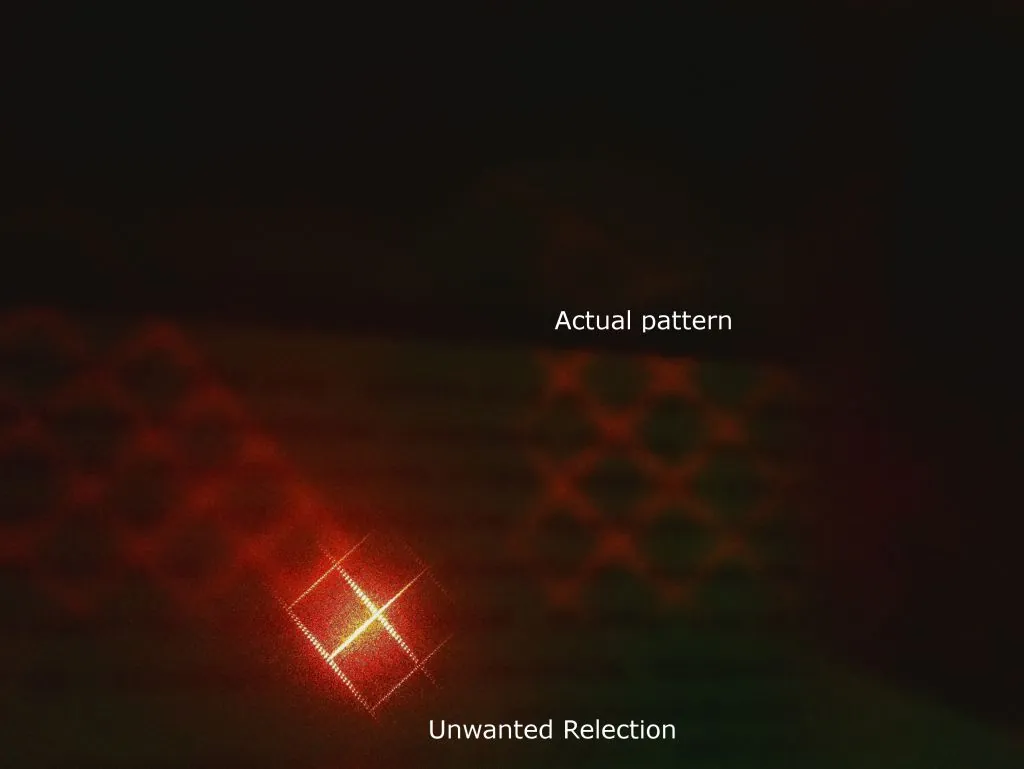
A beam splitter cube is a precision optical component that takes a single incoming beam of light and divides it into two separate paths. Engineers build these devices by taking two identical right-angle glass prisms and joining them together at their hypotenuses to form a perfect square. Right in the center of that junction sits a specialized thin-film coating. This internal interface reflects a very specific portion of the light at a strict 90-degree angle while allowing the remaining light to pass straight through. If you want to understand how modern optics function inside complex laser systems, quantum measurement tools, or advanced display screens, you have to look at the mechanics of the cube.
Handling light requires extreme physical precision. Unlike angled glass plates or other directional mirrors that require complex mathematical mounting systems, cube beamsplitters operate at a 0-degree angle of incidence. The incoming light strikes the flat exterior face of the cube perfectly perpendicular to the glass. Because the entry is perfectly straight, the transmitted beam continues exactly along the original optical axis. The reflected beam simply bounces off the internal diagonal coating and exits a side face. This straight-on entry makes the cube incredibly easy to align within a larger mechanical setup. You point the laser straight at the flat side, and the physics take care of the rest.
Step-by-Step: Three Ways to Split Light
Not all cubes split light the same way. The optical engineering field relies on three primary variations of the beam splitter cube. The physical shape remains identical, but the internal thin-film coating changes to manipulate the light based on intensity, wavelength, or polarization.
1. Splitting by Intensity (Non-Polarizing Cubes)
Non-polarizing cube beamsplitters use metallic or dielectric coatings to divide the raw power of the light. These coatings split the beam by a specific ratio. A 50/50 cube takes a 10-watt laser and sends 5 watts straight through while bouncing 5 watts out the side. You can also find 30/70 splits or 10/90 splits depending on the system requirements. The key feature here is that the cube maintains the original polarization states of the incident light. The light exiting both paths carries the exact same wave orientation as the light that entered.
2. Splitting by Wavelength (Dichroic Cubes)
Dichroic beam splitters act as highly efficient color filters. Instead of splitting power evenly, the internal coating reacts differently to different frequencies of light. A dichroic cube might reflect long-wavelength infrared light while completely transmitting shorter-wavelength visible light. Engineers use these specific cubes when they need to combine two different lasers into a single path, or when they need to strip out unwanted heat from a lighting system.
3. Splitting by Polarization
Polarizing cubes use the joined interface to split unpolarized light into two distinct, highly organized states. Light waves naturally vibrate in multiple directions. The polarizing coating forces a sorting process. It transmits P-polarized light straight through the cube and reflects S-polarized light at a strict 90-degree angle. This gives engineers two perfectly isolated beams vibrating in completely different planes, which is a requirement for advanced fiber optic communications and complex laboratory diagnostics.
Common Issues and Fixes: The Cube vs. Plate Debate
Optical engineers constantly debate whether to use a solid glass cube or a thin plate beamsplitter. Both tools split light, but they interact with the physical environment in very different ways. Plate beamsplitters are essentially thin sheets of glass with a coating on one side. They are lighter, cheaper, and fit into tight spaces. But they introduce severe optical errors that cubes are designed to fix.
The Ghosting Problem
When light hits a plate beamsplitter at an angle, the main beam splits at the front coating. But a small percentage of that light travels through the glass and bounces off the unprotected back surface of the plate. This creates “ghosting”—a secondary, slightly offset reflection that muddies the optical signal. Cube beamsplitters completely eliminate ghosting. Because the splitting interface sits perfectly encapsulated inside the middle of the solid block, the split happens internally. The transmitted beam remains entirely coherent with the incident light.
Refraction and Beam Displacement
When light travels through a flat plate of glass at an angle, the glass refracts the beam. It bends slightly upon entering and bends again upon exiting, causing a lateral offset. The light comes out parallel to its original path, but it is physically shifted over. Cubes eliminate this beam displacement. Because the light enters and exits the cube at exactly 0 degrees (perpendicular to the faces), the glass does not bend the transmitted beam. Furthermore, the solid cube geometry maintains equal optical path lengths. The reflected light and the transmitted light travel through the exact same amount of solid glass.
Weight and Group Delay Dispersion
Cubes are not perfect. They are heavy blocks of solid glass. If you are building a satellite or a drone where every gram matters, a thick cube is a massive liability. Additionally, pushing light through a thick block of glass introduces Group Delay Dispersion (GDD). The glass physically slows down different frequencies of light at slightly different rates. When working with ultra-short femtosecond lasers, this dispersion stretches the laser pulse out, ruining the timing of the equipment. In these highly specific edge cases, engineers abandon the cube and revert to specialized ultra-thin plates.
Alternative Methods: Managing High-Power Lasers
Standard cube beamsplitters rely on epoxy or optical cement. The manufacturer builds the two separate right-angle prisms, applies the thin-film coating to one hypotenuse, and literally glues them together. For low-power visible light, this manufacturing process works flawlessly. But high-power lasers expose the major vulnerability of the standard cube.
When you fire a high-energy laser through a cemented cube, the optical cement absorbs a tiny fraction of that energy. Over time, or under intense continuous ultraviolet light exposure, the cement physically degrades. It burns, bubbles, and darkens. This drastically lowers the overall laser damage threshold of the component, eventually causing the cube to shatter or warp the beam.
To fix this, high-end optical engineering completely abandons epoxy. Instead, technicians use “optical contacting” or chemically active direct bonding. This complex manufacturing technique polishes the two glass prisms so perfectly flat that the molecular forces of the glass itself pull the two pieces together. They physically fuse the prisms without cement. By removing the glue entirely, the power handling capabilities of the cube skyrocket. A cement-free, optically contacted cube can handle intense laser blasts up to 10 J/cm² at a 1064 nm wavelength.
Engineers also swap the substrate material depending on the heat and wavelength requirements. Standard borosilicate glass (like BK7) works perfectly for visible light and standard ultraviolet applications. But if the system relies on intense infrared spectrums, glass absorbs too much heat. For those applications, engineers build the cubes out of fused silica, specialized metal-coated substrates, or highly specific crystalline structures.
Real-World Engineering Case Studies
Understanding the physics is one thing, but these cubes actively drive modern technology across several distinct industries. Their ability to hold strict optical alignment makes them mandatory for precision instruments.
- Interferometry: In the fields of quantum optics and precision measurement, cube beamsplitters sit at the very heart of the Michelson interferometer. This device takes a single laser beam and splits it down two perpendicular arms. The light hits two separate mirrors and bounces back into the cube, recombining. By measuring the interference patterns of the recombined light, scientists can calculate microscopic distances and detect minute gravitational waves.
- Heads-Up Displays (HUDs): Modern fighter jets and high-end automotive displays rely on cube architectures. The system integrates a digital projection unit and a complex lens array to bounce light around tight corners. The cube cleanly overlays the digital laser-projected imagery onto a transparent surface, allowing the pilot or driver to read data while looking straight through the glass at the real world.
- Fluorescence Spectroscopy: Medical laboratories and biological imaging systems utilize dichroic beamsplitters constantly. When technicians blast a biological sample with a laser, the sample emits a faint fluorescent light at a different wavelength. The dichroic cube filters the harsh incoming laser light out of the equation, isolating only the faint emitted fluorescence and bouncing it directly into the imaging detector for analysis.
Frequently Asked Questions
What is a beam splitter cube made of?
A standard beam splitter cube is composed of two identical right-angled prisms. These prisms are typically carved from optical glass, such as BK7, or high-purity fused silica for demanding applications. The manufacturer joins the two prisms at their hypotenuses, sandwiching a specialized thin-film dielectric or metallic coating in the exact middle to divide the light.
Why use a cube beamsplitter instead of a plate beamsplitter?
Engineers choose cube beamsplitters because they completely eliminate “ghosting”—the annoying secondary reflections that occur when light bounces off the back wall of a flat glass plate. Cubes also prevent lateral beam displacement, meaning the light travels in a perfectly straight line without refracting off to the side. Because cubes operate at a 0-degree angle of incidence, they are mechanically robust and much easier to align inside complex machinery than angled plates.
Can beam splitter cubes handle high-power lasers?
Yes, but you have to choose the right materials. Standard cubes are bonded together using epoxy cement. High-power lasers or continuous UV exposure will burn this cement and destroy the optic. For high-energy industrial or laboratory laser applications, you must use “optically contacted” cubes. These specialized cubes use molecular forces to physically fuse the raw glass prisms together without any cement, significantly increasing their damage threshold.