
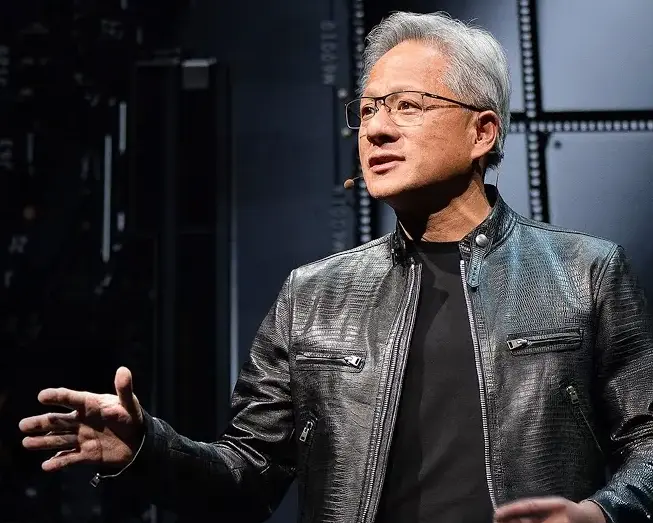
The tech industry is rushing to move heavy AI workloads out of expensive data centers and directly onto your desk. On Monday, Nvidia officially entered the $200 billion PC processor market during CEO Jensen Huang’s keynote at the Computex conference in Taipei.
Huang revealed the RTX Spark superchip. This hardware is built to run autonomous “agentic AI” workflows natively on Windows machines, completely bypassing the cloud. The platform gives Microsoft a critical second chance at defining the AI PC following the severe consumer privacy backlash over its initial Copilot+ “Recall” feature.
Inside the Arm-based RTX Spark Architecture
Nvidia co-designed the new hardware with Taiwan’s MediaTek. They integrated a Blackwell RTX GPU with a 20-core Grace CPU via an NVLink-C2C connection. It supports up to 128GB of unified memory to handle heavy local AI models without stuttering.
This fall, the platform will debut in premium laptops built by ASUS, Lenovo, MSI, Dell, and HP, according to the Computex announcement covering the new N1X Arm-based processor. Nvidia expects to release over 30 distinct laptop models and 10 compact desktop PCs in the initial wave.
The hardware pushes 1 petaflop of FP4 AI performance, and the announcement immediately drove down stock prices for competitors AMD, Intel, and Qualcomm, as the industry pivots to local AI agents. Those legacy x86 chipmakers saw shares fall between 4.9% and 8.5% on Monday. Meanwhile, Nvidia hardware partners HP and Dell surged over 7%.
How Nvidia OpenShell Fixes the Windows Privacy Problem
Giving an AI agent the freedom to autonomously click through your local files and applications requires strict safety boundaries. Microsoft and Nvidia are enforcing new Windows-native operating system controls to prevent these agents from wrecking the PC.
They are introducing Nvidia OpenShell, a technology that applies strict containment, identity, and policy governance. This allows the AI agents to manipulate specific applications without gaining unrestricted administrative access to the entire machine. It keeps your private data on the device instead of sending it to a remote server.
Huang compared the leap to agentic AI computers to the historical transition from standard cell phones to smartphones. He called it the first completely re-engineered line of PCs the industry has seen in 40 years.