
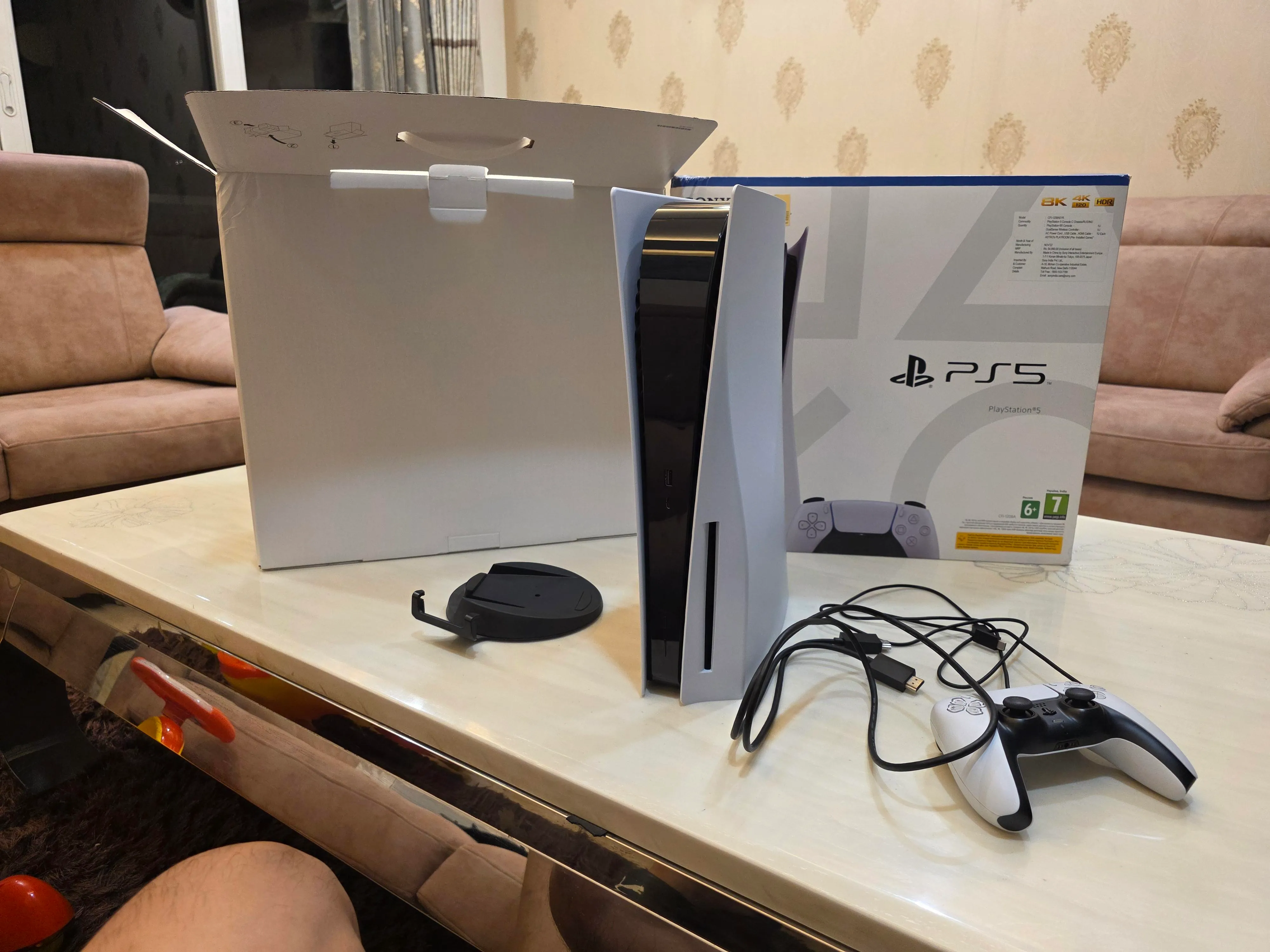
Millions of gamers are inadvertently capping their console performance by making a single, easily avoidable mistake behind their television. They are plugging the PlayStation 5 into the wrong input. As highly demanding titles push graphical boundaries in 2026, the physical cable connection has quietly become the biggest bottleneck for hardware performance.
The PS5 is specifically engineered to utilize HDMI 2.1 features. That standard is required to hit top-tier performance metrics like 4K resolution at 120Hz, Variable Refresh Rate (VRR) to prevent screen tearing, and Auto Low Latency Mode (ALLM) for faster controller response times. But plugging the console into a standard HDMI 2.0 port instantly limits the bandwidth.
The Cost of the Wrong Port
When restricted to older inputs, the PS5 caps gameplay at 60Hz and completely disables latency optimizations and true-to-life color depth. The root of this widespread confusion traces back to the hardware transition that began with the console generation launch. The leap in bandwidth required by these machines outpaced what standard TVs could accommodate across all of their inputs.
To keep manufacturing costs down, TV makers adopted a fragmented approach. Modern displays routinely feature a mix of older HDMI 2.0 ports right alongside the newer HDMI 2.1 standard. This leaves the burden of correct configuration entirely on the consumer. Users must actively check their TV’s spec sheet or port labels to ensure they get the full 48 Gbps bandwidth, as highlighted in an educational guide explaining PS5 HDMI 2.1 port requirements.
You have to look closely at the back panel. The correct inputs are usually marked explicitly with “4K@120Hz” or “eARC” labels. If your cable is in port three or four instead of port one or two, you are likely leaving a significant amount of visual fidelity on the table.
How Xbox Series X Players Face the Exact Same Hardware Bottleneck
This hardware bottleneck is not exclusive to Sony. Microsoft’s Xbox Series X players face the exact same limitation, as their console also requires a dedicated HDMI 2.1 port to output its advertised 4K resolution at 120Hz. High-end television manufacturers, particularly with displays like LG OLEDs, are frequently cited as prime examples where port specifications vary wildly across a single back panel.
We have seen this specific type of consumer friction before. The current hardware bottleneck heavily mirrors the industry transition from HDMI 1.4 to HDMI 2.0. During that cycle, early 4K adopters struggled with standard ports that simply could not support 60Hz refresh rates. Today, accessing built-in VRR and ALLM settings requires a verified HDMI 2.1 physical connection as a strict industry standard defined by the HDMI Licensing Administrator.