
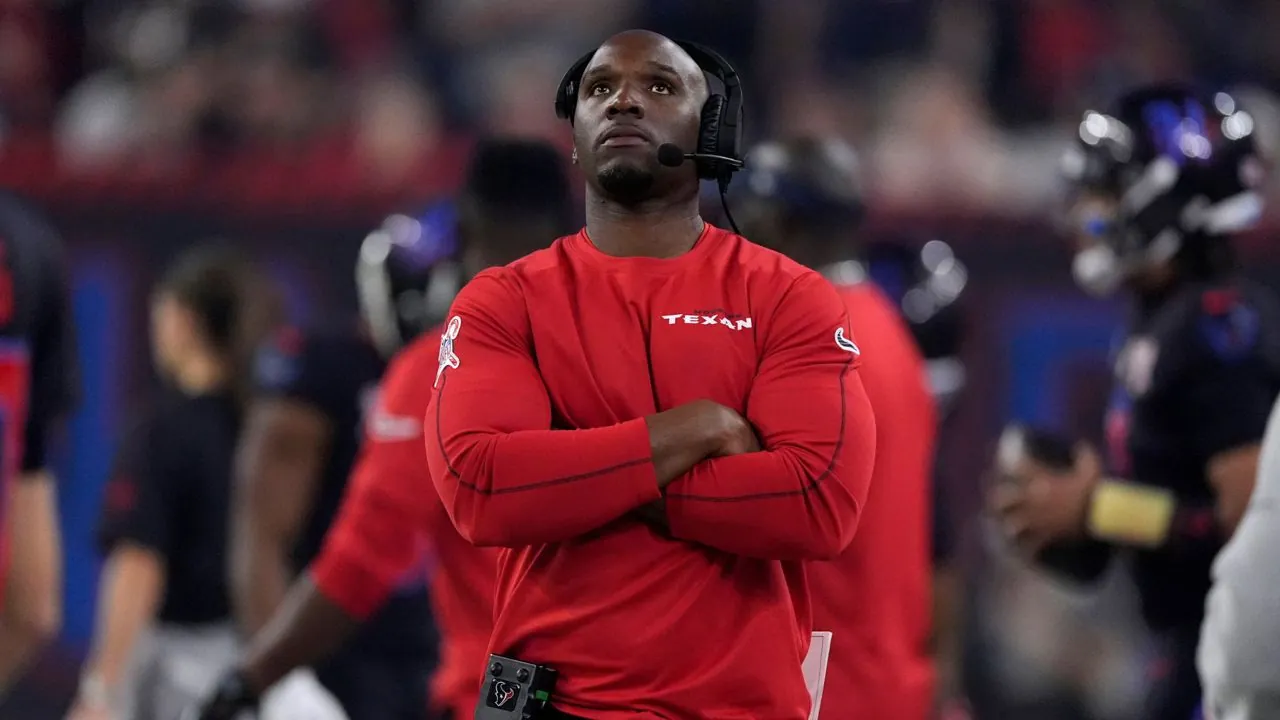
Professional sports teams manage mid-season coaching changes by immediately dismissing the underperforming head coach, elevating an assistant to an interim role to maintain daily schedules, and accepting significant financial losses from paying out guaranteed contract buyouts. This sudden shift is usually done to shock the roster into a short-term performance boost during a rough stretch of the year. While the front office handles the logistics behind closed doors, the players must quickly adapt to new voices and subtle changes in game strategy without the benefit of a full offseason training period. It is a high-stakes management strategy that sports franchises use when a season begins to slip away.
How Mid-Season Coaching Changes Work
The process of changing a coach in the middle of a playing season is a chaotic operational task. It rarely happens because of one bad day or a single mistake on the field. Instead, the front office watches the team over a period of weeks. In volatile professional leagues, a manager might lose their job after a handful of consecutive poor games. When the team owners and the general manager decide that a change is necessary, the execution happens quickly to minimize distractions. The general manager typically calls the coach into a private meeting early in the morning before the players arrive at the practice facility. They hand the coach their termination papers and discuss the exit details.
Once the head coach leaves the building, the front office must immediately fill the leadership vacuum. They rarely hire an outside candidate right away because a proper search takes weeks of interviews, background checks, and contract talks. A team in the middle of a competitive season cannot wait that long. To solve this problem, the front office looks at the remaining coaching staff. They select a top assistant, such as an offensive coordinator, a defensive leader, or a senior bench coach, and promote them to the role of interim head coach. This person takes over the head whistle, runs the daily practices, and leads the team during games.
The interim coach faces the difficult task of keeping the team structured while managing player emotions. They usually keep the existing playbook because changing the entire tactical system in forty-eight hours is impossible for the players to learn. Instead, the interim coach makes small adjustments to the lineup, changes the practice schedule slightly, or alters the team rules to create a different atmosphere in the locker room. Meanwhile, the front office has to deal with a major financial burden. Most top-tier head coaches sign multi-year contracts with guaranteed money. When an owner fires a coach early, they must continue to pay that coach their full salary for the remainder of the deal while simultaneously paying the interim coach and searching for a permanent replacement.
Why Teams Use This and When It Applies
Franchises turn to mid-season firings for several reasons, even though the process is expensive and disruptive. A major explanation comes from a sociological concept called the Ritual Scapegoating Theory, which researchers first detailed in the mid-1960s. This theory explains that firing a coach is often a public ritual designed to satisfy people outside the locker room. When a team is losing, fans stop buying tickets, corporate sponsors complain, and sports reporters write highly critical articles. By firing the head coach, the team owner sends a clear, visible signal to the public that the organization refuses to accept losing.
This strategy also acts as a defensive shield for the rest of the organization. If a team keeps losing week after week, the public begins to look closely at the players or the general manager who built the roster. Firing the coach redirects all that negative attention. It places the blame for the poor season on one single individual who has already left the organization. This action buys the general manager and the team owners more time to fix the deeper problems within the franchise without facing constant calls for their own dismissals.
Teams apply this drastic measure during very specific moments in a season. The most common scenario occurs when a team with high preseason expectations suffers a long losing streak that threatens their chances of making the postseason tournament. In international leagues, the stakes are even higher due to the rules of relegation, where the worst teams get dropped to a lower division at the end of the year. Falling to a lower league causes a giant drop in television revenue and ticket sales. In those situations, owners feel they have no choice but to change the coach as a desperate attempt to avoid financial ruin.
Famous Examples from Major Games
When we look at how these changes play out across major sports, clear historical patterns show up in the data. In top-tier professional soccer, the immediate result of a coaching change is so common that experts have given it a specific name: the new manager bounce. Players who were stuck on the bench get a clean slate, while the starting players run harder to prove they deserve to keep their spots. According to a data analysis published by the Premier League, teams that changed leaders mid-season saw a points increase of around forty percent during the new manager’s first five matches. The average team went from earning under one point per match to pulling in more than one and a quarter points per match in those early games.
A similar short-term spike occurs in professional American football. Historical records from recent years show that interim head coaches who take over a team early in the season, specifically before the sixth week of the schedule, win nearly two-thirds of their debut games. This shows how a change in leadership can completely alter the short-term energy of an entire roster. The players often experience a psychological lift when a negative environment is removed from the facility.
The data also reveals that experience matters when an interim coach steps into the spotlight. In American football matches, interim leaders who had previous experience as a head coach at another franchise managed to win against betting expectations more than half the time in their first game. On the other side of the coin, interim coaches who were entirely new to the top job only beat those expectations less than half the time. This shows that while the team gets an emotional lift, having someone who knows how to handle the game-day decisions under pressure gives the roster a clear tactical advantage.
Common Misconceptions
The single biggest misconception about mid-season coaching changes is that they provide a permanent fix for a broken team. Casual fans watch a team win its first two games under a new coach and assume the season is saved. But sports science and deep statistical tracking show that this early success is almost always a temporary illusion. The initial burst of energy eventually wears off as the players settle back into their normal routines.
This drop-off is well-documented in academic research. As demonstrated in a study hosted by the National Institutes of Health, the positive effect of a mid-season coaching change in professional soccer completely vanishes after around five to seven games. Once that honeymoon phase ends, teams almost always return to their previous baseline level of performance. The new coach cannot magically make the players faster or more skilled than they actually are.
Another common myth is that changing the coach will fix a poorly constructed basketball team. This idea was tracked in an academic paper preserved in the BYU ScholarsArchive, which analyzed nearly two hundred mid-season coaching changes in professional basketball. The findings revealed that only about one in ten new coaches managed to significantly improve the team’s long-term winning percentage compared to the previous coach. More than four-fifths of the teams performed at the exact same level as before, and roughly five percent actually saw their records get worse. A coaching change cannot overcome a lack of raw athletic talent or bad roster construction.
Frequently Asked Questions
Does a mid-season coaching change help a team win more games in the long run?
No, historical data shows that it rarely helps over a long period. While teams often get a short-term increase in wins during the first five games, they almost always return to their regular performance level after that initial phase ends.
What is the new manager bounce in professional sports?
The new manager bounce is a temporary improvement in a team’s performance right after a coach is fired. It happens because players get a psychological boost and try harder to impress the new leader, but this effect typically disappears within two months.
Why do sports teams use an interim coach instead of hiring a permanent one immediately?
Teams use an interim coach because a thorough search for a permanent head coach takes weeks or months. Promoting an assistant coach allows the team to keep its daily practice schedule and playbook intact without stopping the season to run interviews.
What is the Ritual Scapegoating Theory in sports management?
This theory states that teams fire coaches to give the public a visible sacrifice when a season is going poorly. Firing the coach satisfies angry fans and media while protecting the general manager and players from being blamed for the losses.
Do teams have to pay coaches after they fire them mid-season?
Yes, most professional coaches have guaranteed contracts. If an owner fires a coach before the contract ends, the team must continue to pay that coach their full salary for the rest of the deal while also paying the new coaching staff.