
When a general manager tries to build a basketball dynasty, they are aiming for a highly specific mathematical window. The most common age of an NBA championship roster falls squarely between 27 and 29 years old. This exact range offers the perfect blend of athletic prime and veteran experience required to survive a grueling two-month playoff run.
Every front office in the league wants to draft an 18-year-old phenom. But those rookies almost never lift the trophy right away. The game moves too fast for them. On the flip side, building a team entirely out of aging veterans usually ends with pulled hamstrings in the second round. Striking the balance in the high 20s is the proven formula.
Looking at recent history proves this point directly. Eight out of the last ten title-winning teams had an average age between 27 and 29 years old. Teams simply do not win rings when their core is too young and inexperienced, nor do they consistently win when their roster is too old and fatigued. The physical demands of playing a potential 100-plus games in a single season filter out the extremes.
We see this align perfectly with individual superstar trajectories. Sports analytics routinely show that elite players reach their absolute maximum talent output between ages 26 and 29. During these years, a player has peak physical speed but has also spent five or six years learning the tactical rules of the league. Michael Jordan, LeBron James, Nikola Jokić, and Giannis Antetokounmpo all won their first championships right in the middle of this specific age bracket.
Modern title winners fit this mold cleanly. Championship-winning rosters like the 2017 and 2018 Warriors averaged 27.9 and 28.9 years old, respectively. The 2019 Toronto Raptors averaged 28.3, and the 2020 Los Angeles Lakers sat right at 28.9. The high 20s rule the league.
How Roster Age is Measured in the NBA
Figuring out a team’s true age is not as simple as adding up the birth certificates of all 15 guys on the bench and dividing by 15. The players sitting at the end of the bench barely see the floor during the high-stakes games of the playoffs.
If a team signs three 19-year-old rookies to sit on the bench and wave towels, their basic average age drops significantly on paper. But those rookies do not affect the actual outcome of a playoff game. Their youth does not translate to fresh legs on the court. To get an accurate picture of how old a team actually is while competing, analysts use a metric called Weighted Age, often referred to as WAGE.
This method weights a player’s age by the number of minutes they actually play or their overall usage rate on offense. This reveals the true effective age of the core rotation that influences the final score. If your starting five are all 30 years old and playing 40 minutes a night, your team operates exactly like a 30-year-old team, regardless of who sits at the end of the bench in warmups.
During the playoffs, head coaches famously shorten their rotations. A regular-season rotation might feature 10 or 11 guys playing regular minutes to keep everyone fresh through an 82-game schedule. Come playoff time, every single possession matters. Coaches shrink that circle to just seven or eight highly trusted players.
Because coaches lean heavily on their experienced veterans in high-pressure situations, a team’s effective age often skews much higher in the postseason than their regular-season roster average. The young guys simply stop getting minutes. You only play the guys who know exactly where to be on defense.
Why the Championship Age Window Matters
The 27 to 29-year-old window exists for a very practical reason on the basketball court. The playoffs are a completely different sport compared to the regular season. The fast-paced, high-scoring transition games of November disappear in May. The game slows down into a half-court, physical grind.
Older teams excel here. A veteran roster simply does things better under pressure. When the game slows down, the experienced players thrive for several key reasons:
- They make fewer unforced turnovers when double-teamed.
- They execute complex defensive schemes without missing rotations.
- They communicate through screens effectively.
- They exploit offensive mismatches without rushing the play or forcing a bad shot.
When an opposing team goes on a 10-0 scoring run in a hostile arena, a 28-year-old point guard knows how to control the tempo, draw a hard foul, and quiet the crowd. A 22-year-old point guard is much more likely to panic, rush the ball up the floor, and turn it over.
Young players rely heavily on raw athleticism, fast breaks, and transition scoring. In a seven-game series, opposing coaches spend days studying film to take those easy opportunities away entirely. They force you to execute in the half-court. You have to think your way to a basket, and that requires the basketball IQ that only comes from years of experience.
But general managers cannot just sign a roster of 34-year-olds and expect an easy ring. The primary downside to targeting an older average age is physical attrition.
The basketball season is a brutal marathon. Older rosters are significantly more prone to soft-tissue injuries and deep muscle fatigue. Surviving the regular season and then battling through two straight months of high-intensity playoff games breaks down older bodies. A team averaging 31 years old might have the highest basketball IQ in the league, but they often lose their jump-shot legs by the Conference Finals. This is why the 27 to 29 age bracket remains the gold standard. It provides the intellect of a veteran with the physical recovery speed of a younger athlete.
Historic Championship Teams Across the Age Spectrum
While the high-20s is the established standard, a few legendary teams have completely broken the trend on both ends of the age spectrum. These outliers usually had historical talent that rewrote the normal rules of team building.
The 1997-98 Chicago Bulls are the oldest team to ever win a title. Chronicled during their famous final season together, Michael Jordan, Scottie Pippen, and Dennis Rodman led a veteran-heavy core that relied purely on execution and suffocating defensive intensity. They won it all with a weighted average age of 32.096. They completely lacked the youthful speed of their competitors, but their mental dominance carried them through. Close behind them are the 2010-11 Dallas Mavericks, who won their title at 31.607 years old by relying on seasoned veterans who simply outsmarted younger opponents.
On the other side of history, the 1976-77 Portland Trail Blazers hold the record for the youngest team to win it all. They captured the championship carrying a weighted average age of just 24.199. The 1979-80 Los Angeles Lakers, led by a spectacular rookie named Magic Johnson, followed closely behind at roughly 25.7 years old. Those Lakers ran older teams right off the floor with pure speed.
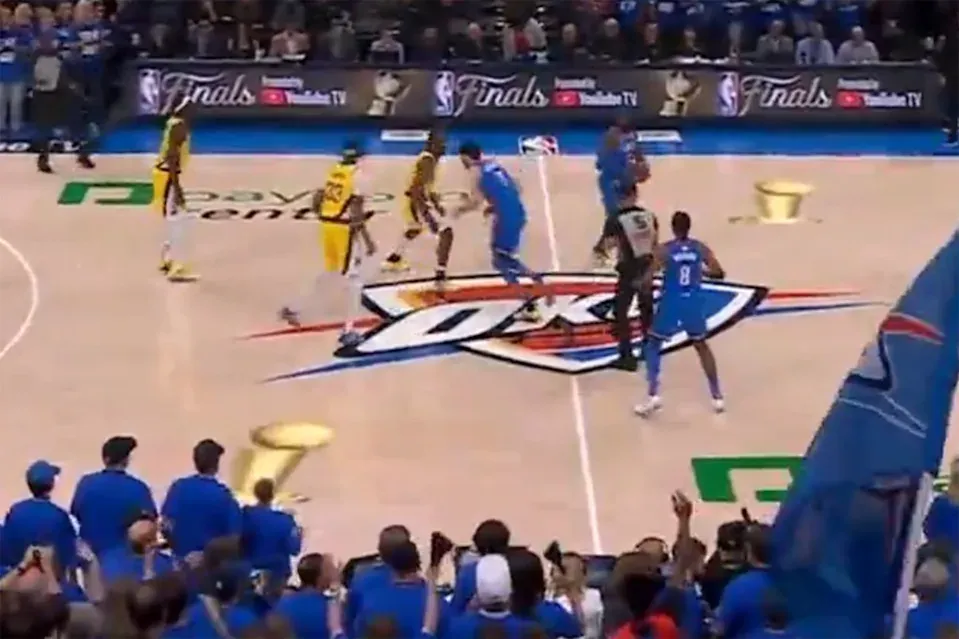
For decades after that, the pure youth movement failed in the playoffs. But the 2024-25 season offered a rare exception. The Oklahoma City Thunder shattered recent expectations by becoming the youngest team to reach the Finals in 50 years.
The Thunder made their deep playoff run with an average age of 25.56, and an even younger effective playoff rotation age of just 24.7 years old. They challenged the traditional front office philosophy that you absolutely must have an older roster to survive the postseason. They proved that if young players have exceptionally high basketball IQs and defensive discipline, they can occasionally speed up the timeline.
Common Misconceptions
One of the biggest misconceptions among casual fans is that raw, youthful talent can overwhelm an older team simply by out-running them. Fans see a 21-year-old jump out of the gym in November and assume that same energy will win a championship in June.
History shows this is rarely true. Analysts often point to the Trapezoid of Champions theory. This concept combines a team’s average age with their total collective playoff games played. Teams almost never win a title without having previously endured deep, heartbreaking playoff runs. You have to lose on the biggest stage before you learn the emotional regulation required to win there. The youthful teams that do make deep runs usually have a core group of players who have already played dozens of playoff games together, artificially boosting their experience level despite their young biological age.
Another common misconception is that a team’s championship window stays open for five or six years once their young core develops. Fans assume a good 25-year-old core will dominate for a decade. In reality, the physical toll of deep playoff runs means the true peak of a roster is often just two or three years long. Once a core pushes past 30, the injuries mount rapidly. Hamstrings pull. Ankles take longer to heal. Role players leave in free agency. The window slams shut much faster than anyone anticipates.
Frequently Asked Questions
What is the oldest team to ever win an NBA championship?
The 1997-98 Chicago Bulls are the oldest champions in history. Led by Michael Jordan in his final season with the team, the roster had a weighted average age of 32.096.
What is the youngest team to ever win an NBA championship?
The 1976-77 Portland Trail Blazers are the youngest championship team. They captured the title carrying a weighted average age of just 24.199.
Did the Oklahoma City Thunder break the age record recently?
Yes. In the 2024-25 season, the Oklahoma City Thunder became the youngest team to reach the Finals since the 1977 Trail Blazers. They reached the championship round with an average roster age of 25.56 and an effective rotation age of 24.7.
At what age do NBA players typically peak and win championships?
Historical data shows that elite basketball players generally reach their physical and mental prime between the ages of 26 and 29. Most superstars, including Nikola Jokić at 27 and Giannis Antetokounmpo at 26, win their first championships directly inside this window.