
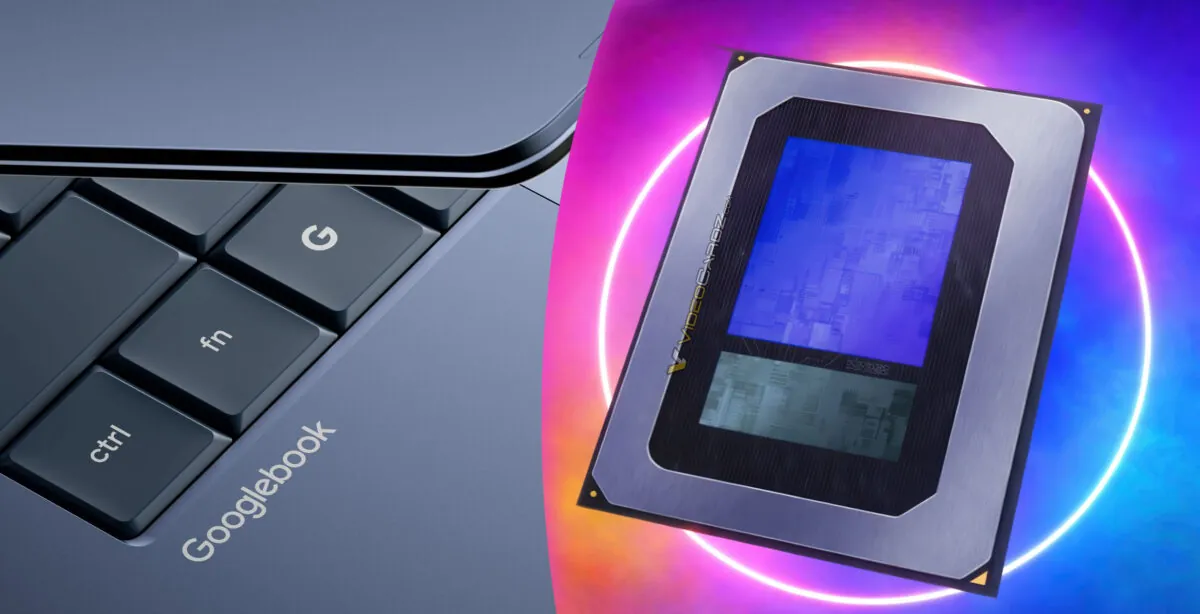
Google has officially pulled the curtain back on the Googlebook. This new premium hardware platform is built to bury the “budget” reputation of the Chromebook once and for all. It’s a high-stakes move. Google wants to bring native technology like Gemini AI directly to your desk without needing the cloud for every single prompt. With global chip supply chains stabilizing in 2026, Google is securing its spot in the luxury market by partnering with the biggest names in silicon.
Intel confirmed the partnership via X. The chip giant said its upcoming Core Series 300 “Wildcat Lake” processors will be the primary engine for these new machines. These chips use the cutting-edge 18A node. They are built specifically for heavy AI workloads. According to technical specifications from Intel, the Wildcat Lake setup uses a six-core configuration. It combines two “Cougar Cove” performance cores with four “Darkmont” efficiency cores. This is paired with an NPU 5 that can hit 40 TOPS of processing power.
Google Sets Strict Hardware Standards for OEM Partners
This is not a free-for-all for laptop makers. Google Vice President John Maletis has set down strict baseline hardware requirements. Every Googlebook must meet specific standards for memory and storage. Even the keyboard layouts are being standardized. This ensures that the Gemini AI experience is the same whether you buy an Acer or a Dell. The first wave of these devices will arrive this fall. The confirmed launch partners include Acer, ASUS, Dell, HP, and Lenovo.
Intel is taking a lead role here, but they are not the only ones in the room. Google is also working with Qualcomm and MediaTek to offer Arm-based versions. This creates a massive race for AI dominance between different chip types. Samsung was a surprise absence from the 2026 launch list. Reports suggest the company is waiting until 2027 to join. They want to focus on deeper integration with their own Galaxy AI tools first.
Chasing the MacBook Neo Design
The move to high-end hardware isn’t just about speed. It’s about style and status. There are already talks about how the new Intel chips help these laptops match the design language seen in the Apple MacBook Neo. Google is mandating premium materials like aluminum chassis. This is a far cry from the plastic shells of early Chromebooks. By pushing for 40 TOPS NPUs, Google is telling the world that the era of cheap, cloud-only laptops is over.
How Wildcat Lake Chips Break the MacBook Monopoly
The Wildcat Lake platform is a direct shot at Apple’s Silicon dominance. For years, the MacBook was the only real choice for a high-end laptop that felt “smart” at a hardware level. Google is now using Intel’s 18A process to close that gap. This marks the first time Google has enforced such a rigorous hardware baseline since the original Chromebook pilot back in 2010. It is a fundamental shift in how we think about portable computers.
By moving Gemini AI processing to the device itself, Google is solving a major privacy and latency problem. Users won’t have to wait for a server to respond to their AI requests. This shift makes the local processor’s NPU speed the most important metric for any new laptop purchase in 2026. The competition between x86 and Arm within the Googlebook ecosystem will likely drive prices down for consumers, but the days of the $300 “throwaway” laptop are fading as the “AI first” era takes over.