
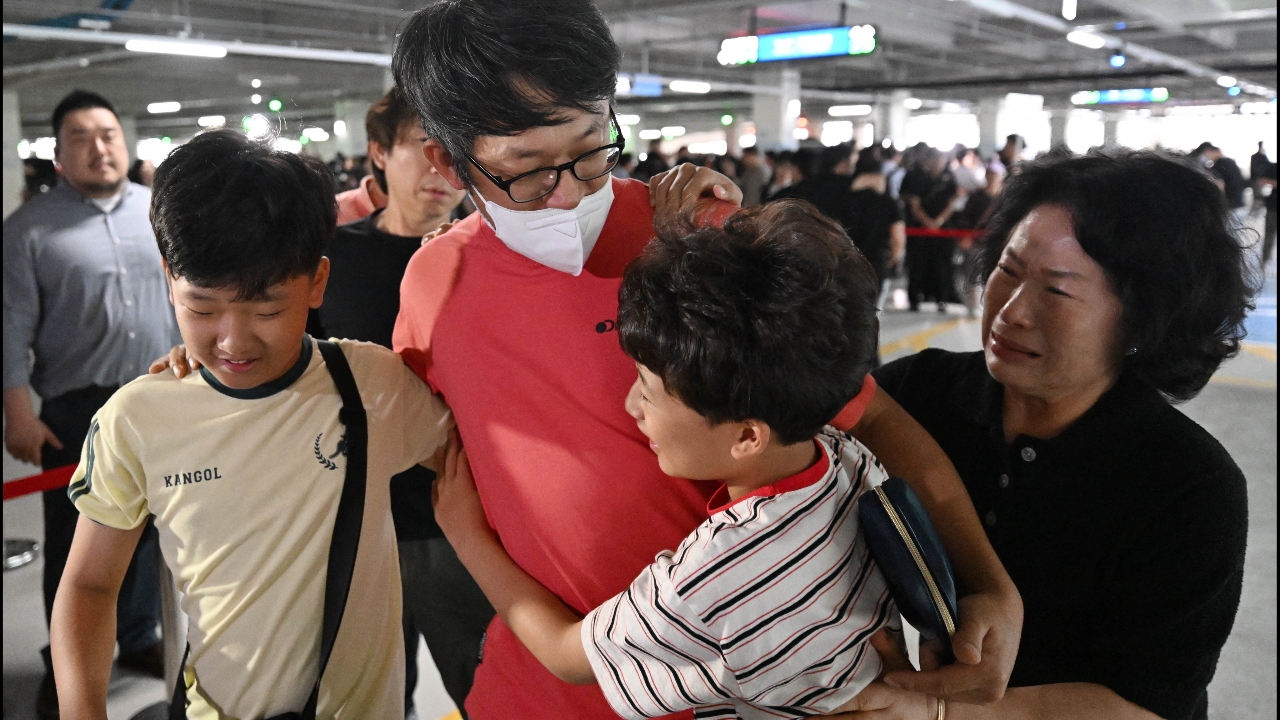
More than 300 South Korean workers landed back on their home soil today, a week after a sweeping US immigration raid. They looked tired but relieved as they stepped off a chartered plane at Incheon Airport, many still wearing face masks. High-ranking officials, including the President’s chief of staff, greeted them with applause, marking the end of a surprising ordeal.
Their return followed a week of intense talks between the South Korean government and US authorities. Shock spread across South Korea when images showed workers in handcuffs and shackles during the raid at a major battery factory project in Georgia. These pictures sparked widespread public anger and highlighted a brewing diplomatic issue.
The incident brought to light a long-standing challenge for South Korean companies operating in the US. They often struggle to get the right visas for their skilled workers on large American projects. This difficulty has led some workers to use what many see as loopholes in US visa rules. The battery plant in Georgia is a joint project between LG Energy Solution and Hyundai Motor, aiming to boost production for electric vehicles.
This unexpected crackdown has put a strain on relations between the two countries, especially at a sensitive time. Both nations are close to finalizing a major trade deal. This agreement includes plans for a $350 billion fund to support key US industries. The raid’s timing, therefore, raised eyebrows on both sides of the Pacific.
South Korea’s Foreign Minister, Cho Hyun, quickly flew to Washington D.C. this week to address the problem head-on. He pressed US officials to consider a new type of visa for workers from Korean companies investing heavily in the US. Both governments are now discussing forming a special group to look into this issue.
Beyond the South Korean workers, the raid also led to the detention of others. Ten Chinese nationals, three Japanese, and one Indonesian worker, all employed by LG Energy Solution or its contractors, were also held. South Korean President Lee Jae-myung warned that such events could make companies hesitant to invest in the US. This concern runs against efforts by figures like former President Donald Trump to attract more foreign manufacturing to American shores.
Source: Reuters