
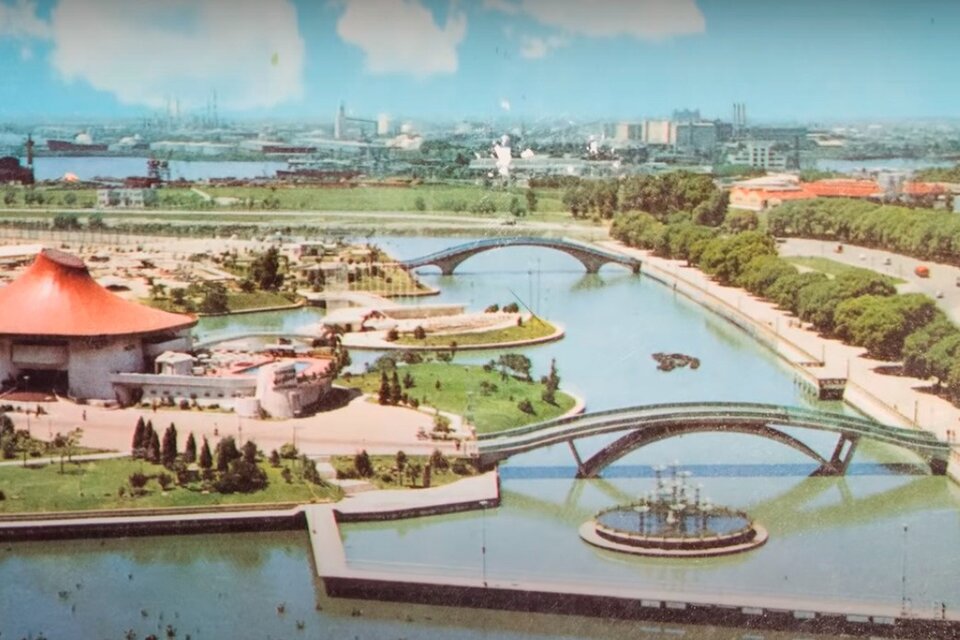
The Boca Sports City on the Costanera Sur was the dreamed and truncated business. It was promoted by the former president of Boca Alberto Armando and suffered by the partners who lost their investment. Puma Armando – president of the club between 1954-1955 and 1960-1980 – announced that the impressive works would be inaugurated on May 25, 1975 with a stadium for more than 100,000 spectators. Before, a new pool, a luxury restaurant, camping, grills, electromechanical games and even a drive-in would be enabled.
To build the site, raffles and easy quotas were used that included even the location of the future stadium. Fortunes were collected. Armando himself explained to the fans during the matches what the project called the Golden Crusade was like. There were advertisements everywhere. And Armando himself did not stop describing it in interviews.
The construction would be done by winning land from the river. It was approved by Congress through Law 16,575, which gave Boca some 40 hectares. The work began immediately. By convention, they had to be finished in ten years. Otherwise Boca would lose the assignment.
On May 25, 1971, the first pile on which the new stadium would sit was installed. The news was so relevant that even the dictator Alejandro Lanusse attended the event in his role as president. However, the works slowed down the pace of work. Economic problems prevented full advance. The company in charge removed most of the workers. Meanwhile, some attractions worked. The Genovés Park drew crowds with iconic games like the giant slide or The Worm. There was also a confectionery. But the place no longer generated the same expectations as when it was announced. Construction of the stadium had come to a standstill. Not even the government’s rescue attempt was useful by declaring the work of National Interest. At the same time, millionaire works were being made for the stadiums that would host the ’78 World Cup.
In ’79, the then Municipality of Buenos Aires, led by Osvaldo Cacciatore, gave the club a grace period and removed the obligation to move forward with the new stadium. Instead, it forced him to “build swimming pools, a skating rink, and tennis, basketball, volleyball, and soccer courts.” Which were not done either.
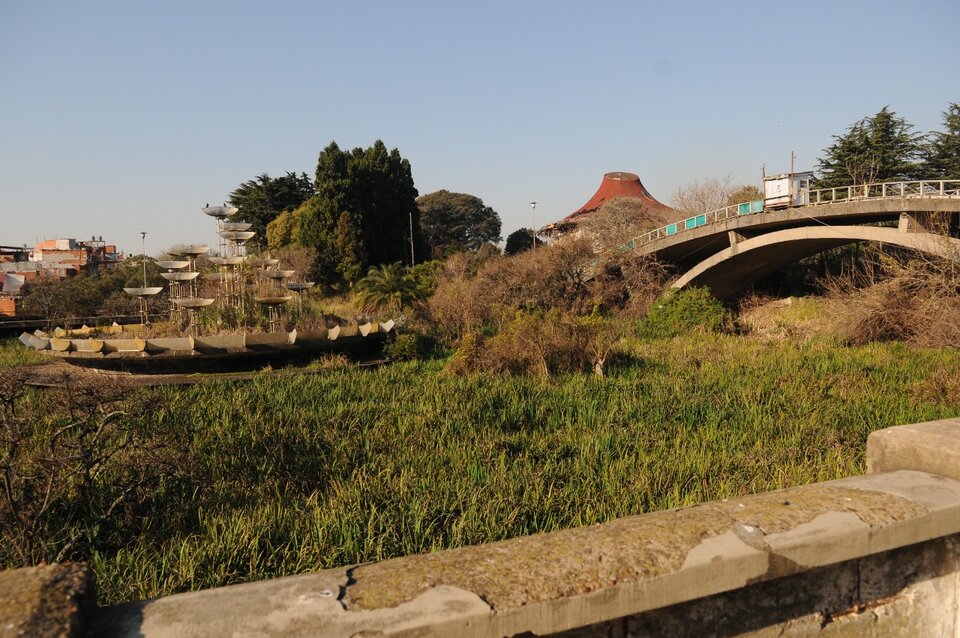
In the Sports City work was done less and less, the enabled facilities were not maintained and the grass did not stop growing. The abandonment was evident. Boca was granted three years of grace. The place was closed and then abandoned. The partners who contributed money were never compensated and Armando was exempt from any legal issue related to the issue.
When the ’80s began, Armando left the presidency without fulfilling his wish. Chaired by businessman Martín Noel, Boca was exploited by a long-term economic crisis that did not even cover the title achieved in the Metropolitan of ’81, with Maradona as a figure. Later, La Bombonera would be closed due to lack of maintenance, unpaid employee salaries and even the numbers would have to be marked on the professional players’ jerseys. The football performance was terrible. The intervention of Federico Polak saved the club from bankruptcy; the arrival of the Antonio Alegre and Carlos Heller allowed the resurgence. Polak tells the story in his book Armando Macri.
Journalists Lucas Taskar, Maximiliano Acosta, Nicolás Franciulli and Micael Franciulli made a great audiovisual on the subject: the documentary “Ciudad Deportiva”. In this work you can see the desolation of the area. Total abandonment, towering grass, the striking bridges and their broken stairs, the decaying confectionery. Next door, the Rodrigo Bueno neighborhood.
Dated April 15, ’82, through Municipal Ordinance 37,677 the works were deemed completed; and it reads that Boca “is granted (…) legal possession of the lands that make up the Sports City, with everything planted in them, and proceeds to grant the corresponding title deed in its favor.”
In 1989 the Law was modified so that the club can sell the property. Boca kept public lands. They were sold in 1992 for $ 20 million to the Santa María del Plata society. Five years later, the Irsa Group acquired them.
When former President Menem dreamed of Argentina being the Olympic venue in 2004, plans included these lands to host athletes from all over the world. Once they left, the buildings would be left for some commercial destination. In 2007, Irsa announced the construction of residential towers and a commercial and cultural center. The story comes up with an open ending. Although predictable.
.