
A growing body of research has begun to clarify the extent Pre-Hispanic occupation of the Amazonwhich was not as depopulated as expected, but now there is evidence of large-scale urbanization.
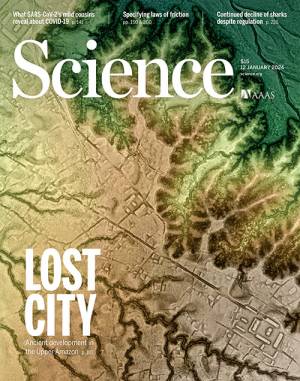
Science magazine dedicates its cover this week to the “Lost City”: the ancient development in the upper Amazon. / Science
A study is published in the journal this week Science – also highlighted on the cover – where the discovery of a dense lake in the Ecuadorian Amazon took place System of small pre-Hispanic “towns”characterized by platforms and squares connected by large straight paths.
The investigation was led by the French archaeologist Stephen Rostain of the Center National de la Recherche Scientifique (CNRS) presents evidence for a agricultural based civilization which began 2,500 years ago Upano Valleyin Amazon Ecuador, a region in the eastern foothills of the Andes.
He Field work for more than 20 years and the analysis of LiDAR imagescaptured from aircraft using laser technology, reveal the oldest and most extensive low-density agricultural urbanism documented to date in the Amazon.
Specifically, it’s about the study documents more than 6,000 ground platforms Man-made rectangular structures and plaza structures connected by paths and roads and surrounded by extensive agricultural landscapes with canals and river drainages, within an extensive jungle area 300 square kilometers.
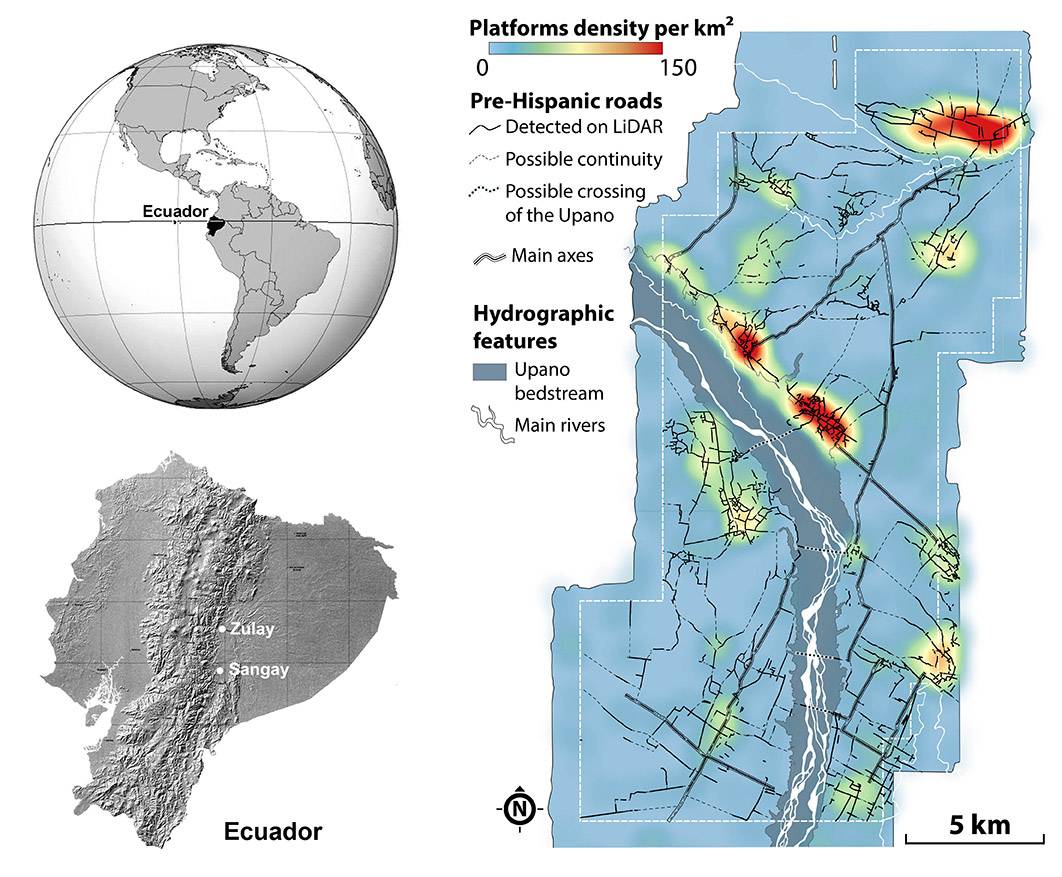
Archaeological map of the Upano Valley (Ecuador). On the right, map of the pre-Hispanic roads with 5 main settlements (red and orange) and 10 secondary settlements (yellow and green). / Lidar imaging, A. Dorison and S. Rostain
The authors at least identified themselves 15 settlements different sizes based on groupings of this type of structures, but especially the extensive and complex network of “roads” which extends over dozens of kilometers on a regional scale and connects urban centers and the surrounding areas.
From 500 BC BC to 500 AD
Archaeological excavations indicate that the construction and occupation of the platforms and streets occurred between approximately 500 BC and took place. C. and from 300 to 600 AD. C. Taken together, this is a very extensive and early development in the Upper Amazoncarried out by groups of Kilamope cultures and consequently Upanois comparable to similar Mayan urban systems in the Central American regions of Mexico and Guatemala. However, the Upano Valley sites differ from other sites in the Amazon, which are more recent and less extensive.
“These discoveries are another vivid example of underestimating the Amazon’s dual heritage: Environment but also culturaland therefore, indigenous“, notes Rostain's team, which, like many other authors, considers it “critical” to “thoroughly examine our preconceived notions about the Amazon world, while reinterpreting contexts and concepts in the light of inclusive and participatory scholarship.”

These discoveries are a vivid example of the underestimation of the Amazon's dual heritage: ecological, but also cultural and therefore indigenous.

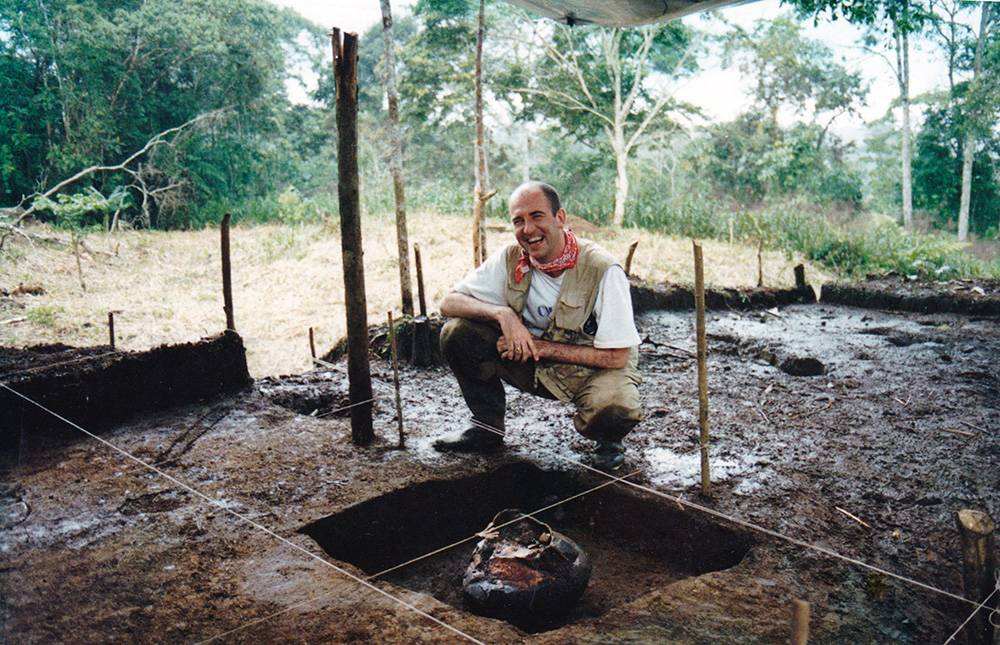
Stéphen Rostain behind a ceramic jug for corn beer (chicha) during archaeological excavations on an earthen platform at the Sangay site in the Upano Valley. / S. Rostain
Half a century full of discoveries
Another author of the study, Fernando MejiaProfessor at the Pontifical Catholic University of Ecuador (PUCE), SINC reminds that the first investigations in this region date back to the 70s of the last century, when one of the professors of this university, a priest and archaeologist Pedro Porras, traveled to Upano Valley. He traveled through the city of Macas on the back of a mule and discovered the archaeological site of Wapula, a pre-Hispanic city of several Hills or tolas'.
Years later, in the 1990s, Stephen Rostain came to investigate and excavate there and other sites nearby. Around the same time, in the first decade of the 2000s, Dr. Ernesto Salazar from the PUCE, set out to search for and found similar archaeological sites, showing that this type of construction using platforms or square tolas extended well beyond Wapula.
“The problem at the time was that both the French archaeologist and Salazar (who initially worked with him) had to start looking for possible new sites. running through the jungleAnd yet they conducted and published relevant studies,” says Mejía.
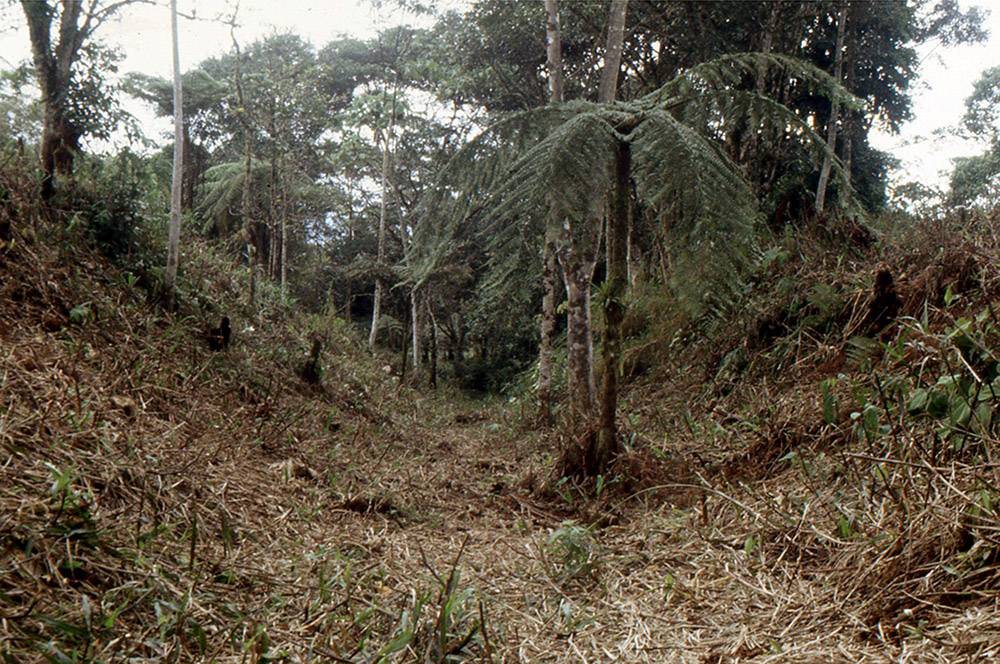
Wide and deep excavation roads at Sangay site in Upano Valley. / S. Rostain
But in 2015 LiDAR technology: the systematic mapping of the territory using airborne laser scanning. “This is officially carried out by the National Institute of Cultural Heritage (of which I was a member at the time) with funding from the Secretariat of Higher Education, Science, Technology and Innovation (Senescyt) of Ecuador, 300 km2“says the Ecuadorian archaeologist.
“Using lasers from aircraft allows us to capture the surface,” he explains, and then use algorithms to remove layers of vegetation, houses and modern buildings, roads, etc., reconstructing the terrain without everything overlying it. This is how surprising results were achieved: thousands of hill, some isolated throughout the valley, but many clustered in a dozen towns or archaeological sites. The largest has been confirmed to be Wapula, measuring nearly 10 km long and 4 km wide. “It is a pre-urbanism that is not seen in more studied coastal areas.”
In this way the rectangular tolas were visualized, Dozens of kilometers of pre-Hispanic roadstwenty pipes to transport water from one place to another, and even small towns with “some platforms surrounded by protective moats, similar to the moats of medieval castles,” compares Mejía, who clarifies that there should be a house on each hill. like those that exist today in the Amazon, consisting essentially of palm tree trunks and roofs made of leaves of this plant.
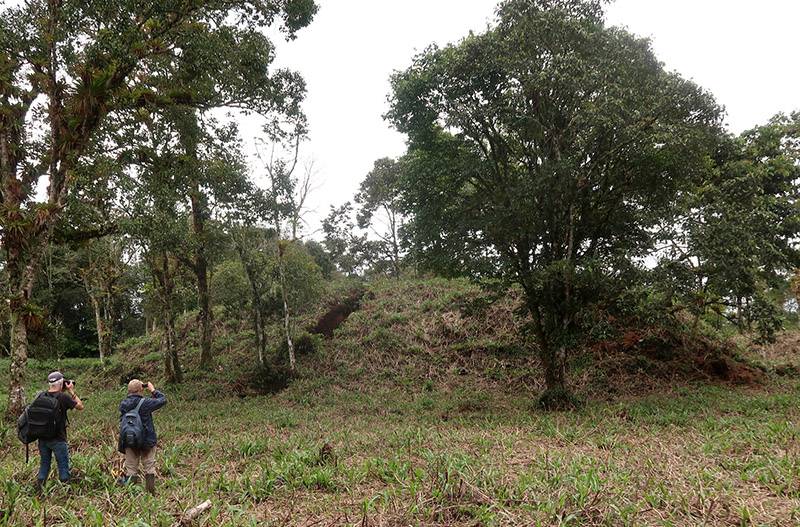
Earth platform at the Sangay site in the Upano Valley. / S. Rostain
“We have a Sea of information “We didn't expect that,” he emphasizes, “and we began to ask questions and give some answers: the Amazon was not a forgotten area, it was in the circle of civilizational development of this region.” The current indigenous people here live, are now divided into groups Suarez And Asuarasare direct descendants of a common group that occupied this area.”
Despite the “mine of information” obtained with LiDAR, the researcher complains that the funds for this project and further research ran out in 2016. Nevertheless, a year later, Access to data is offered received from renowned experts such as Rostain and archaeologists from PUCE and the Universidad San Francisco de Quito, who also carry out small projects together in the region.
The Amazon was not a forgotten area, it was in the circle of civilizational development of this region
In addition, the preliminary results of the project were discussed in collaboration with two archaeologists – including the Spanish Alejandra Sánchez archaeological cultural landscape of the Alto Upano Valley The document, developed by the National Institute of Cultural Heritage, will be published in 2023 Ecuadorian Magazine of Archeology and Paleontology this institution.
For their part, Rostain and his team are now providing much more information, detailed analysis and the knowledge they have acquired over more than two decades and are now publishing the work that can be seen on the cover of Science. But there is still a long way to go: “The information collected by the institute should be further processed for the next generation of archaeologists at home and abroad,” explains Mejía.
The Ecuadorian archaeologist concludes with a reflection: “If we have more than 6,000 mounds, that is more than 6,000 houses, each with an extended family that can have 10 people, so do the math.” In this small section alone lived so many people, which means that a Food mega production And there has to be someone in charge. Politically we speak of one or more local chiefs who controlled a large part of the population. The completely changes the idea of the Amazon and is the starting point for many new investigations.”
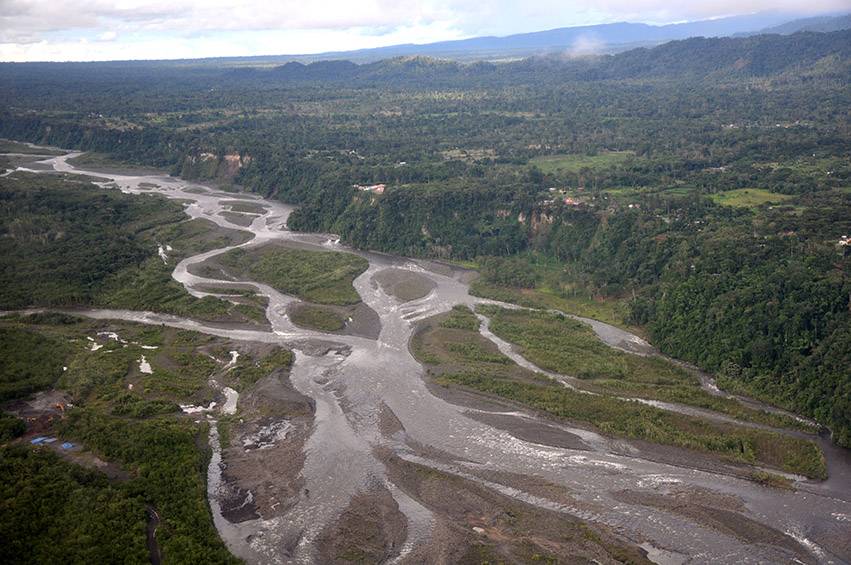
The Upano River is bordered by 70 to 100 meter high cliffs in Ecuador. / S. Rostain
Reference:
Stephen Rostain et al. “Two thousand years of garden city building in the upper Amazon.” Science2024