
Tesla kicks off testing for its autonomous vehicles in Austin, Texas. This move comes just days before the company is set to launch its commercial service in the city.
A New Approach for Tesla in Austin
For months, Tesla has been planning to launch a fleet of autonomous vehicles for passenger transport in Austin. This is a significant shift from the company’s long-standing promise to offer unsupervised autonomous driving capabilities in millions of vehicles sold since 2016.
Instead, Tesla plans to operate a small internal fleet with dedicated software optimized for a geographically limited area of Austin, complemented by a robust teleoperation system. CEO Elon Musk has announced the service launch for June, but some doubts remain. Musk himself admitted that Tesla only started testing the system without safety drivers at the end of May.
Testing and Regulation
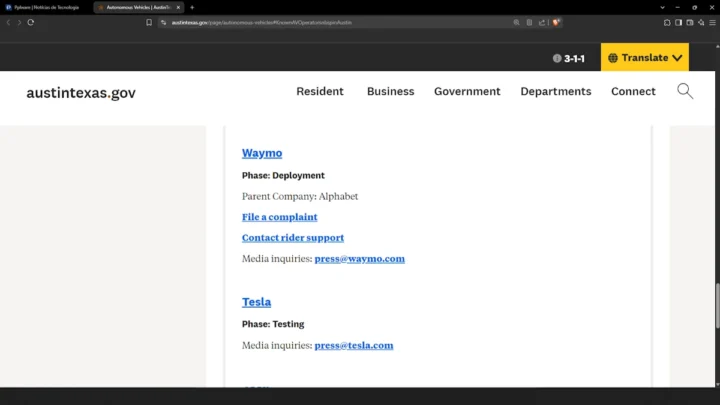
In contrast, Waymo tested its system for six months with safety drivers and another six months without them before launching its service in Austin. Until recently, Tesla was not listed as a known autonomous vehicle operator in Austin, but this has changed. Tesla has been added to the list, currently in the “Testing” phase.
The Waymo remains the only company listed in the “Deployment” phase. It’s unclear if the website is outdated or if Tesla has only just started its autonomous driving tests in the city.
Regulatory History
In the past, Tesla bypassed autonomous driving test reporting requirements by classifying its system as a level 2 Advanced Driver Assistance System (ADAS), keeping full responsibility on the driver.
Recently, Tesla vehicles with manufacturer plates and drivers have been spotted in Austin. However, without reaching the “Deployment” phase, Tesla won’t be authorized to charge customers for rides, unlike Waymo.
It remains to be seen if Tesla has significantly optimized its Full Self-Driving (FSD) system for the geographically limited area of Austin and imposed speed limits. The current public version of FSD has a concerning average of around 800 km between critical disengagements.
Removing the safety driver in these circumstances could increase the risk of severe accidents. While teleoperation can mitigate some risks, any delay in remote intervention can also be dangerous.