
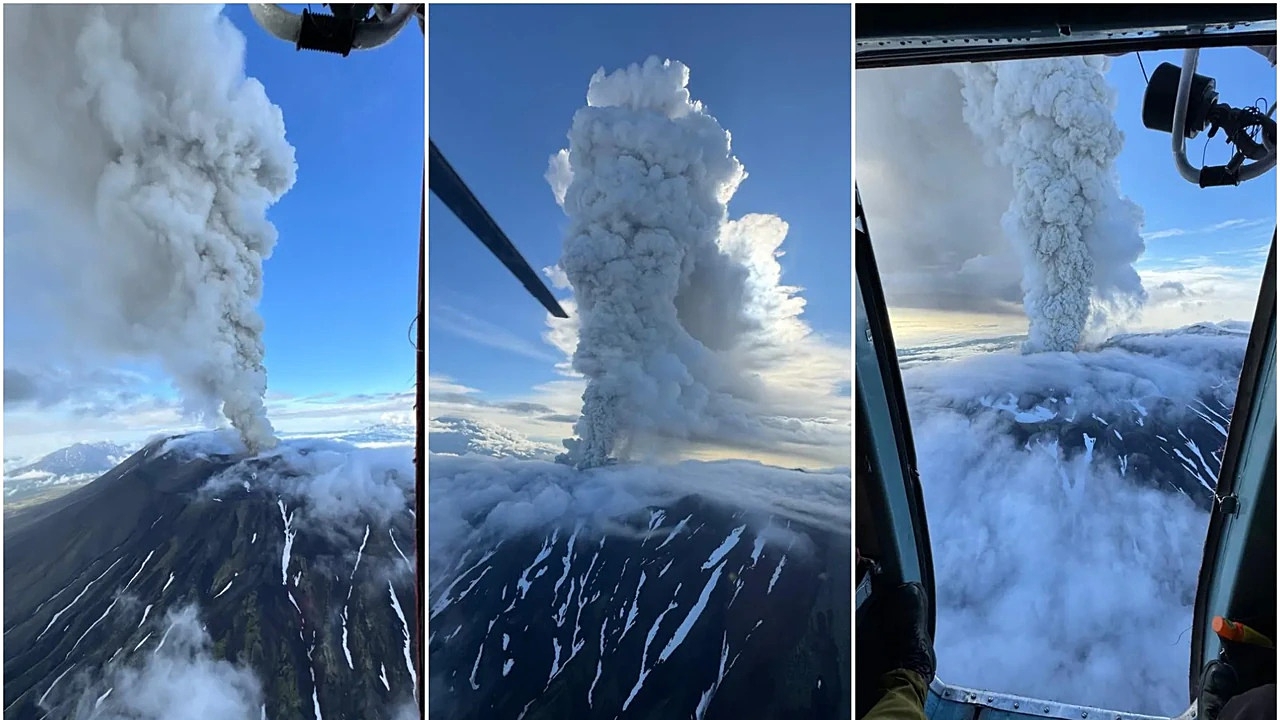
Nature put on quite a show recently on Russia’s Kamchatka Peninsula. A volcano named Krasheninnikov, which had been quiet for over four and a half centuries, suddenly erupted. This rare event happened just days after a powerful 8.8 magnitude earthquake shook the region. It’s a vivid reminder of how alive and restless our planet truly is.
Russia’s National Emergency Agency confirmed the eruption on August 3. Smoke and ash soared from Krasheninnikov. The Smithsonian Institution’s Global Volcanism Program notes this volcano last blew its top back in the year 1550. Imagine, that’s almost five hundred years of peace.
The Kamchatka Ministry of Emergency Situations shared photos and updates on their Telegram channel. They reported the ash plume reached an impressive height of 6,000 meters. This cloud spread eastward, drifting over the Pacific Ocean. Luckily, no towns or villages lay in its path. Residents also didn’t report any ash falling where they live. Still, the event earned an “orange” aviation warning. This means flights in the area might face delays or cancellations.
Krasheninnikov wasn’t the only one stirring. Just a few days before, on July 30, another giant, Klyuchevskoy, also erupted. Klyuchevskoy is known for being very active. It’s actually Europe and Asia’s most frequently erupting volcano. The Global Volcanism Program has recorded at least 18 eruptions from Klyuchevskoy since the year 2000 alone. So, while Klyuchevskoy’s rumble is common, Krasheninnikov’s awakening was truly special.
Both volcanic eruptions followed one of the strongest earthquakes ever recorded. This massive 8.8 magnitude quake struck off the coast of Petropavlovsk on the Kamchatka Peninsula on July 30. Its sheer power triggered tsunami warnings across the entire Pacific. Millions of people along coastal areas, from Japan to Hawaii and even as far as Ecuador, had to evacuate their homes. The worst damage, however, hit Russia directly. A tsunami wave crashed into the port of Severo-Kurilsk. It submerged a local fishing factory, causing significant harm.
This 8.8 quake stands as the strongest in the region since the devastating 9.1 earthquake off Japan in 2011. That earlier quake caused a massive tsunami that claimed more than 15,000 lives. The recent events in Kamchatka certainly underscore the powerful forces always at work beneath the Earth’s surface.