
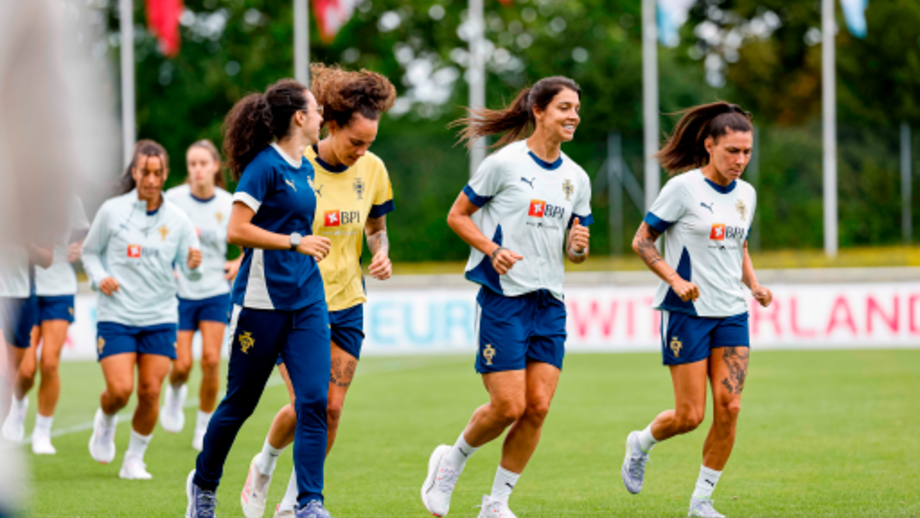
The final whistle brought a familiar sting. Portugal’s women’s national team lost 2-1 to Belgium, ending their run at the European Championship. This outcome meant missing out on the knockout stages for the third time in a row. It was a tough pill to swallow, especially since Italy’s loss to Spain had opened a small door. But Portugal couldn’t grab their part of the chance. This performance, marked by struggles in results and playing style, stood in stark contrast to their strong showing at the 2023 World Cup in New Zealand and Australia.
Yet, this setback also marks a new beginning. Coach Francisco Neto had spoken of a “new cycle” for the team. Pedro Proença, the president of the Portuguese Football Federation (FPF), quickly confirmed Neto would stay. Proença believes in the team’s “professional attitude” and said they would be “here to blow it all up” in four years. Neto himself agreed, noting that football operates in two-year blocks. “One cycle ended, another will begin,” he said, adding he always wants to be “part of the solution, never the problem.” This signals stability even as changes arrive.
For some players, this Euro might have been their last dance on this big stage. Ana Borges, with a record 187 appearances for her country, spoke from the heart. At 35, she shared her feelings: “This was my last European Championship. I carry so many memories, so many fights, and so much passion with me. It’s a chapter closing, but my heart is full.” She expressed great hope for what’s ahead. “The future of this National Team is brilliant,” Borges declared. “There’s talent, desire, and pride in wearing this jersey. We will keep giving our all.”
Borges recently moved from Sporting to Benfica, signing until 2027. That year, the World Cup takes place in Brazil, and she could still feature if Portugal makes it. She will play alongside Carole Costa at Benfica, who is also 35 and likely won’t play in the 2029 Euro. Other seasoned players might also be considering their national team future. Jéssica Silva, 30, hinted that the next Euro might be without her. Carole Costa (35, 183 caps), Dolores Silva (33, 175 caps), Patrícia Morais (33, 100 caps), Tatiana Pinto (31, 129 caps), and Diana Silva (30, 120 caps) are all veterans who could follow.
A Bright Tomorrow on the Horizon
The move towards this new generation is already well underway. Players like Kika Nazareth, Andreia Jacinto, and Telma Encarnação are already key figures, showing great promise for what’s to come. But the talent pool runs even deeper. Marisa Gomes is coaching a rising group of champions from the Under-19 team. They recently shone at the U19 European Championship and earned a spot in the Under-20 World Cup.
The future looks strong with names like Carolina Correia, 23, who just got her first senior call-up. She joins a long list of impressive young players. Andreia Bravo, Érica Cancelinha, Rita Almeida, Maísa Correia, Matilde Nave, Carolina Santiago, Thaís Lima, Iara Lobo, Inês Menina, Marta Gago, Lara Martins, Diana Costa, Neide Guedes, and Carolina Tristão are all showing incredible potential. They are the clear signs of the “brilliant future” Ana Borges spoke about, ready to step up and make their mark on the international stage.