
On a recent November 4th, a subtle digital tribute from Google served as a reminder of one of nature’s most astounding spectacles: the annual migration of the monarch butterfly. This seemingly simple acknowledgment belies a story of profound biological marvel, one that spans continents and generations, yet now hangs precariously close to an irreversible end. The migration of the monarch is not merely a journey; it is an epic, an ancient dance of survival that is slowly being brought to its knees by the march of human activity.
Each year, millions of monarch butterflies, known scientifically as Danaus plexippus, embark on a staggering journey of up to 4,800 miles, some sources claiming closer to 7,700 miles. Their flight path stretches from the northern reaches of the United States and southern Canada, tracing an invisible map laid down by countless generations, all leading to the warmer winter sanctuaries of central Mexico and coastal California. This round-trip odyssey is a biological enigma, a precise navigation that allows these delicate creatures to escape the brutal cold, hibernate, and reproduce, only to return north with the coming spring.
Most monarchs live for a mere 24 days, a lifespan barely sufficient for a fraction of the migration. However, a special cohort, dubbed the "Methuselah generation," defies this brief existence. Emerging from their chrysalises at the close of summer, these remarkable individuals can live for up to nine months, possessing the stamina and genetic programming to complete the entire outbound and return journey. They are the living vessels of ancestral knowledge, guiding the future generations along routes they themselves were born to follow.
Beyond their mesmerizing flight, monarch butterflies play a critical, understated role in the vast North American ecosystem. They are tireless pollinators, flitting from flower to flower, inadvertently facilitating the reproduction of countless wild species along their extensive migratory corridors. The International Atomic Energy Agency has even employed isotopic techniques to non-invasively track their trajectories, confirming their fundamental contribution to the health of diverse plant life.
Despite their ecological significance and inherent wonder, the monarch’s future has dimmed considerably. On July 21, 2022, the International Union for Conservation of Nature (IUCN) officially classified the migratory monarch butterfly as an endangered species, placing it on its ominous Red List. This designation was not a surprise to conservationists who have watched their numbers plummet. In just the last decade, the monarch population has seen a precipitous decline, estimated between 22% and 72%.
The threats are multifaceted and largely anthropogenic. Climate change, with its erratic weather patterns and extreme temperatures, directly disrupts the delicate balance monarchs rely on for survival and hibernation. Equally devastating is the relentless destruction of their critical habitats. Illegal logging and rampant deforestation continue to erode the very forests in Mexico and California where these butterflies seek refuge from winter’s chill. Without these essential overwintering grounds, their ability to survive the colder months is severely compromised.
Adding to this complex web of peril is the widespread use of pesticides and herbicides. These chemical agents not only directly kill adult butterflies but also decimate milkweed, the sole plant on which monarch larvae feed. The eradication of milkweed effectively removes the nursery and primary food source for developing monarchs, directly impacting their reproductive success and the potential for population recovery.
The central Mexican highlands, particularly the Monarch Butterfly Biosphere Reserve, are pivotal to their survival. This sprawling 56,259-hectare sanctuary, located about 60 miles west of Mexico City, was recognized as a UNESCO World Heritage site in 2008. It serves as a vital hibernation ground for millions of eastern monarchs.
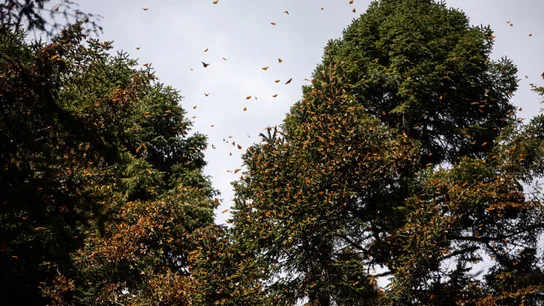
Similarly, specific groves along the Californian coast provide essential wintering sites for the western monarch population. The sheer density of butterflies that once covered these areas is difficult to comprehend today. In the late 1990s, the recorded monarch population in these sanctuaries covered nearly 47 acres of land. By 2014, this figure had plummeted to less than 2.5 acres, a stark and alarming indicator of their rapid decline.
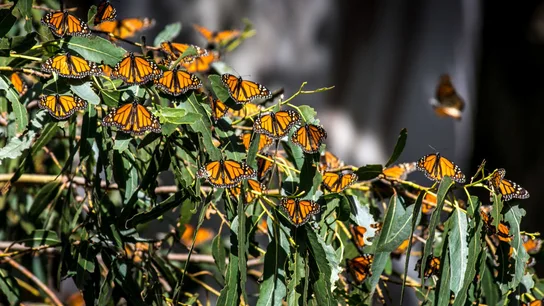
While the iconic North American migratory population faces such severe challenges, isolated instances of monarch butterflies have been observed elsewhere. Some lost individuals have found their way to the Iberian Peninsula, establishing a non-native, albeit unstable, presence in warmer southern and southwestern regions of Spain, including Andalusia, the Canary Islands, Valencia, and Murcia, where milkweed also thrives. These occasional sightings from April to October offer a curious footnote to their global presence but do little to alleviate the crisis faced by their primary migratory brethren.
The Google Doodle’s momentary spotlight on the monarch butterfly serves as a poignant reminder. This creature, a living embodiment of nature’s endurance and beauty, is now a symbol of our planet’s fragility. The silent vanishing of such an incredible phenomenon forces a sobering question: what will we lose before we truly understand its value?