
The debate around electric vehicles has gotten pretty loud. It seems everyone has an opinion, even those who’ve never actually driven an EV. This widespread chatter made us realize something: it’s time to test what people truly know. We decided to put together a quiz for our readers, pitting electric mobility against traditional combustion cars. Some questions are easier than others, but the real challenge is figuring out how much you genuinely understand about these vehicles.
Electric Vehicles: Who Knows and Who’s Just Guessing?
Here we are again, talking about electric cars. The argument about their efficiency compared to combustion vehicles never seems to end. Whether you like it or not, moving to electric transportation is totally changing how we think. It impacts how we travel, where our energy comes from, and our effect on the planet.
Electric cars are incredibly energy efficient. They also produce fewer local emissions. But on the other hand, gas cars still work better in some situations. They offer a longer range, refill quickly, and the technology is very mature. This quiz aims to dig into the technical, economic, and environmental details. These are the hidden facts when comparing electric and gas cars. It’s not enough to just say an electric car is “cleaner.” And it’s not enough to say a gas car “fills up faster.”
We will test your knowledge about how efficient cars are and their full lifespan. We’ll look at their tech limits and how people use them. So get ready! The questions ahead need careful thought and some smart thinking. You’re not just picking the right answer. You need to understand why it’s the right answer. Share your answers in the comments (like 1A, 2B, 3C…) so we can see how many you got right.
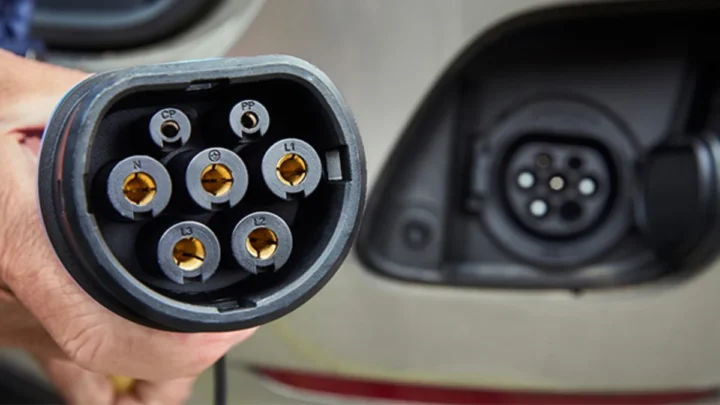
Ready? Here are the questions!
1. Which factor most affects the long-term degradation of an electric car battery?
- A) Number of kilometers driven
- B) Number of charging cycles and operating temperature
- C) Vehicle’s top speed
2. In what situation might an electric car use more energy than usual?
- A) When driving on a long downhill slope
- B) When driving with the air conditioning on and at high speed on the highway
- C) When driving slowly in traffic jams
3. Why should fast charging (DC) not be used constantly?
- A) Because it requires more driver attention
- B) Because it reduces the efficiency of the electric motor
- C) Because it speeds up battery degradation
4. What distinguishes a three-phase charging system from a single-phase system in an electric car?
- A) The way the motor is cooled
- B) The possibility of charging faster due to higher available power
- C) The type of vehicle traction
5. An electric car with a 75 kWh battery and an average consumption of 15 kWh/100 km will have a theoretical range of:
- A) 400 km
- B) 500 km
- C) 600 km
6. What is the main function of an inverter in an electric vehicle?
- A) To cool the battery during driving
- B) To convert direct current (DC) from the battery into alternating current (AC) for the motor
- C) To automatically regulate tire pressure
7. Which parameter best indicates the energy efficiency of an electric car?
- A) Its maximum power in horsepower
- B) Consumption in kWh/100 km
- C) Battery capacity in kWh
8. Why do electric cars often use regenerative braking instead of conventional braking?
- A) It reduces tire wear
- B) It allows part of the kinetic energy to be recovered to recharge the battery
- C) It is quieter
9. What happens when an electric car is connected to a charging station with lower power than it supports?
- A) The battery may overheat
- B) Charging will be slower, but completely safe
- C) Charging is automatically refused
10. What is a PHEV?
- A) A plug-in hybrid electric vehicle
- B) A 100% electric car
- C) A natural gas car
11. In an urban driving test, why might an electric car have proportionally lower consumption than on the highway, unlike a combustion car?
- A) Because the electric motor is more efficient at low speeds and recovers energy during braking
- B) Because the battery cools better in the city
- C) Because vehicle weight influences less at low speeds
12. Which of these scenarios most favors a combustion car over an electric car?
- A) Long continuous journeys in remote regions with little charging infrastructure
- B) Urban use with constant starts and stops
- C) Driving on long downhill slopes with frequent braking