
In at least six animal species, it is known that cancer can spread to different individuals. In other words, cancer can spread.
Wikimedia Commons | Alicia L. Bruzos, CC BY-SA
Alicia L. Bruzos, University of Santiago de Compostela and Jose Tubio, University of Santiago de Compostela
Siddhartha Mukherjee referred to cancer as the emperor of all evil more than ten years ago, and now more than ever, this title very well characterizes this disease because it was discovered that cancer can spread.
The books even define cancer as an uncontrolled division of abnormal cells in a part of the body that can eventually spread throughout an individual. However, in at least six animal species it is known that cancer can spread to different individuals. In other words, cancer can spread.
Contagious cancers are spread by the transfer of live cancer cells between individuals. No virus, bacteria or parasite infects the new patient’s cells, but it is a cancer cell from the affected individual that will divide uncontrollably in the new individual. In other words, these cancer cells acquire the ability to become infected.
This ability is equivalent to the creation of a new infectious “parasite”: the “parasitic” cancer cell will infect a different individual from the one that originated it, it will divide and its “daughter” cells will continue to infect other individuals.
The fact that healthy cells coexist in the new individual with cancer cells from another individual allows us to diagnose these contagious cancers, since the DNA of the cancer cells does not match that of healthy cells.
Until now, the contagious cancers that affect the dogs, Tasmanian demons, clams, mussels and cocklesBut thanks to advances in DNA sequencing, it is possible that many more cases will be identified in other species in the next decade.
So many stories as contagious cancers
Mukherjee returned in his book to the breast cancer suffered by the Persian queen Atossa in 500 BC, but today we know of an even older cancer that, surprisingly, is still alive: contagious dog cancer. Recent scientific studies date back to 8,000 years old and as it continues to spread from dog to dog, it is known how long it will live.
As if it were a virus – but having nothing to do with a virus – clonal transmissible cancers can behave like an epidemic. And that’s exactly what happened with the contagious cancer of the Tasmanian demons: in just about 20 years the population was reduced due to the high number of infections of this cancer that kills demons at an alarming rate.
In 2008 this species was declared in danger of extinction and many feared its disappearance, but the latest studies suggest that the Tasmanian devil are adapting to live with this cancer.
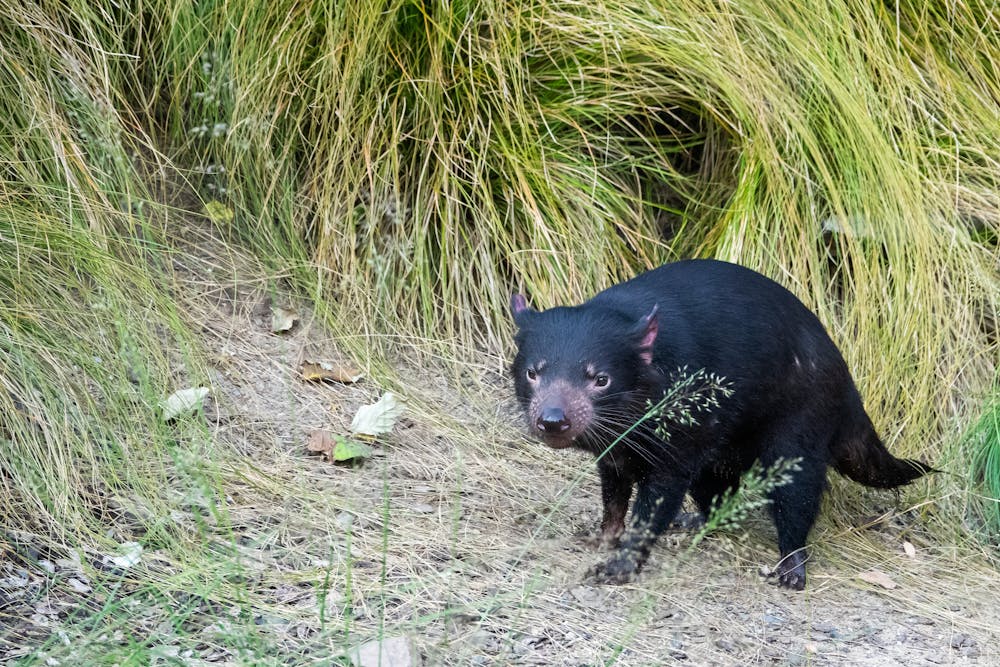
Shutterstock / Milan Rybar
Even more surprising are the contagious bivalve cancers that, in certain cases, can infect individuals of other species. The cancer cell originates in a shellfish with DNA from that species and then spreads into populations of a different shellfish. In these cases, when sequencing a mollusc with cancer, the DNA of two different species is found. The mechanisms that allow a cancer cell to evade the defenses of an individual of another species confuse scientists, and research around the world is trying to shed light on this field.
And are there contagious cancers in humans?
Numerous sequencing studies of cancer patients have been conducted over the past few decades and, so far, there have been only rare cases of contagious cancer in humans. The most alarming cases are perhaps the mother-to-child cancer transmission through cancer cell transfer during pregnancy. Genetic analysis suggests that cancer cells acquire mutations that allow them to escape the child’s defenses.
In adults, cancer only seems to spread when a person’s defenses aren’t functioning properly. For example, patients who receive organ transplants may be vulnerable to getting cancer from their donors. In 2018, four patients developed breast cancer after receiving kidneys, lungs, heart and liver from a 53-year-old donor who died in an accident. The cancer cells did not match those of the patients, but those of the donor who did not have the disease at the time of the transplant.
At the moment, there is no evidence that a contagious cancer similar to that of dogs, Tasmanian demons or bivalves is spreading in humans. Although that doesn’t mean it can’t happen in the future.
Ultimately, it is important to investigate contagious cancers, as they can help us better understand the mechanisms used by this “Emperor of All Evils”. Maybe then, one day, we can remove it.
Alicia L. Bruzos, Cancer Genomics Researcher and Professor of Genetics, University of Santiago de Compostela and Jose Tubio,, University of Santiago de Compostela
This article was originally published in The conversation. read the original.