
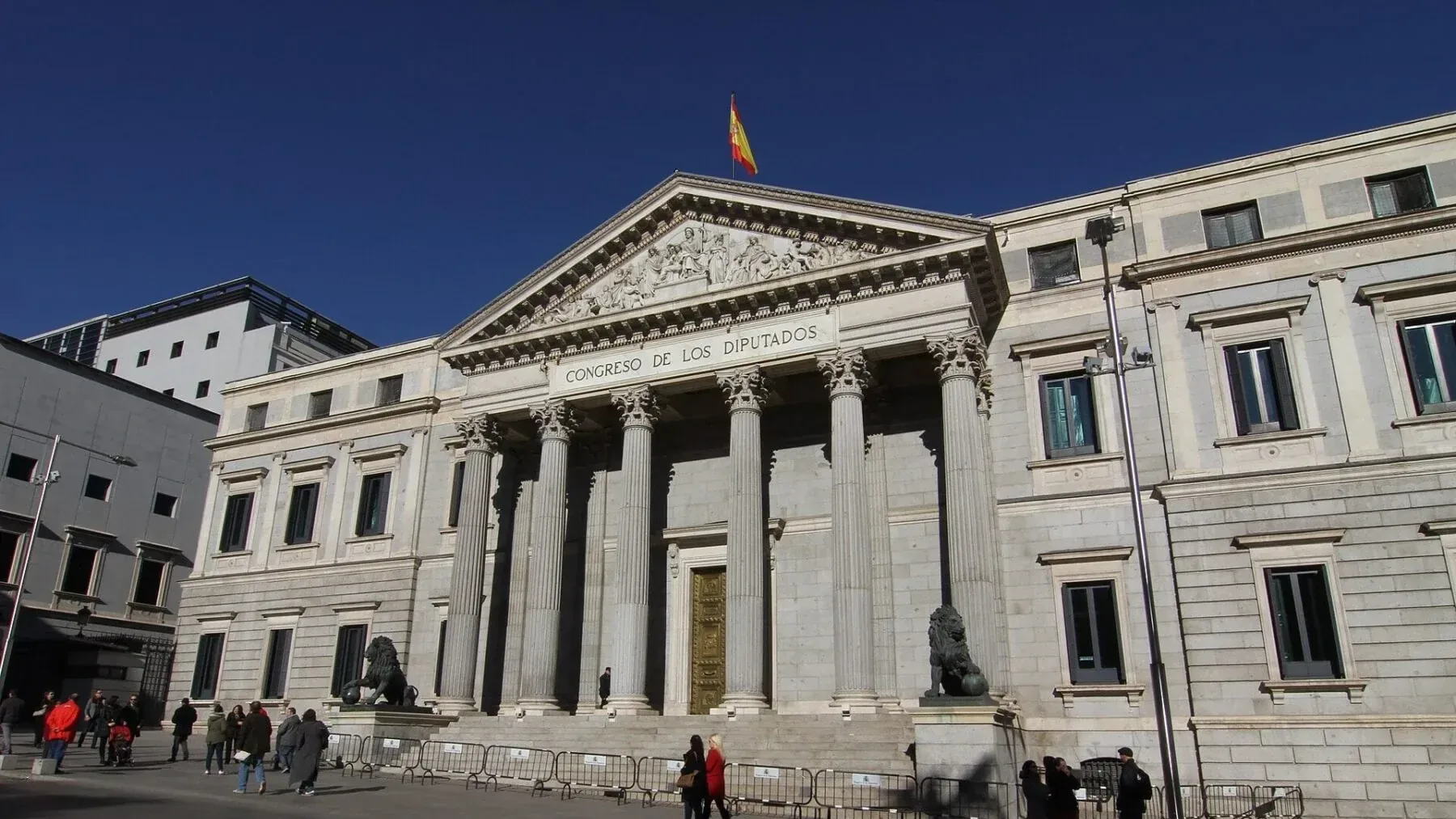
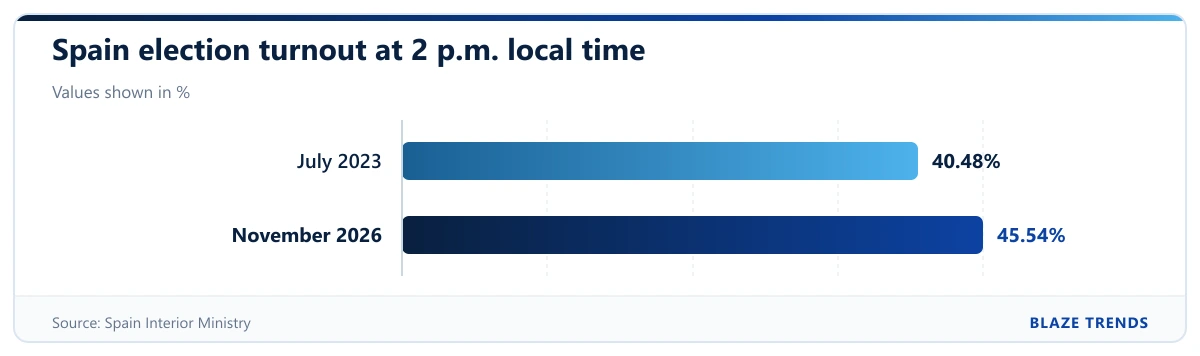
Voters across Spain cast ballots on Sunday, Nov. 29, 2026, in a snap general election with early turnout running sharply ahead of the last national vote. Provisional Interior Ministry turnout figures reached 45.54% by 2:00 p.m. local time, up 5.06 percentage points from 40.48% at the same hour during the July 23, 2023 election.
Roughly 38.7 million citizens aged 18 and older are eligible to vote for all 350 seats in the Congress of Deputies, Spain’s lower house of parliament, and 209 directly elected seats in the 267-seat Senate, according to Spain’s National Statistics Institute (INE). A party or coalition needs 176 seats in the Congress of Deputies for an absolute majority.
The result will determine whether Prime Minister Pedro Sánchez extends eight years of Socialist-led government or gives way to a conservative-led administration that could include the far-right Vox party. Entering the national government would be the first time a far-right party has held power in Spain since the country returned to democracy after Gen. Francisco Franco died in 1975.
What pre-election polls and party leaders say
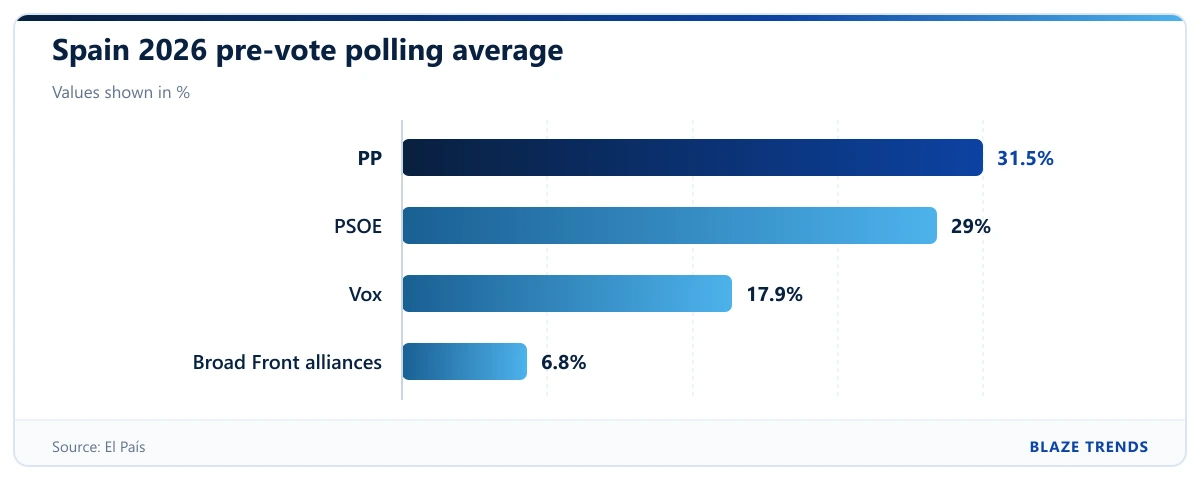
Pre-vote surveys published before Spain’s statutory pre-election polling blackout placed the conservative People’s Party (PP) in first place, but short of an outright 176-seat majority. A Nov. 24 El País polling average put the PP at 31.5%, Sánchez’s Spanish Socialist Workers’ Party (PSOE) at 29%, Vox at 17.9%, and the left-wing Broad Front (Frente Amplio) and allied coalitions at 6.8%.
Together, those averages gave right-wing parties 51.2% support against 38.7% for left-wing parties, a 12.5-point gap that narrowed by about three percentage points during the campaign. Forecasts project the PP and Vox clearing 176 seats together, leaving the PSOE with narrow parliamentary math even if it overtakes the PP in the popular vote.
Major party leaders appealed for heavy turnout after voting Sunday morning. PP leader Alberto Núñez Feijóo said the election would “shape the destiny and direction of Spain not just for the next four years but for the next decade,” while Vox leader Santiago Abascal urged citizens to vote “without fear and with all the bravery and hope that Spain deserves.”
Broad Front leader Ada Colau called on voters to turn out to “defend democracy, to defend public services [and] to defend the right to housing, pensions and decent salaries.” Sánchez expressed confidence as he cast his ballot, echoing remarks he made on Cadena Ser radio on Friday when he said, “I can’t conceive of us losing,” and added, “When progressive Spain gets going, it’s unstoppable.”
“Spain deserves a decent prime minister and [Sánchez] isn’t one,” Feijóo said during a televised head-to-head debate the week before the vote. “My government hasn’t been perfect; I’ve made mistakes,” Sánchez replied, adding, “But I’m also fully aware that we have always governed in the right direction.”
Housing protests, rail crashes and why the vote came early
Spain’s next general election was not scheduled until summer 2027, but Sánchez dissolved parliament early after the PP, Vox, and the Catalan pro-independence party Junts voted down his government’s emergency housing package. Under Royal Decree 806/2026, signed by King Felipe VI and Sánchez on Oct. 5 and published in Spain’s Official State Gazette (BOE) on Oct. 6, the legislature elected in July 2023 was dissolved and voting was set for Nov. 29.
In the July 2023 vote, the PP finished first in votes and seats, but Sánchez remained prime minister by assembling a minority coalition backed by the left-wing Sumar alliance and regional nationalist parties, including Junts. “You must decide whether you want our country to move backwards or continue moving forwards, and whether you prefer a government that works for the interests of the majority of society,” Sánchez told voters when announcing the snap poll.
Public anger over rents intensified in September 2026 after 87-year-old María del Carmen Abascal was evicted from her Madrid apartment following a 230% rent increase demanded by an investment fund that bought the building. Nationwide protests followed, including a general strike over housing prices joined by more than 3 million people.
The PSOE’s rejected housing measures included a ban on evictions until 2030 and new rules for temporary and room-by-room rentals, and in the final days of the campaign Sánchez’s government proposed a new tax on fortunes above €100 million (£84 million) to fund childcare, housing, and public services. The PP is campaigning on tax cuts and a pledge to build 1 million homes.
Sánchez’s campaign also contended with corruption allegations involving his inner circle and criticism over his government’s response to a border crisis in Ceuta, Spain’s North African territory, where about 80,000 people crossed from Morocco in 48 hours. At the end of October, 69 people were killed in Spain’s second fatal rail crash in nine months, prompting Transport Minister Óscar Puente to resign and drawing criticism from the PP and Vox over public safety.
Polling schedule and what happens next
Polling stations opened at 9:00 a.m. local time (08:00 GMT) for 11 hours of voting in Spain’s 16th general election of the post-Franco democratic era and its sixth in 11 years. On election day, PP representative Francisco Galeote filed a complaint with Spain’s Central Electoral Board alleging incidents reported by party observers at two polling stations in Toledo, according to 20minutos.
Spain’s Interior Ministry is scheduled to release its second turnout update covering ballots cast up to 6:00 p.m. local time around 6:30 p.m., before polls close at 8:00 p.m. local time (19:00 GMT). Exit polls will be published as voting ends, followed by provisional vote counting throughout the evening, and under Royal Decree 806/2026 both newly elected chambers of parliament are scheduled to convene on Dec. 23, 2026, at 10:00 a.m.