
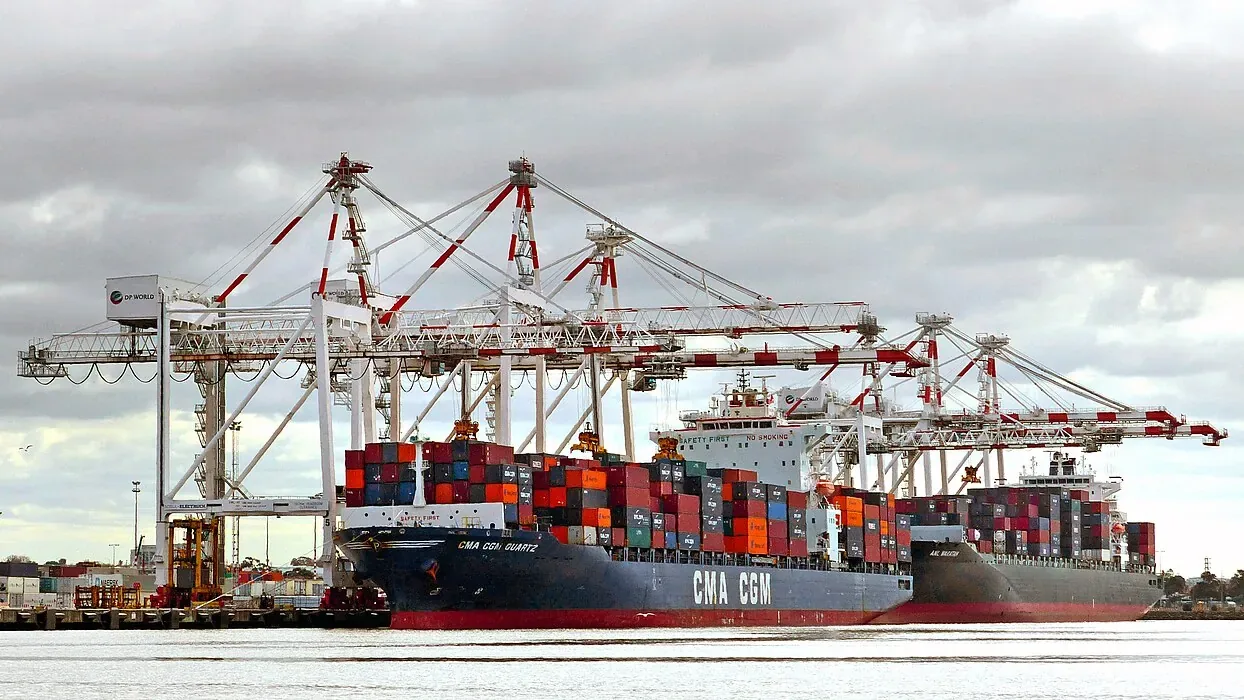
When a commercial ship pulls into port and fails to pay for fuel, repairs, or crew wages, creditors do not have to track down an offshore holding company to collect their money. Under admiralty law, unpaid maritime claims automatically create maritime liens against the vessel itself, allowing creditors to use ship arrests to detain the vessel in port until the debt is secured or the court sells the ship at auction. Because the law treats the vessel as its own legal person, the ship stands trial for its unpaid obligations.
Why do maritime liens attach to the ship itself?
In ordinary commercial law on land, if a trucking company skips a repair bill, you usually have to sue the company, win a judgment, and record a lien against its property. According to the Cornell Law School Legal Information Institute (2023), a maritime lien arises automatically by operation of law the exact moment a service is rendered to a vessel or damage is caused by it.
You do not need the shipowner’s written consent, a court order, or a public title filing for the claim to take effect. Admiralty law personifies the vessel as a distinct legal entity capable of entering obligations and answering for them in an in rem lawsuit, which translates to an action “against the thing.”
Because these claims do not appear in a central public registry, commercial lenders and buyers call them secret liens. If an owner privately sells a cargo vessel with unpaid fuel or repair bills, those hidden obligations travel with the hull to the new buyer. Only payment, the expiration of legal time limits, or a court-ordered foreclosure auction wipes the slate clean.
What kinds of debts trigger a maritime lien?
Not every business dispute involving a boat qualifies for admiralty enforcement. The vessel must be in navigation, meaning ships still under initial construction or permanently retired from the water do not qualify. In the United States, the Commercial Instruments and Maritime Liens Act (46 U.S.C. § 31301, 2010) divides valid claims into two main tiers: preferred maritime liens and liens for necessaries.
Preferred maritime liens sit at the top of the creditor hierarchy and cover six specific obligations:
- Wages owed to the vessel’s master or crew members.
- Wages owed to stevedores when employed directly by the ship’s owner, operator, master, or charterer.
- Salvage operations, including contract salvage, that rescue a vessel from marine peril.
- General average claims, where maritime parties share losses from voluntary sacrifices made to save a voyage.
- Damages arising out of maritime torts, such as ship collisions, oil spills, or personal injuries aboard the vessel.
- Any valid maritime lien that attached before a preferred ship mortgage was officially filed.
Below that top tier sit claims for “necessaries.” Under 46 U.S.C. § 31342 (1989) and § 31301(4) (2010), anyone who provides repairs, supplies, towage, or the use of a dry dock or marine railway on the order of the owner or an authorized agent, such as a charterer or captain, automatically receives a maritime lien on the vessel and may bring a civil action in rem to enforce it.
How do ship arrests work when a creditor enforces a claim?
When a shipowner defaults, the creditor enforces the lien by arresting the vessel while it is docked within a court’s territorial jurisdiction. Under the 1999 Arrest of Ships Convention, an arrest is a court-ordered detention or restriction on the removal of a ship to secure a maritime claim before a final judgment on the merits.
In the United States, the procedure follows Supplemental Rule C for Admiralty Claims (2024) in federal court:
- The creditor files a verified complaint in rem in the U.S. District Court for the district where the ship is docked or will soon arrive, describing the vessel with reasonable particularity.
- A federal judge reviews the complaint and supporting filings, and if the requirements for an in rem action are met, the Clerk of the U.S. District Court issues a Warrant of Arrest In Rem.
- A deputy from the U.S. Marshals Service (2023) boards the vessel within the district’s territorial waters, physically posts the warrant and complaint on the ship, places it under official custody, and records the return of service on Form USM-285.
- If the vessel is not released within 10 days after the warrant is executed, the plaintiff must publish public notice of the arrest in a court-designated newspaper so other creditors know to file their claims.
- Anyone asserting an ownership or possessory right in the vessel must file a verified Statement of Right or Interest within 14 days after the arrest warrant is executed, and must serve a formal Answer within 20 days.
Because an idle commercial ship loses charter revenue and racks up port storage fees every day, most arrests do not end on the auction block. Under both U.S. Rule C and Article 4 of the 1999 Arrest Convention, the court will release the ship so it can keep trading as soon as the owner or their protection and indemnity insurer posts sufficient financial security, such as a bail bond or letter of undertaking, capped at the value of the arrested vessel.
Who gets paid first if the court sells the ship at auction?
If an insolvent shipowner walks away and fails to post security, the court orders an in rem foreclosure sale. Under 46 U.S.C. § 31326 (2006), a judicial sale by a U.S. District Court extinguishes every existing claim and lien on the hull, giving the winning bidder a clean title while all creditor claims transfer to the cash pot raised at the auction.
Because an auction rarely brings in enough money to pay everyone 100 cents on the dollar, 46 U.S.C. § 31326(b) sets a strict statutory payout waterfall. Consider a worked example where a U.S.-flagged cargo ship is sold at a marshal’s auction for $10,000,000 against $13,000,000 in total claims:
| Priority Rank | Claim Category (U.S.-Flagged Vessel) | Amount Claimed | Payout from $10M Sale | Remaining Pool |
|---|---|---|---|---|
| 1 | Court-allowed expenses and marshal custody fees | $400,000 | $400,000 (100%) | $9,600,000 |
| 2 | Preferred maritime liens (crew wages, salvage, collision torts, pre-mortgage liens) | $1,600,000 | $1,600,000 (100%) | $8,000,000 |
| 3 | Recorded U.S. preferred ship mortgage | $9,000,000 | $8,000,000 (88.9%) | $0 |
| 4 | Post-mortgage liens for necessaries (fuel, post-mortgage repairs, towage) | $2,000,000 | $0 (0%) | $0 |
In that $10,000,000 auction of a U.S. vessel, the court expenses ($400,000) and preferred maritime liens ($1,600,000) are paid in full first, leaving $8,000,000 for the bank’s $9,000,000 mortgage and nothing for the suppliers who delivered fuel after the mortgage was recorded.
However, the math flips if the arrested ship is a foreign-flagged vessel whose mortgage is not guaranteed by the U.S. government under Title 46, Chapter 537. Under 46 U.S.C. § 31326(b)(2), a preferred mortgage lien on an unguaranteed foreign vessel is subordinate to a maritime lien for necessaries provided in the United States. In the same $10,000,000 auction of a foreign ship, the U.S. fuel and repair suppliers claiming $2,000,000 would step ahead of the foreign bank, collecting their full $2,000,000 and reducing the foreign lender’s payout to $6,000,000.
How do rules vary between the United States and other countries?
Maritime law is not identical across every port, and suppliers or lenders often wait until a vessel enters a favorable country’s 12-nautical-mile territorial sea before filing an arrest warrant. Two major rules divide U.S. admiralty courts from jurisdictions that follow the 1952 or 1999 International Conventions on Arrest of Ships:
- Sister ship arrests: Under U.S. Supplemental Rule C (2024), an in rem maritime lien attaches only to the specific vessel that received the service or caused the injury. By contrast, Article 3(2) of the 1999 Arrest Convention (and the earlier 1952 Convention) allows a creditor to arrest any other ship owned by the same liable party when the arrest takes place, known as a sister ship arrest.
- Status of routine supplies and repairs: Under 46 U.S.C. § 31342 (1989), providing fuel, repairs, or towage in the United States automatically creates a full maritime lien. In many countries operating under the 1952 and 1999 Arrest Conventions, claims for supplies and repairs give the creditor a statutory right to arrest the vessel while it belongs to the debtor, but do not grant a top-priority secret lien that survives a private sale to a new owner.
- District territorial limits in the U.S.: According to the U.S. Marshals Service (2023), a federal Warrant of Arrest In Rem can only be served within the specific judicial district that issued it, with the sole statutory exception of the shared waters between the Southern and Eastern Districts of New York under 28 U.S.C. § 112(b) and (c).
Because strict filing deadlines, local bond requirements, and international priority conflicts can wipe out an unsecured claim in days, vessel buyers, marine suppliers, and shipowners facing detention should consult a licensed maritime attorney in the port’s jurisdiction.
Frequently asked questions
Can a creditor arrest a government or military vessel for unpaid bills?
No. Under 46 U.S.C. § 31342(b) (1989), the U.S. statute establishing maritime liens for necessaries explicitly excludes public vessels owned or operated by the government. Sovereign immunity laws prevent creditors from using in rem warrants to seize military or state-owned ships.
Does buying a boat or ship in a private sale clear old maritime liens?
No. Because maritime liens attach to the vessel itself without public recording, they survive private sales even if the buyer had no way of knowing the debt existed. Only full payment, the expiration of legal time limits, or a court-ordered in rem foreclosure sale under 46 U.S.C. § 31326 (2006) extinguishes prior maritime liens.
How much security does an owner have to post to release an arrested ship?
Under Article 4(2) of the 1999 International Convention on Arrest of Ships, if the parties cannot agree on the amount of the bond or guarantee, the court sets the security amount, which cannot exceed the total value of the arrested ship.