
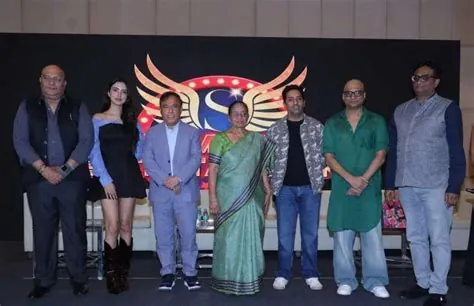
Theatrical release schedules for the fall are starting to fill up. Producer Sammy Nanwani and Sammy’s Entertainment have officially locked in an October 2026 global theatrical release for the upcoming historical romance Jai Hind, Jai Sindh: A Love Story.
The announcement dropped alongside a pair of first-look posters, finally giving audiences a glimpse into director Indrajit Lankesh’s vision. Set against the violent backdrop of the 1947 Partition of India, the film zeroes in on the often-overlooked cultural displacement and resilience of the Sindhi community.
To anchor a story of this scale, the studio assembled a massive veteran cast. The roster includes heavy hitters like Mahesh Manjrekar and Jaya Prada. They are backed up by Zarina Wahab, Vikram Kochhar, Upasana Singh, Indira Tiwari, Chhaya Kadam, Rahul Dev, and Amit Behl. That kind of acting firepower is exactly what you want when tackling heavy historical trauma, according to the Times of India. But the real curiosity here is the central pairing. The film introduces newcomers Gaurav Dhingra and Akaisha Vats to carry the main romantic plot.
Does a fresh face work better for a historical epic? Sometimes, the lack of audience baggage actually helps sell the period setting. And Vats isn’t waiting around to find out if it pays off. She recently booked a role in an upcoming project under Karan Johar’s Dharma Productions banner, securing her rising star status before this premiere even happens.
Behind the camera, the production leans heavily on experienced leadership. Lankesh steps into the director’s chair with a clear mandate to frame this narrative as a “love letter” to India’s diversity. The intention is to project a message of peace and endurance to a world currently tangled in modern conflicts. This creative direction was driven directly by producer Sammy Nanwani.
Focusing on the Sindhi Experience Fills a Decades-Long Bollywood Blind Spot
Bollywood has produced countless films about the 1947 Partition, but the narrative almost entirely revolves around the Punjab and Bengal borders. By isolating the Sindhi experience—a community that faced total geographic displacement without a designated state in post-partition India—Nanwani’s project taps into a specific cultural nerve that mainstream cinema rarely touches.
This specific angle gives Jai Hind, Jai Sindh a distinct marketing hook heading into its October 2026 window. It isn’t just another broad historical drama. It caters to a distinct demographic hungry for on-screen representation, while simultaneously operating as a high-profile launchpad for Vats across the wider industry.