
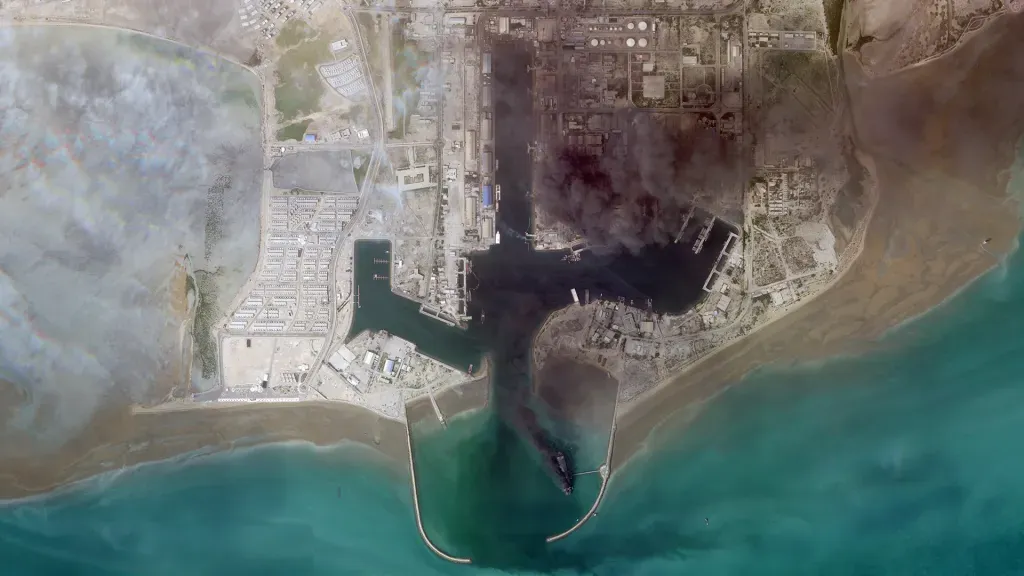
The United States military completed its 13th consecutive night of airstrikes against Iranian targets early Friday morning, heavily bombarding naval facilities as the 2026 Iran War severely restricts transit through the Strait of Hormuz. The latest barrage concluded shortly before 5 a.m. local time, hitting critical command centers aimed at degrading Tehran’s capacity to threaten commercial shipping.
Iranian state media confirmed multiple explosions across the southern city of Ahvaz, Qeshm Island, and Bandar Abbas, the operational headquarters of the Iranian Navy. The sustained offensive occurs as global benchmark Brent crude oil breached $100 a barrel for the first time since May.
According to US Central Command, the immediate strikes targeted drone facilities and regional communication hubs. The explosions triggered widespread power cuts in Bandar Abbas as the port city absorbed heavy damage. In a related escalation, Yemen’s Iran-backed Houthi rebels widened the maritime conflict by striking two Saudi oil tankers in the Red Sea.
The persistent attacks are forcing Saudi Arabia to divert millions of barrels of daily oil exports overland to the Yanbu port to bypass the Persian Gulf bottleneck. The conflict formally erupted in February following airstrikes that killed Supreme Leader Ali Khamenei, and international monitors warn the regional security situation continues to deteriorate.
UN Secretary-General Antonio Guterres addressed the Security Council regarding the conflict, cautioning that the Middle East is being pulled into an “ever-widening circle of confrontation.”
United States President Donald Trump issued a formal statement threatening “major military punishment” if the attacks on international shipping do not cease. To offset the economic toll on maritime operators, Trump decreed that any future shipping damages will be financially compensated using frozen Iranian funds currently under US control.