
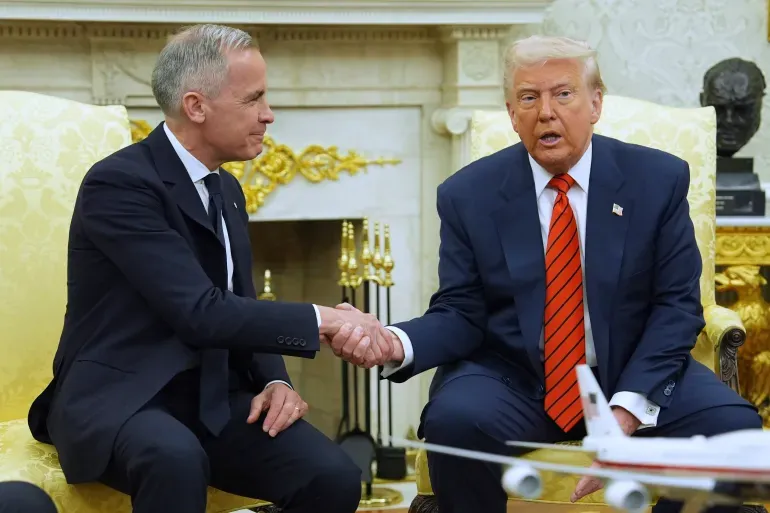
The North American trade war escalated sharply on Monday as U.S. President Donald Trump signed executive orders imposing a 50% tariff on a broad array of Canadian goods. The move bypasses a February 2026 Supreme Court ruling that restricted the administration’s emergency tariff powers, opening a new front in an economic conflict that reignited in 2025.
The duties target products ranging from commercial cement to wine and hockey sticks, taking effect in 30 days. The White House justified the import taxes as direct retaliation for what it called “unequal treatment” of American dairy, alcohol, and automotive exports. Several key Canadian exports, including energy, potash, critical minerals, and fish, are entirely exempt from the new levies.
Key Details
- The tariffs apply to all covered goods regardless of their standing under the existing USMCA free trade agreement.
- The 30-day implementation window sets a mid-August 2026 deadline for negotiators to reach an alternative trade agreement.
- The executive proclamations omit any mention of Canadian wildfires, despite the U.S. administration publicly citing drifting smoke as a grievance just days prior.
Canadian Prime Minister Mark Carney characterized the tariffs as a direct violation of the USMCA and a threat to national sovereignty. He stated his government is prepared to “intensify” trade negotiations in the coming weeks. Ontario Premier Doug Ford demanded a harsher immediate approach, stating Canada must retaliate “dollar for dollar.”
To execute the tariffs without violating recent Supreme Court constraints on emergency economic powers, the administration is invoking a rarely utilized legal framework. A senior administration official confirmed the White House is using Section 338 of the Tariff Act of 1930, a maneuver detailed in a report by CBS News that also highlighted deep concern from the Distilled Spirits Council of the United States.
The Distilled Spirits Council warned that the worsening trade dispute will cause severe collateral damage to American distillers and the domestic hospitality sector. Candace Laing, CEO of the Canadian Chamber of Commerce, called the escalation “regrettable” but pushed for meaningful formal talks before the duties lock into place.
How the 30-Day Window Impacts Cross-Border Supply Chains
The mid-August 2026 deadline creates immediate volatility for North American manufacturing and agriculture. By exempting energy and critical minerals, the U.S. administration shields its own heavy industry from sudden supply shocks, concentrating the financial pressure entirely on Canada’s consumer goods and specialized manufacturing sectors.
If Carney’s government adopts Ford’s “dollar for dollar” retaliation strategy, U.S. exporters of dairy and automotive parts will face identical margin compression at the border. The invocation of Section 338 also sets a new legal precedent for trade enforcement, signaling that the administration will utilize century-old statutes to execute economic policy when modern judicial pathways are restricted.