
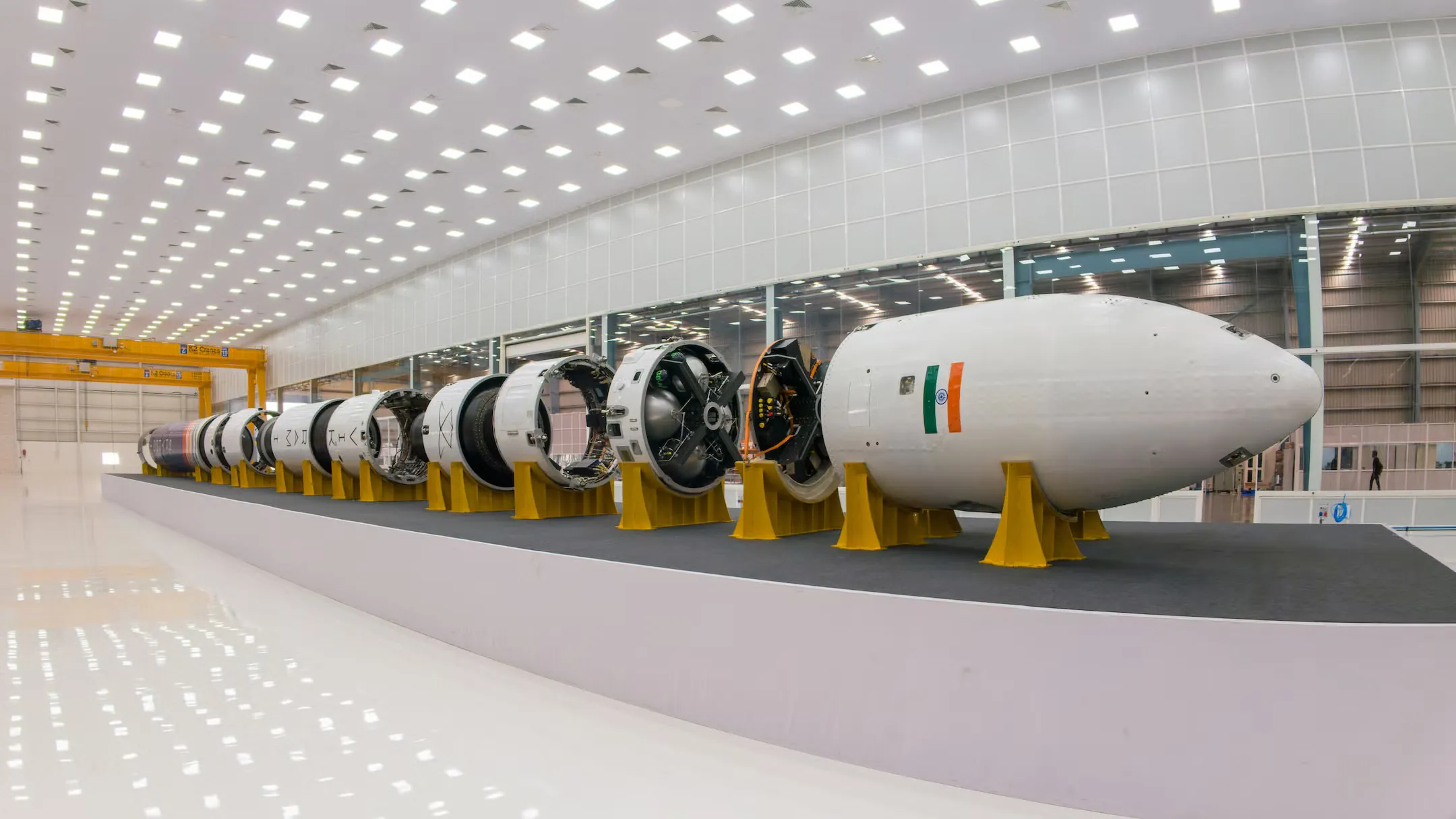
Skyroot Aerospace just rewrote the rules of Indian spaceflight. The Hyderabad-based private space company successfully launched its Vikram-1 rocket into orbit on Thursday. Liftoff occurred precisely at 12:05 p.m. IST from the Satish Dhawan Space Centre in Sriharikota. This flawless maiden flight officially shatters the historical monopoly held by the Indian Space Research Organisation (ISRO).
Getting to orbit on the first try is incredibly rare in aerospace. By pulling it off, Skyroot fundamentally alters the global commercial launch market. This milestone makes India only the third country worldwide, trailing just the United States and China, to possess a proven, privately funded orbital launch capability.
Anatomy of Mission Aagaman
The mission itself was designated “Mission Aagaman.” Vikram-1 is a multi-stage, carbon-composite launch vehicle designed for rapid assembly and high frequency. Mission control confirmed that all four stages performed nominally throughout the ascent. The architecture relies on three solid-fuel stages and a final liquid-fuel kick stage to place satellites precisely into their designated slots.
The vehicle has a payload capacity of 350 kilograms to Low Earth Orbit (LEO). Everything went exactly to plan, and the rocket successfully deployed its payloads exactly 17 minutes after leaving the pad. That kind of precision on a debut flight immediately elevates Skyroot into a highly exclusive tier of global launch providers.
Satellites and Symbolic Cargo
Vikram-1 did not fly empty. The rocket carried a suite of technology demonstration payloads. The primary hardware included Skyroot’s own SCOPE satellite, a robotic arm named “Embrace” built by Cosmoserve Space, and a specialized orbital demonstration unit from the German hardware firm DCUBED.
But the cargo manifest also contained a few distinct cultural artifacts. Alongside the commercial technology, the vehicle carried an 18-karat gold rocket figurine and a lab-grown “Cosmic Bloom” diamond. The most unique payload was a handwritten Vande Mataram postcard penned by Prime Minister Narendra Modi. The card was placed inside the fairing to commemorate the 150th anniversary of the historic national song.
Why the ISRO Monopoly Breakdown Matters
For decades, ISRO handled every orbital launch that left Indian soil. The success of Mission Aagaman acts as a direct, physical validation of the sweeping space sector reforms passed by the Indian government in recent years. Those policy changes explicitly aimed to foster commercial, privately funded companies and open up satellite deployment to independent engineering teams.
Skyroot now sits squarely alongside international competitors like Rocket Lab and Firefly Aerospace. Having a fully operational, private carbon-composite vehicle available in South Asia completely changes the logistics for small satellite operators looking to buy a ride to Low Earth Orbit. The barrier to entry just dropped.