
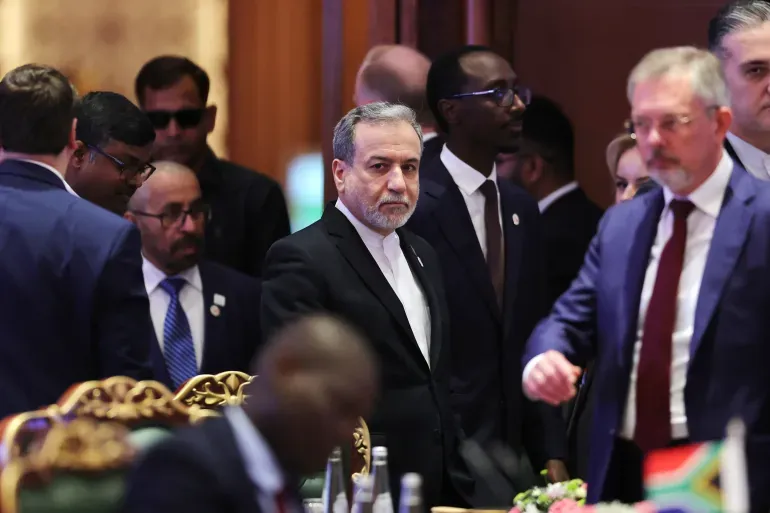
Iranian forces launched heavy military strikes against neighboring Gulf nations this week, marking a severe escalation in the ongoing 2026 US-Iran war that began in February. The attacks on infrastructure in Kuwait, Bahrain, and Jordan occurred simultaneously with a diplomatic visit by Iranian Foreign Minister Abbas Araghchi to Qatar.
Araghchi traveled to Doha to formally pay respects following the death of the Father Emir, Sheikh Hamad bin Khalifa al-Thani. While the foreign minister held diplomatic meetings, Iranian missiles and drones struck targets across the Gulf, injuring Kuwaiti military personnel.
The contradiction between the diplomatic condolence mission and the military offensive exposes a fracture within Iran’s leadership. Iranian President Masoud Pezeshkian apologized for earlier attacks on Gulf states, but the Islamic Revolutionary Guard Corps resumed the strikes just hours later.
Gulf Cooperation Council Secretary-General Jasem al-Budaiwi condemned the military actions. He described the attacks as a treacherous violation of sovereignty that risks expanding the regional crisis.
Following the new wave of Iranian aggression, US Central Command announced retaliatory airstrikes targeting Iranian military bases along the southern coast. The United States forces launched the counter-offensive to protect commercial shipping routes in the area.
Bottom Line: The contradictory actions of Iran’s civilian government and its military forces indicate a fractured command structure. Regional instability will likely increase as the Gulf Cooperation Council mobilizes defense operations and US Central Command expands its air campaign.