
The American electric vehicle infrastructure market is officially shifting from reckless expansion to calculated efficiency. According to a new Q2 2026 report by EV data platform Paren, the U.S. added 4,382 new public DC fast charging ports in the second quarter. That represents a 10% decline compared to the same period last year. For the first half of 2026, total new port installations hit 7,903, marking a 7.4% year-over-year drop.
But a slowdown in construction does not mean a slowdown in adoption. Total charging sessions jumped 29% year-over-year, proving drivers are heavily utilizing the existing network. The industry is dubbing this mature operational phase “Charging 2.0,” where the focus is finally pivoting away from simply putting plugs in the ground toward actually keeping them functional.
Key Details
- The national average fast-charging reliability score ticked up to 93.8 in Q2 from 93.6 in Q1.
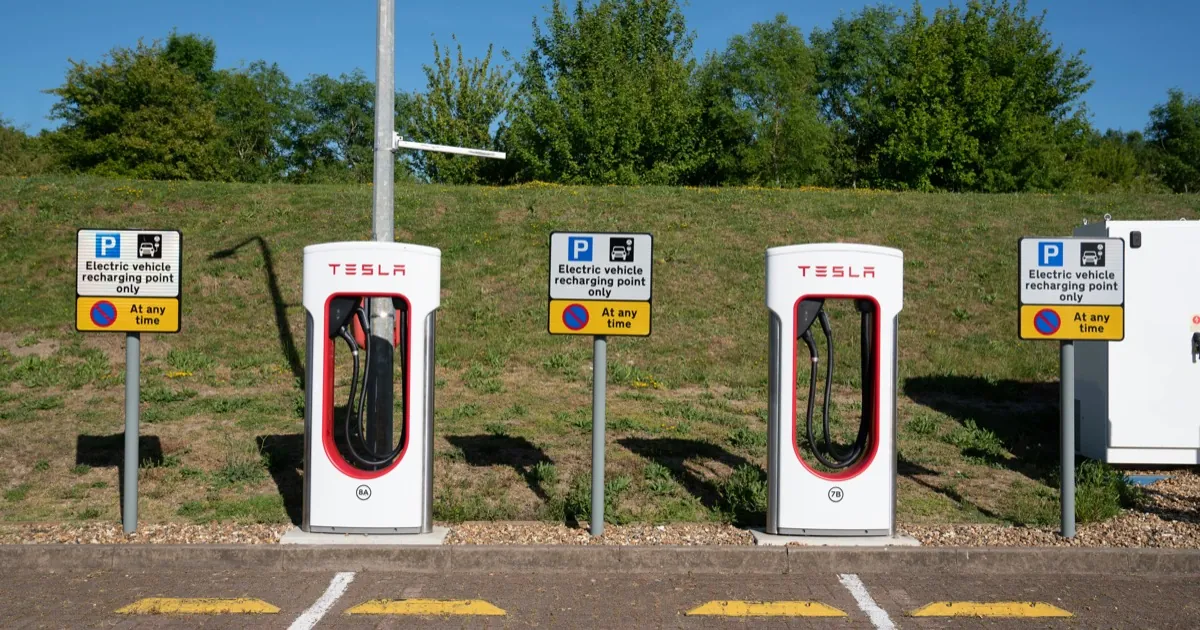
- Tesla remained the dominant market force, deploying 1,185 ports or 27% of all new U.S. fast-charging hardware.
- Retail giant Walmart secured second place with 368 new ports, followed by ChargePoint (333) and Red E (315).
Legacy operators like Tesla, EVgo, and Electrify America are no longer playing a numbers game. They are actively pivoting to concentrate new stations inside existing high-demand local markets. The raw data, parsed in a comprehensive industry breakdown, highlights a clear divide in corporate strategy. While the old guard consolidates territory, aggressive new entrants like Ionna, Walmart, Red E, and Mercedes-Benz High-Power Charging are racing to establish a nationwide footprint.
This mirrors broader network behavior, pointing to a distinct push for improved reliability at high-capacity sites. The national reliability score climbing to 93.8 proves the operational pivot is yielding tangible results for drivers tired of dead screens and broken cables.
How the NACS Connector Standard Forces a Legacy Retrofit
The transition to Charging 2.0 is not purely driven by real estate strategy. The rapid standardization around the North American Charging Standard (NACS) is forcing charge point operators to adapt their hardware pipelines. New providers are currently installing NACS and CCS connectors in roughly equal numbers to service a mixed fleet. However, the existing legacy infrastructure remains heavily skewed toward the older CCS standard.
Because nearly every new EV sold today features a native NACS port straight from the factory, older stations are rapidly losing compatibility without physical adapters. Operators that delay retrofitting their aging CCS terminals face a severe competitive disadvantage as the active fleet turns over.
The Bottom Line
The era of rapid, unchecked EV charger deployment is over. The 10% drop in Q2 installations signals a maturing market that is finally prioritizing uptime and strategic location over sheer volume. For EV owners, this means finding a charger might require less app-hopping as reliability scores inch upward. For investors, the dividing line is clear: companies that adapt to the NACS standard and optimize their high-traffic locations will survive this consolidation phase, while slow-moving legacy operators risk obsolescence.