
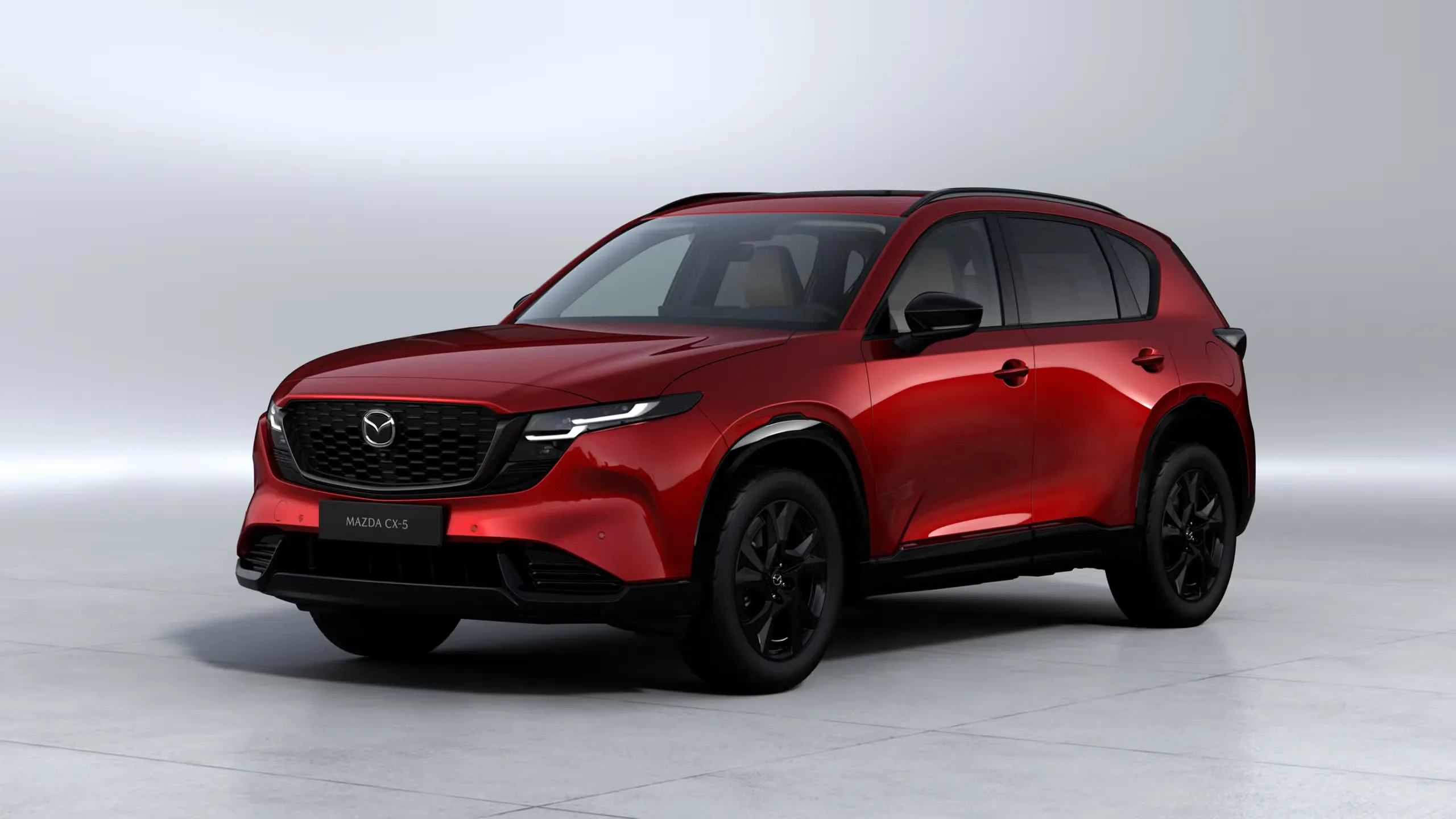
The compact SUV segment has a clear separation in occupant protection following the latest crash-testing cycle. In a head-to-head benchmark comparison conducted by Karl Furlong at Autoblog, the Mazda CX-5 emerged significantly ahead of the Honda CR-V, shifting the competitive dynamic for safety-conscious family buyers.
The performance gap highlights the diverging engineering paths taken by both automakers as baseline safety testing undergoes structural changes. While both vehicles have historically commanded top marks, updated evaluation frameworks have disrupted the status quo, leaving one former leader completely off the industry’s most prestigious safety lists.
Mazda Secures Top Safety Pick+ While Honda Falls Off the List
The 2026 Mazda CX-5 secured the highest possible distinction from the Insurance Institute for Highway Safety (IIHS), earning the Top Safety Pick+ award. To achieve this, the vehicle had to secure top marks across all evaluated metrics, including the newly toughened moderate overlap front and side-impact tests designed to simulate higher-velocity collisions.
By contrast, the Honda CR-V failed to make either the IIHS Top Safety Pick or the Top Safety Pick+ lists for 2026. While the CR-V remains fundamentally safe under older testing paradigms, it failed to clear the strict updated criteria across all of its retail trims, creating a distinct marketing disadvantage against its primary Japanese rival.
Advanced Crash Prevention Systems Give Mazda the Edge
A secondary finding in the evaluation revealed a stark contrast in active driver assistance technology. In vehicle-to-vehicle frontal crash prevention evaluations, the Mazda CX-5 outperformed the Honda CR-V by a wide margin, successfully mitigating or avoiding impacts during high-speed tracking scenarios.
The CX-5 relies on standard deployment of its Smart Brake Support system across all trim packages. This integration allowed the vehicle to maintain superior structural and electronic performance during the newly implemented testing phases, whereas the CR-V’s baseline configurations faced difficulties meeting the updated thresholds.
Stricter Testing Standards Alter the Competitive Landscape
The underlying catalyst for the Honda CR-V’s drop in rankings is the IIHS’s recent policy update, which implemented much stricter baseline criteria for its moderate overlap front and side crash tests. These changes were instituted to better account for rear-seat passenger protection and high-riding vehicles, exposing structural vulnerabilities in models that have not seen recent platform overhauls.
Mazda’s perfect safety score allowed the company to cross a significant historical milestone. With the 2026 results finalized, the brand joins Toyota and Hyundai as the only global automakers to earn 100 or more IIHS Top Safety Picks since the award’s initial inception back in 2008. Within the current compact SUV market, the Subaru Forester stands out as one of the only other direct segment competitors to match Mazda’s achievement by earning the Top Safety Pick+ outright.
How the 2026 IIHS Criteria Impacts Compact SUV Market Shares
The latest crash test updates represent a structural shift in how vehicle safety acts as a commercial driver. Historically, mainstream crossovers could rely on carrying identical five-star safety profiles, effectively neutralizing safety as a deciding point of friction for consumers. With the IIHS raising its compliance boundaries, safety has reverted to a highly visible point of product differentiation that will likely pressure mid-cycle vehicle refreshes.
For Honda, missing out on the Top Safety Pick classification altogether poses an immediate marketing challenge for the current model year. The CR-V has long leveraged its reputation for family utility, but keeping pace with a shifting regulatory and testing landscape will require structural or software modifications to its Honda Sensing suite. Meanwhile, Mazda’s ability to sustain its historical safety track record on an older platform underscores the longevity of its underlying architecture, cementing its position at the top of the safety-conscious demographic.