
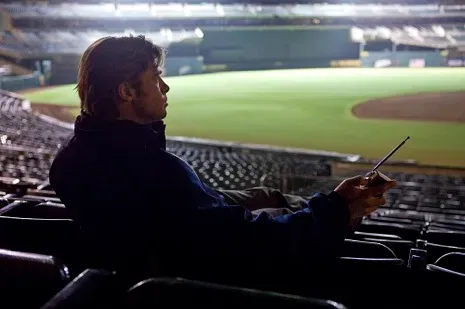
Getting a movie made about a historical sporting event requires an exercise in extreme financial engineering. It is rarely a simple matter of a major Hollywood studio writing a massive check and sending a film crew to a vintage baseball diamond. Instead, producers operate more like venture capitalists. They stitch together a production budget using a highly specific patchwork of private equity, foreign pre-sales, and aggressive state tax incentives.
If you want to understand how a $40 million period piece gets greenlit today, you have to look at the capital stack. The reality of independent and mid-tier filmmaking is that you rarely get one big cash deposit. Producers rely on a volatile mix of equity and debt to keep the cameras rolling.
The Anatomy of an Indie Deal
Private equity investors almost always take the first major leap of faith. These individuals or funds provide the initial cash to get a project off the ground, but they demand a massive premium for taking on that upfront risk. Movie production is slow. An investor’s capital sits tied up for two to three years before a single movie ticket is ever sold.
To compensate for that lost time and high risk, the industry relies on the “120 and 50” model. Investors expect to recoup 120% of their initial money—covering their principal investment plus a 20% interest premium—before the director or the producers see a single dime. After that initial debt clears completely, the investors take 50% of all future profits generated by the film. That is the standard profit-sharing structure across the independent space.
Bridging the Gap with High-Risk Debt
Private equity almost never covers the entire shooting budget. To get the rest of the money, producers take on debt. One common method is gap financing. This is a highly volatile bank loan taken out against the projected value of the film’s unsold distribution rights. The bank looks at the script, the genre, and the cast, and estimates what a distributor might eventually pay for it. The bank then loans the production a percentage of that estimated value. If the movie bombs at a festival and no one buys those rights, the production is in serious financial trouble.
To mitigate that exact risk, producers push hard for a negative pickup deal. In this setup, a major studio agrees to buy the film for a guaranteed price, but there is a major catch. The studio refuses to release any funds until the final, completed movie is delivered to their lot. A contract promising future payment does not pay for catering or camera rentals today. So, the producer takes that legally binding studio contract to a bank. The bank accepts the contract as collateral and issues a short-term loan so the producer can actually hire a crew and shoot the movie.
The Foreign Market Hurdle
Financing gets significantly harder when the script focuses on strictly American sports. Action thrillers and science fiction films sell universally. An explosion translates perfectly into any language. Baseball and American gridiron football do not.
Producers fund a massive chunk of their budgets by pre-selling distribution rights to specific international territories before cameras even roll. Foreign buyers purchase these regional rights based almost entirely on the script and the cast attached to the project. Because historical American sports routinely struggle to draw crowds in Europe or Asia, foreign buyers hesitate to put money into sports dramas.
To overcome this cultural hurdle and secure those vital pre-sales, producers absolutely need a globally recognized movie star. A bankable A-list actor is the only insurance policy foreign distributors trust. When you attach Brad Pitt or Will Smith to a script, foreign buyers stop caring that their local audiences do not understand the rules of the sport. The star power alone guarantees a specific box office return, allowing the producers to finally close their financing gap.
Why Tax Incentives Keep the Lights On
Historical dramas burn through cash quickly. You cannot simply film actors walking down a modern city street. You need period-accurate costumes, vintage sporting equipment, and physical locations that look exactly like they did forty or fifty years ago. Because these practical demands inflate the budget so quickly, producers aggressively chase state tax incentives.
Shooting a film in a state with a strong incentive program can return anywhere from 15% to 45% of the qualified local spending back to the production. These credits are the absolute lifeblood of mid-budget cinema.
According to data published by the National Conference of State Legislatures, these programs operate through highly specific mechanisms. Some states offer refundable credits. This acts essentially as direct cash. Once the state audits the production’s local receipts, they issue a check directly back to the filmmakers.
Other states offer transferable credits. Louisiana offers up to 40% in transferable credits, while Massachusetts offers a 25% production and payroll credit. A transferable credit means the state gives the production a tax voucher. Since the production company usually owes no local taxes in that specific state, the voucher is useless to them directly. The producers must broker and sell that credit to a wealthy local taxpayer or corporation who wants to lower their own tax bill. The production usually sells the credit at a strict discount, taking roughly 87 cents on the dollar. Until that broker sale closes, the production carries that expected money as debt on their ledger.
Surviving the Mid-Budget Death Zone
Historical sports dramas almost exclusively live in the “mid-budget” tier. They cost between $20 million and $60 million to produce. Over the last decade, major Hollywood studios retreated heavily from this specific financial space. Studio executives prefer to roll the dice on massive $200 million IP-driven blockbusters or highly profitable, micro-budget horror films.
Navigating the financing challenges of this middle tier forces filmmakers to be ruthlessly efficient. The saving grace for sports dramas is that they can largely avoid heavy computer-generated imagery. While a modern superhero movie spends tens of millions of dollars on post-production visual effects, a historical sports movie relies on practical stunt action and character performances. Keeping the action physical and practical is the only way producers keep these budgets from ballooning out of control.
How The Numbers Break Down: A Viewing Guide
Let’s look at the actual math behind three major sports biopics that made it through this financial gauntlet.
- Remember the Titans (2000): Set in 1971, this Virginia high school football drama kept its production budget to a strict $30 million. The producers leaned entirely on Denzel Washington’s marquee value to secure the initial financial backing and distribution. The conservative budget paid off. The film grossed $136.7 million worldwide. That ratio proves mid-budget sports films can yield massive returns when the upfront math stays disciplined.
- Moneyball (2011): This highly technical workplace drama about the 2002 Oakland Athletics cost $50 million to produce. Brad Pitt’s casting was the definitive factor in locking down its financing and international distribution. Despite focusing heavily on the obscure mathematics of baseball scouting, the star power pushed it to gross $110.2 million globally.
- King Richard (2021): The historical tennis biopic focusing on the Williams sisters’ father also cost $50 million to produce. Backed heavily by Warner Bros. and starring Will Smith, the film hit theaters during the highly unpredictable pandemic era. It grossed only $39.4 million at the box office. That massive financial loss highlights the exact volatility that scares modern studio executives away from mid-budget adult dramas.
Key Takeaways
- The 120 and 50 standard dictates early money: Private equity investors take on the most risk and expect to recoup 120% of their initial capital before splitting any remaining box office profits evenly with the producers.
- Star power is a financial utility, not just an artistic choice: Because historically American sports do not sell well in foreign markets, attaching a globally recognized A-list actor is the only way producers can successfully pre-sell international distribution rights.
- Tax credits dictate the filming location: The high cost of period-accurate costumes and sets forces producers to rely on state programs offering 15% to 45% rebates, often trading transferable tax vouchers at a discount to generate fast production cash.