
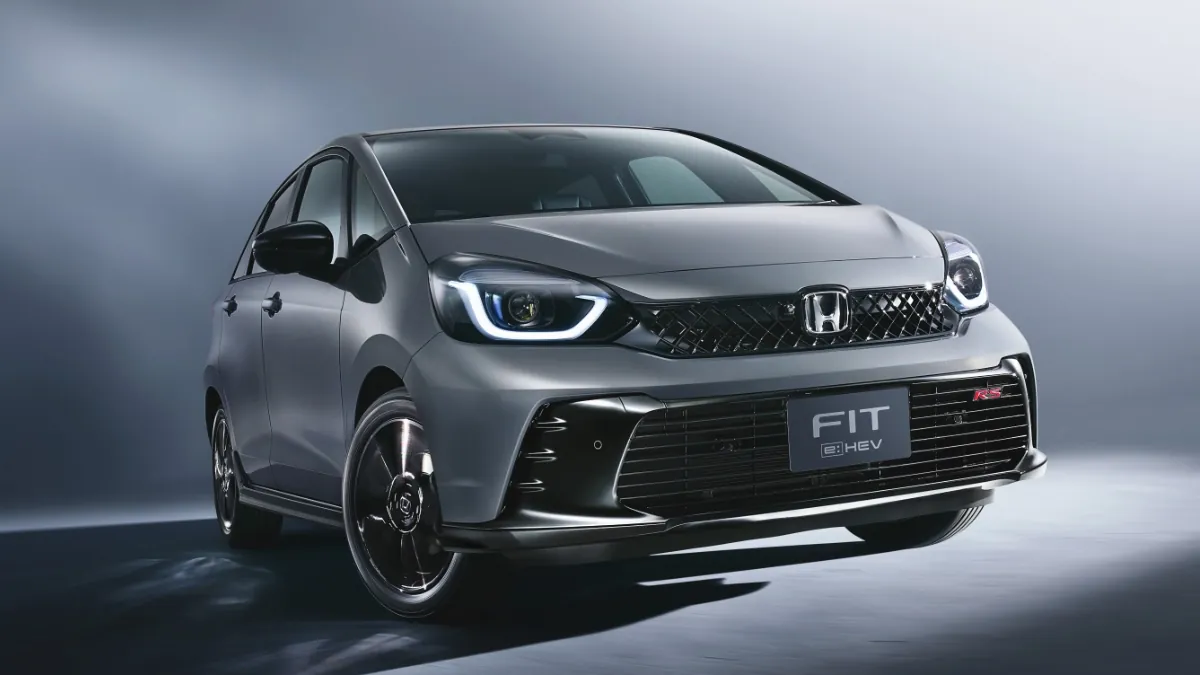
Honda has officially unveiled a refreshed version of its fourth-generation Fit in Japan, bringing a highly aggressive starting price of approximately $11,200 (¥1,806,200) for the entry-level gasoline model. While the subcompact remains a staple of urban mobility across Asia, its absence from the North American market highlights a widening gap between global manufacturing efficiency and the current state of the American automotive landscape, as noted in a detailed report by Autoblog.
The updated lineup includes a revised trim structure featuring the base X, a new mid-range Z, the sporty RS, and the rugged Crosstar. Notably, both the RS and the off-road-oriented Crosstar are now exclusively paired with the brand’s e:HEV self-charging dual-motor hybrid powertrain, which produces 121 horsepower. This refresh coincides with the 25th anniversary of the Honda Fit nameplate, which originally launched in 2001.
The Impact of Market Trimming on North American Buyers
The stark price contrast between the Japanese domestic model and the scarcity of budget-friendly vehicles in the U.S. points to a long-term shift in manufacturer strategy. Since the Honda Fit was discontinued in North America following the 2020 model year, automakers have largely abandoned the subcompact segment. This trend, often described as trimflation, prioritizes the production of high-margin SUVs and trucks over accessible commuter vehicles.
According to an analysis by The Autopian, the removal of models like the Fit and the Toyota Yaris from the U.S. market has left consumers with few choices under the $20,000 threshold. The Nissan Versa currently stands as one of the few remaining mass-market subcompacts available to buyers in the region. The lack of entry-level options means that new car buyers in North America face a much higher financial barrier to entry than their counterparts in markets where small, efficient vehicles remain a production priority.