
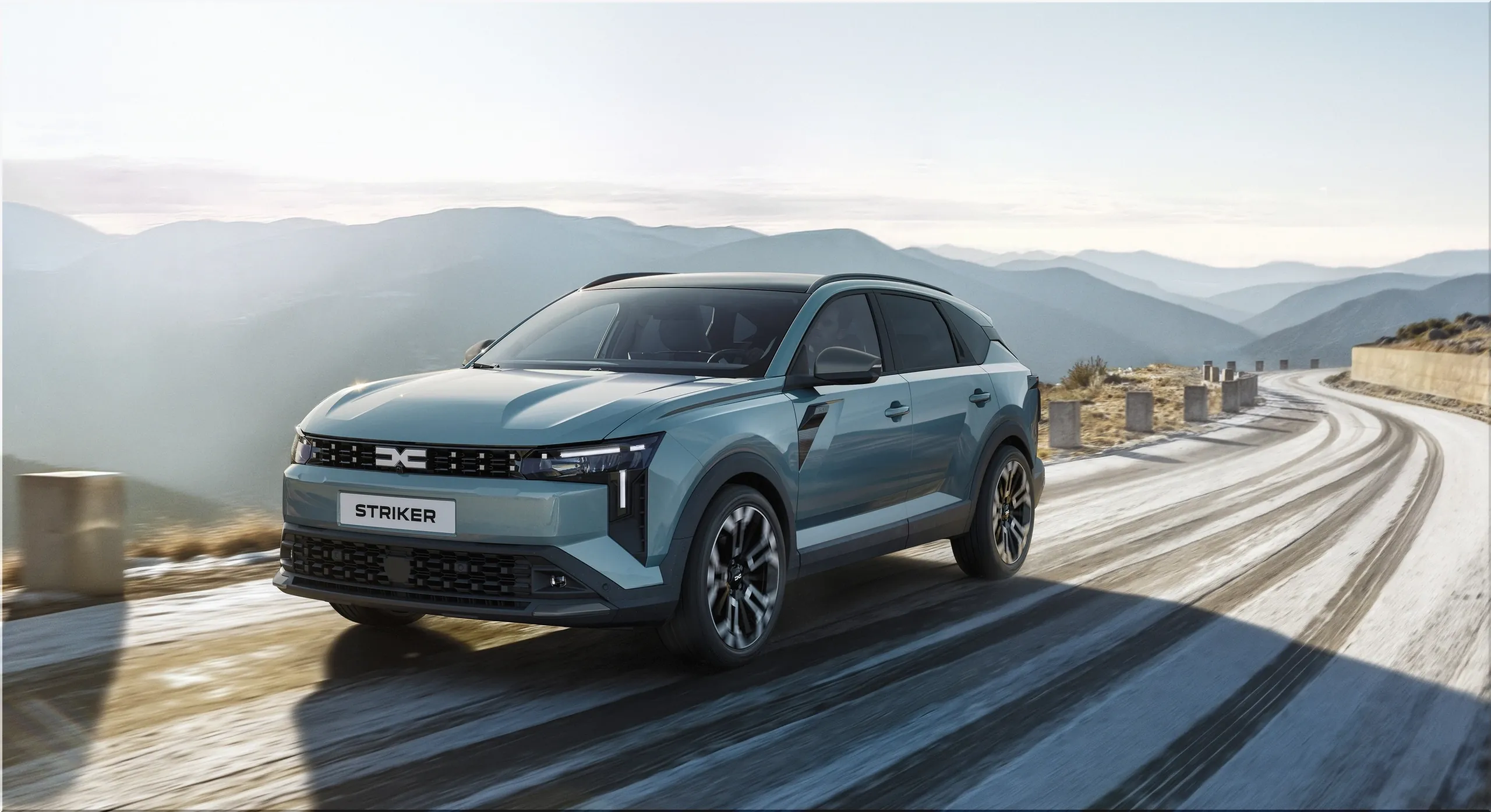
Renault Group is aggressively expanding its European market share. On Wednesday, the automaker’s Dacia brand officially unveiled the 2027 Striker, a lifted estate car starting under €25,000. The vehicle strips away standard industry luxuries to deliver an all-in-one hybrid that directly undercuts equivalent SUVs in the lucrative C-segment.
The base price and rugged styling were confirmed early Wednesday, according to Motor1’s initial coverage of the 2027 Dacia Striker announcement.
Dacia built the Striker on the Renault-Nissan CMF-B platform. It measures exactly 4.62 meters long. That footprint provides 500 liters of cargo space inside the cabin. And the engineering team managed to maintain a drag coefficient of 0.29 despite the blocky, utilitarian exterior. They also utilized unpainted “Starkle” recycled plastic cladding across the body panels to reduce manufacturing costs.
Traditional combustion engines are gone. The Striker relies strictly on hybrid setups to meet tightening European Union emissions standards. The entry-level model uses a 48V mild-hybrid 140 hp bi-fuel LPG engine. A full Hybrid 155 version includes a 1.4 kWh battery. Buyers wanting superior traction can choose the AWD Hybrid 150 4×4 setup, which features an electric motor mounted on the rear axle, as outlined by CompleteCar.
This rollout pushes Dacia away from its purely budget origins and into the smart-buy category. The Striker is a core component of parent company Renault Group’s broader futuREady 36-model agenda, a corporate electrification push detailed recently. The goal is simple. Build multi-energy vehicles that bypass range anxiety while keeping production costs low.
The Threat to Established C-Segment Margins
By pricing a large, hybrid estate below €25,000, Dacia directly threatens the pricing power of dominant European SUVs. Models like the Nissan Qashqai, Hyundai Tucson, and Kia Sportage currently command significantly higher base prices. A fully loaded, all-wheel-drive Striker will top out just over €30,000.
This pricing structure forces competitors to justify their premiums. Sharing architectural DNA with the third-generation Duster and the new Bigster gives Dacia extreme economies of scale. Renault is betting that European consumers will trade soft-touch dashboard plastics for physical size, standard hybrid efficiency, and a €5,000 to €10,000 discount.