
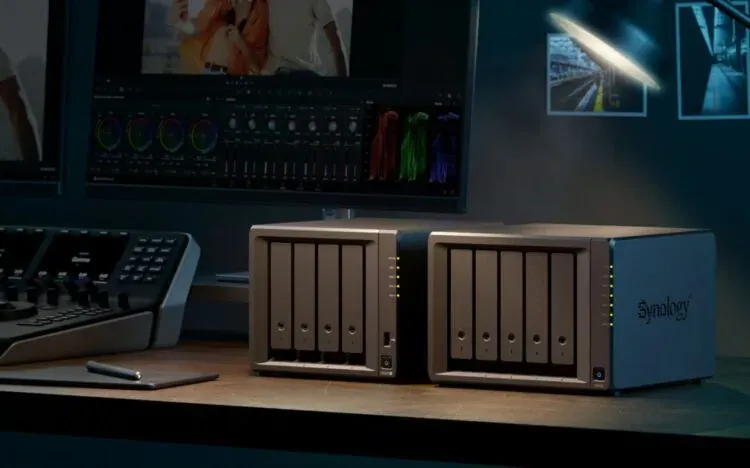
You buy a four-bay Network Attached Storage enclosure because it feels like the responsible choice. The software is polished. The footprint is small. But that storage ceiling creeps up much faster than you think. And long before you fill those drives with data, you hit a completely different wall: networking bandwidth.
An opinion piece over at XDA Developers recently highlighted exactly why so many home server owners are abandoning prebuilt four-bay enclosures entirely. The reviewer swapped their dedicated NAS for a standard ATX desktop tower. The core reason boils down to scalability. When you buy a prebuilt box, you are trapped by the hardware decisions made on the factory floor.
Key Details
- Standard four-bay NAS units frequently lack the internal PCIe lanes required for future 10 Gigabit Ethernet (10 GbE) upgrades.
- Moving to an ATX PC motherboard provides immediate access to standard Host Bus Adapter (HBA) cards, allowing builders to connect eight or more additional hard drives.
- Major manufacturers are shifting their consumer networking focus to dual 2.5GbE ports rather than offering dedicated high-speed expansion slots.
Moving past standard gigabit speeds requires hardware that simply isn’t standard on most entry-level enclosures. You either need native multi-gig ports out of the box or an available PCIe slot to drop in a 10 GbE card. Without them, your drive transfer speeds are severely choked.
This hardware squeeze is becoming more pronounced in the newest generation of consumer hardware. Synology recently launched the DS925+, equipping it with dual 2.5GbE ports and M.2 NVMe slots for caching. But they removed the PCIe expansion slot that was available on the older DS923+ model.
That single missing slot changes the math for power users. A standard ATX tower fixes this instantly. You are always just one empty PCIe slot away from a major performance bump. Drop in an HBA card, and suddenly your system can handle an array of enterprise drives. Add a cheap used 10 GbE network card, and your file transfers max out the physical limits of your spinning rust. The software might require a bit more manual setup on a custom tower, but the hardware ceiling practically disappears.
Why the Home Server Market is Fracturing
The removal of 10 GbE upgrade paths from premium four-bay enclosures forces consumers to make a hard choice. Prebuilt units are leaning heavily into plug-and-play simplicity and localized caching. They are excellent for family photo backups and light media streaming. But they intentionally cap out.
By standardizing around 2.5GbE and stripping out PCIe expansion, manufacturers are clearly segmenting their product lines. If you want true high-speed networking from a prebuilt brand, you have to buy their significantly more expensive enterprise units. This hardware strategy directly fuels the ongoing migration toward custom ATX builds. Enthusiasts realize they can buy an off-the-shelf motherboard, install an open-source operating system, and build a machine that outperforms a prebuilt NAS for a fraction of the cost.