
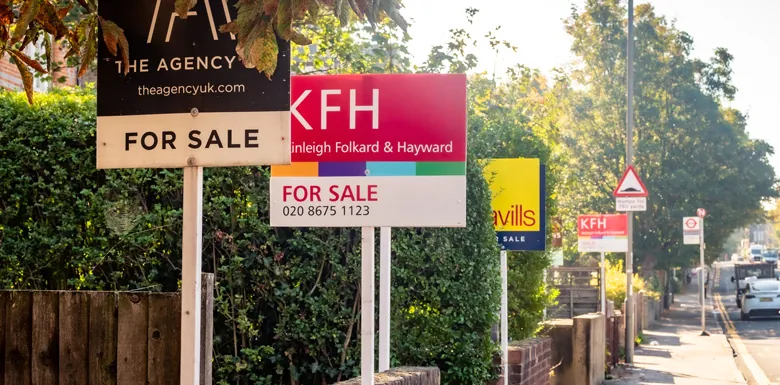
The UK property market is effectively frozen. Elevated borrowing costs and the political whiplash of rapid Prime Minister turnover have pushed prospective buyers to the sidelines as Burnham prepares to take office. Zoopla’s latest House Price Index, published Tuesday, reveals a quiet freeze across the sector. Three in five homes listed since January are still sitting unsold on the market.
Buyers are simply tapped out. A sharp jump in mortgage rates earlier this year, peaking at 5% in April, has completely dismantled affordability models for first-time purchasers. Sales agreed are down 7% year-on-year. Overall buyer demand has fallen by 15%, a trend thoroughly documented in recent Zoopla index data, leaving sellers staring at shrinking offers and stagnant inventory.
Key Details
- London buyers are absorbing an average monthly premium of £232 just to service debt on new property purchases.
- Smaller dwellings are bearing the brunt of the slowdown, with over two-thirds of one- and two-bedroom flats listed in 2026 failing to secure a buyer.
- Northern regions and Scotland maintain higher transaction resilience, seeing stronger sales closures compared to the paralyzed southern markets.
The affordability crunch is reshaping inventory dynamics. Sellers holding smaller, entry-level properties are struggling the most to offload assets. While the south of England deals with gridlock, the transaction volume has not entirely halted in northern markets where baseline property values demand less debt exposure.
Despite the halted transaction volume, industry leaders hesitate to label this a total crash. Richard Donnell, executive director at Zoopla, noted the current economic impact remains visibly less severe than the historic disruption the UK housing market faced following the 2022 mini-budget. The structural foundation of the property market holds, even if liquidity has temporarily vanished.
How Burnham’s Pending Autumn Budget Freezes Transaction Velocity
Sellers pulling listings or slashing prices only solves half the equation. The broader transaction velocity is currently held hostage by geopolitical anxiety. With a new administration taking the reins, property investors and retail buyers alike are universally adopting a “wait-and-see” strategy ahead of the upcoming Autumn Budget.
If the incoming government introduces punitive capital gains taxes or modifies stamp duty thresholds, the financial math for purchasing real estate changes overnight. First-time buyers cannot afford the 5% debt service, and cash-rich investors refuse to deploy capital until the regulatory environment clarifies. The result? A market defined entirely by inertia rather than price discovery.