
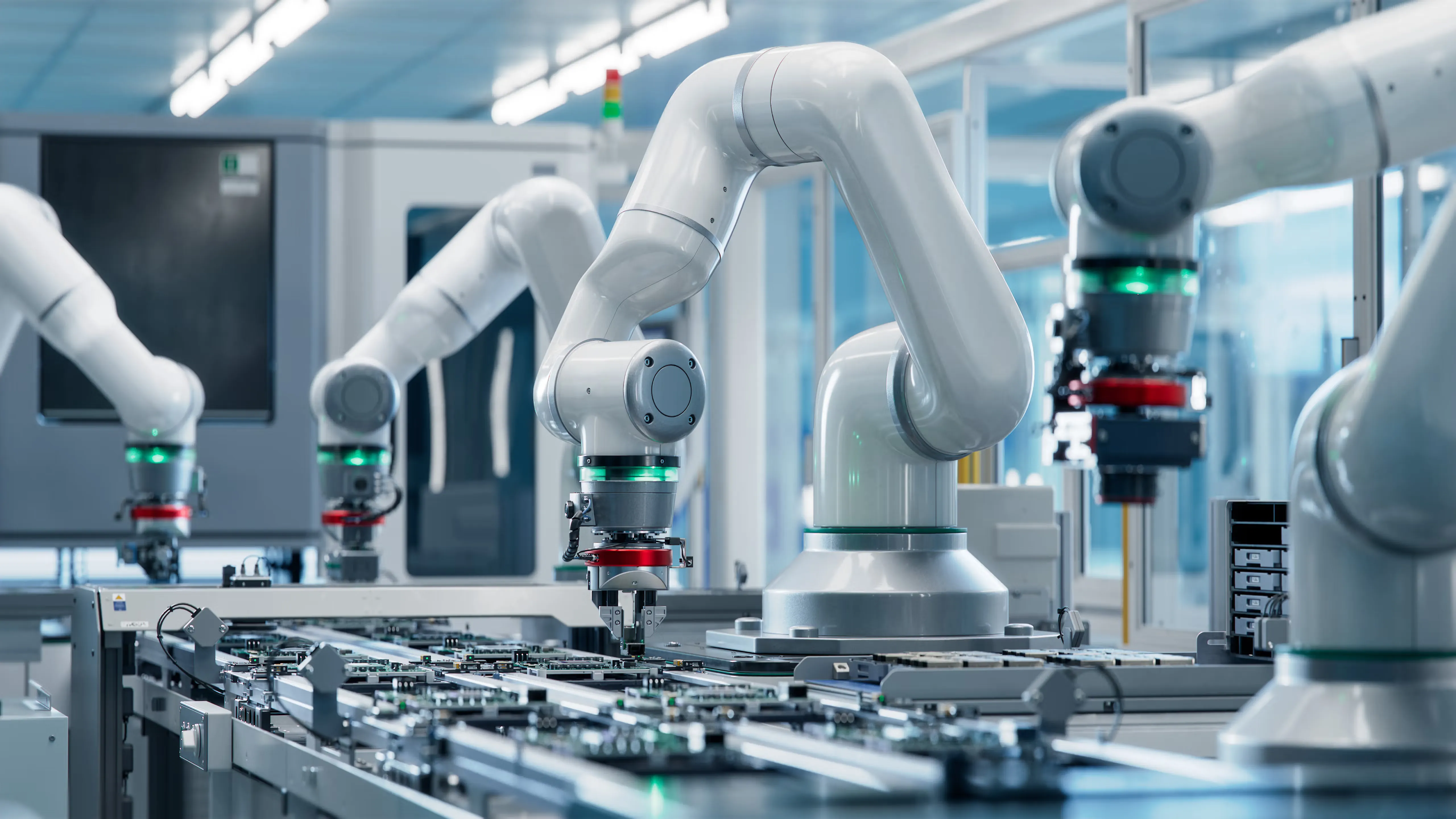
Economies of scale are the cost advantages a business gets when it increases its production output. In simple terms, as a factory makes more units of a product, the average cost to build each individual unit drops down. This economic rule explains why a sophisticated device like a smartphone can sell for a few hundred dollars instead of tens of thousands of dollars. For anyone building a hardware company or trying to understand market prices, mastering this concept explains how factory volume determines retail success.
How Economies of Scale Work
The main engine behind this cost reduction is how a factory handles its fixed expenses. Fixed expenses are the baseline bills that do not change, no matter how many gadgets the factory floor churns out. Think about factory rent, the purchase of multi-million dollar machinery, insurance policies, and basic utilities. If a company spends ten thousand dollars on a specialized mold and only makes ten plastic cases, each case carries a heavy one-thousand-dollar share of that fixed bill. But if the factory pumps out one hundred thousand cases, that initial tooling expense shrinks to a tiny ten cents per unit.
According to educational materials published by Lumen Learning Microeconomics, this long-run average cost drop defines the entire production curve. Companies achieve these savings through internal choices and external industry setups. Internal factors are elements directly inside the firm’s control. For example, a tech giant can buy giant computerized assembly lines or negotiate better deals directly with shipping lines. External factors depend entirely on the broader region, such as when an entire city builds specialized tech schools, giving local factories a steady supply of trained workers without expensive training programs.
And then you have the sheer reality of engineering setup times. Preparing a machine to stamp out circuit boards takes hours of precise calibration by highly paid technicians. If that machine runs for just an hour to make a tiny batch, the setup labor cost per item is sky-high. If that exact same machine runs continuously for three weeks straight, the setup labor cost practically vanishes when divided across the final inventory pile. That is how simple time management turns into financial savings on the balance sheet.
Who Benefits from Scale in Electronics
Big, established corporations profit the most from this economic setup. Tech giants possess the cash reserves to pay for giant upfront research and development bills. Building a new microchip architecture requires hiring teams of specialized engineers for years before a single piece of silicon goes into production. When a company sells millions of devices utilizing that chip, the giant R&D bill gets diluted so thin that it barely impacts the final retail shelf price. A small startup simply cannot spread costs this way.
Component suppliers also gain major stability from high-volume orders. When a manufacturer commits to buying millions of glass screen panels over a two-year period, the glass supplier can confidently invest in faster kiln technology and automated cutting tools. This guarantees the factory lower prices on raw inputs. Smaller brands get stuck buying generic, off-the-shelf components from third-party distributors at much higher markups because they lack the volume to deal directly with the primary source factories.
Everyday consumers end up winning too, getting access to highly complex technology at everyday prices. Features that used to belong only to high-end military equipment or corporate mainframe computers eventually filter down to cheap toys and household appliances. But this setup creates a harsh environment for new inventors. A startup might design a brilliant new electronic gadget, but if their low-volume production run forces a retail price of five hundred dollars, and a massive competitor can sell a similar device for eighty dollars due to factory volume, the startup face-plants immediately.
Real-World Case Studies in Tech Manufacturing
Take the humble four-function pocket calculator as an example of this math in action. Analysts at Airborn Electronics Production studied what happens when you alter batch sizes for basic hardware. If a workshop attempts to build a standard pocket calculator in a tiny batch of just two hundred units, the cost per unit zooms past fifty dollars. The creators must pay full price for the plastic injection molds and buy individual chips at retail value. But when manufacturers scale production into the millions, they can use specialized methods like chip-on-board construction, where the bare microchip is glued directly to the circuit board. This high-volume approach drops the retail price below five dollars while preserving profitability.
Another classic example comes from an old OECD industry study that tracked how digital integration transformed home entertainment equipment. The electronics company Philips poured money into automated assembly lines and smarter engineering designs during the growth of home media systems. By focusing heavily on high-volume production, the company stripped out physical complexity. They successfully cut the total number of physical parts in their CD players by 75 percent. Their VCR manufacturing lines saw a 55 percent drop in total components. This structural simplification drastically boosted how many units a single factory worker could assemble per hour.
This history shows that true scale changes how products are designed from the start. Instead of inventing unique parts for every single device, large companies intentionally design different products to use the exact same core internal components. The exact same memory chip or basic power regulator might sit inside a high-end digital camcorder and a cheap mobile phone. By stacking these component orders together, the company drives down its overall procurement expenses to levels that look impossible to outside observers.
Key Considerations and Pitfalls to Avoid
Growth does not always lead to endless discounts, because factories eventually hit a wall where expanding further drives costs right back up. This problem occurs when a company becomes too bloated, resulting in communication breakdowns, massive shipping mistakes, and heavy layers of middle management that slow down operations. When this happens, a business learns that its internal production efficiency drops quite fast. Managing three separate factories across different time zones requires expensive software and extra logistics teams that can eat up the savings gained from bulk buying.
Another hurdle is the rigid nature of automated factory equipment. When a company spends millions on custom tooling to build one specific style of smartphone casing, they are totally locked into that design. If consumer tastes shift suddenly, or a competitor launches a brand-new feature that requires a different internal layout, changing the factory line costs a fortune. Small companies cannot afford to rebuild these lines, while giant companies must weigh the financial loss of abandoning expensive machinery before it pays for itself.
Startups must also avoid the trap of over-producing just to get a lower per-unit quote from a factory. A factory salesperson might tell a young hardware company that making ten thousand units costs ten dollars each, while making one thousand units costs thirty dollars each. It sounds tempting to order the bigger batch to save money. But if the startup does not have verified consumer demand, they will end up spending all their cash on thousands of units of unsold inventory sitting in an expensive warehouse. Cash flow management matters far more than a theoretical per-unit discount.
Frequently Asked Questions
What is the difference between economies of scale and economies of scope?
Economies of scale focus entirely on getting cheaper unit costs by making more of the exact same item. Economies of scope happen when a factory saves money by producing two or more different types of goods together rather than separately. For example, a company might use the same silicon factory line to print both computer processors and graphics chips, sharing the fixed cost of the building across two distinct product lines.
How do economies of scale give electronics manufacturers a competitive advantage?
They allow large firms to control the market pricing structure. A company with massive production volume can lower its retail prices to levels that smaller rivals cannot match without losing money. Alternatively, the large firm can sell its items at standard market prices and pocket the difference as extra profit, which gives them more cash to spend on marketing and future product designs.
What are diseconomies of scale?
This happens when a company grows past its optimal size and becomes inefficient. Bureaucracy slows down decision-making, shipping goods across massive global networks increases the risk of logistics failures, and workers in giant factories often feel disconnected, which lowers overall quality control. All of these operational problems add unexpected expenses that push the average cost per unit upward.
Why is it so hard for hardware startups to compete with established electronics brands?
Startups cannot access bulk discounts on raw components, and they do not have the money to pay for custom high-speed automation tooling. Because their early production batches are small, their per-unit cost is fundamentally higher, forcing them to charge higher retail prices just to break even while established brands rely on massive factory lines to keep prices low.