
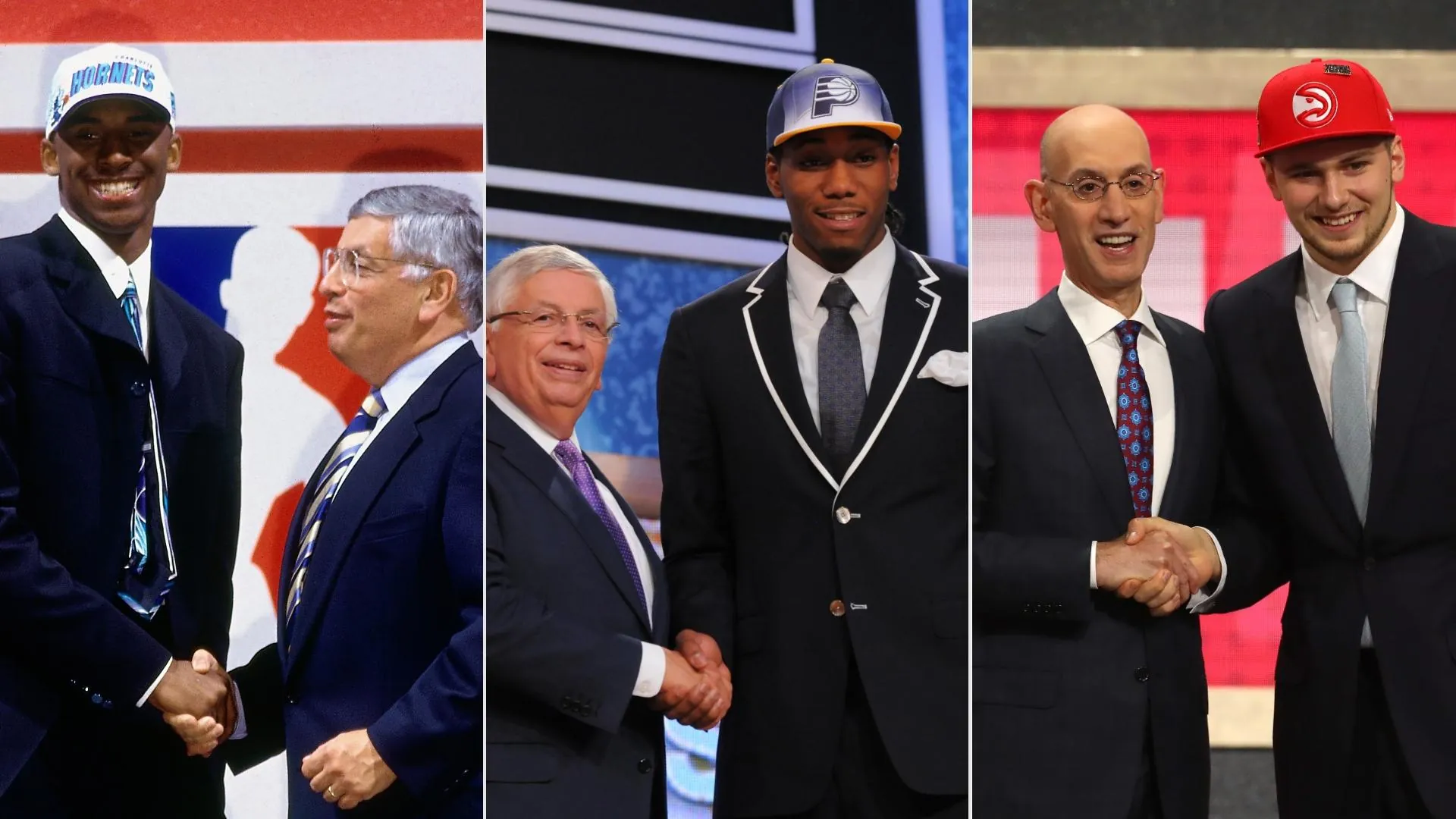
NBA draft day trades happen when professional basketball franchises swap their positions in the annual rookie selection process or exchange the rights to newly drafted players. Before a strict 2 p.m. ET deadline on the day of the event, front offices can trade the actual draft selections directly to other teams. Once that afternoon deadline passes and the event begins, teams are forbidden from trading the picks themselves, meaning they must select a player on behalf of another team and then trade that player’s draft rights. This procedural system explains why many rookies are seen holding or wearing the hat of a team that has already agreed to trade them away to a rival franchise.
How Draft Day Trades Work
The entire operation of a draft night deal functions in two distinct windows. In the first window, which runs up until the afternoon of the draft, team executives call the league office to register standard trades involving future assets, current roster players, or specific pick positions. The league office checks the math against league regulations and approves the swap. At this stage, the pick changes ownership entirely on the official draft board.
The second window opens after 2 p.m. ET. During this time, the pick numbers lock into place. If a team wants to move up or down the board while the clock is ticking, they must execute a draft rights trade. The team holding the pick makes the choice that their trade partner wants. Once the selection is announced on television, the teams submit the finalized paperwork to league officials to complete the transfer of the player’s rights.
This technicality creates unusual visual moments during the broadcast. A college prospect walks across the main stage and puts on a team cap. But behind the scenes, his rights are already moving to a different city. The trade is not officially legal until the league office finishes a conference call with both front offices to verify all contract details and rule compliance. This verification process often takes thirty minutes or longer to complete during a live draft.
Why Teams Use This / When It Applies
Front offices look for these deals for several strategic reasons. The most frequent reason is moving up to target a specific prospect or moving down to collect extra draft assets. If a team does not like the players available at their current spot, they find a partner who wants that position and get future assets in exchange.
Another major reason is getting around the Stepien Rule. This regulation stops teams from trading away their first-round draft picks in consecutive future seasons. A team that lacks a first-round pick in the previous year cannot trade its current first-round pick before the draft. However, they can legally select a player on draft night and immediately trade his draft rights because they technically used the pick, satisfying the league rule.
Teams also use draft night to manage their overall salary cap health. Rookies chosen in the first round get locked into standard multi-year contracts with fixed salary amounts based on where they went in the draft. If a franchise wants to avoid adding that fixed salary to their books, they can trade the pick for future assets or pick an international player who plans to stay overseas. This strategy keeps their payroll flexible for free agency.
Strict rules govern these exchanges for teams with high payrolls. Under league guidelines, heavy-spending teams face major limits depending on how far they go over the luxury tax line. Teams that go past certain financial lines, known as aprons, face restrictions on how much money they can bring back in trades. High-spending teams cannot send out cash to help finalize a deal, and they cannot combine multiple player contracts to match a larger incoming salary during a draft night swap.
For teams under the tax lines, salary matching allows more freedom. In trades that do not happen at the same time, a franchise can create a traded player exception. This mechanism gives the team a full year to bring in a player whose contract fits into that specific salary slot without sending out matching money right away.
Famous Examples from Major Games
History shows how these late-night decisions alter franchise trajectories. In one notable draft room choice, a team traded a young center’s draft rights to get a legendary shooting guard who spent his whole career with one California franchise. These deals rely on immediate talent evaluation under heavy time pressure.
In a recent draft, the San Antonio Spurs held the number eight pick. They selected a highly rated guard named Rob Dillingham. Instead of keeping him, the front office immediately sent his rights to the Minnesota Timberwolves. The Spurs did not take back a player for that night; instead, they received an unprotected first-round pick for the next decade and an option to swap picks in a future season. This deal allowed Minnesota to get a young point guard immediately while San Antonio built up long-term trade capital.
Roster adjustments can happen quickly across multiple draft slots. During the 2026 NBA draft, the New York Knicks moved down from their original spot at number twenty-four to number twenty-five in a quick deal with the Los Angeles Lakers. They used the lower pick on an international prospect to save current cap space, then traded those rights to the Dallas Mavericks to acquire a different rookie and extra second-round picks. This chain showed how front offices treat draft positions as liquid assets to shuffle depth.
Common Misconceptions
Many casual fans believe that draft picks can be traded freely at any moment during the night. That is incorrect. The lock on pick trading after 2 p.m. ET alters the entire process. Teams are trading the rights to human beings rather than abstract spots on a board once the clock starts running.
Another common mistake is thinking that draft rights expire if a player does not sign a contract immediately. When a team drafts a player, they must offer a standard rookie contract known as a required tender. If the player chooses to play in an international league instead of signing, the NBA team keeps their exclusive draft rights indefinitely. The team can hold those rights for years, trade them to another franchise, or wait until the player decides to come to North America.
People also assume that the salary cap does not matter during draft trades because rookies have not signed yet. In reality, the NBA salary cap applies directly to draft night. First-round picks carry a specific cap hold amount from the moment they are selected. If a team includes veteran players in a draft day trade to balance the deal, the total salaries must match within strict percentages set by the league’s collective bargaining agreement.
Finally, fans often think a trade is fully complete when television analysts announce it. The news often breaks on social media before the teams even speak with league officials. A trade can still fall apart if a player fails a medical physical examination or if the salary tracking software flags a math error during the official trade call. The draft day rules require every detail to clear legal checks before anyone changes teams officially.
Key Takeaways
- The mid-afternoon deadline changes the legal nature of draft day deals from transferring pick positions to transferring the specific draft rights of selected players.
- Teams utilize draft night mechanics to bypass strict historical restrictions on trading consecutive future selections while keeping their long-term payrolls flexible.
- New financial penalty lines drastically restrict how top-spending franchises can structure draft night transactions, stopping them from using cash or contract aggregation.