
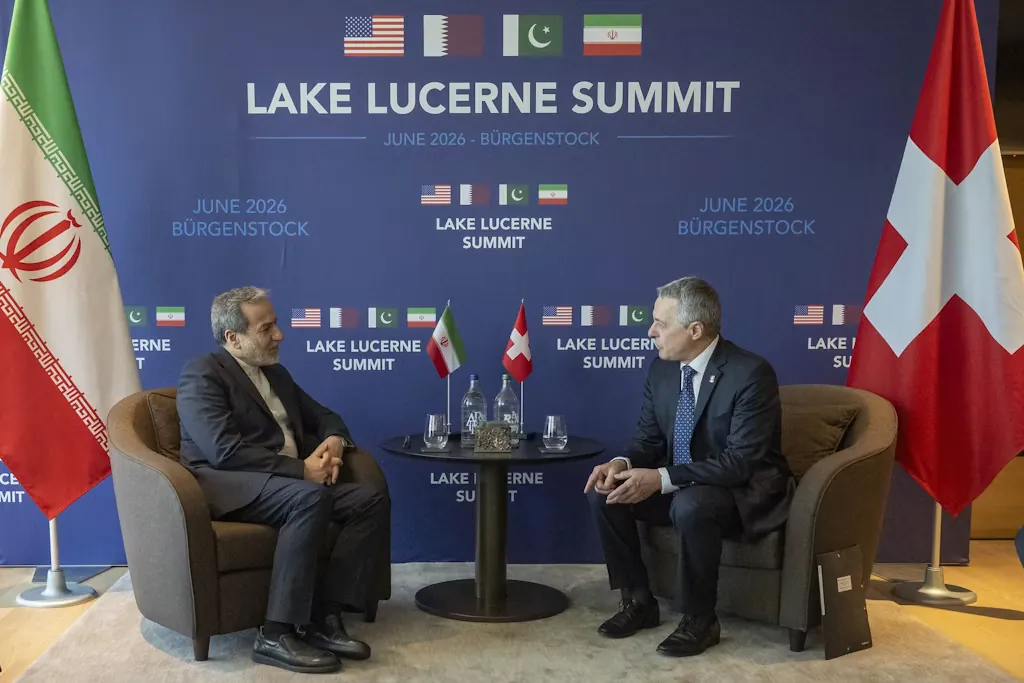
The United States and Iran established a 60-day roadmap on Monday to resolve a months-long regional conflict that has severely disrupted global supply chains. High-level delegations meeting at the Bürgenstock resort in Switzerland agreed to create a direct communication line to secure commercial passage through the Strait of Hormuz.
The diplomatic framework includes the formal establishment of a multilateral de-confliction cell alongside the Lebanese government aimed at halting military operations in Lebanon. Mediators from Qatar and Pakistan released a joint statement following the session citing encouraging progress toward a comprehensive deal.
The negotiations faced early disruptions before reaching the framework. The Iranian delegation temporarily walked out of the session after U.S. President Donald Trump posted social media threats demanding the immediate reopening of the shipping lane without tolls and warned of military strikes against Hezbollah.
Following the resumption of talks, Iranian Foreign Minister Abbas Araghchi confirmed the agreement includes immediate waivers for Iranian oil and petrochemical exports. The terms also lift specific blockades and initiate the release of designated frozen assets to fund a regional reconstruction plan.
Israeli Prime Minister Benjamin Netanyahu responded to the diplomatic developments in Switzerland by stating Israeli troops will remain in southern Lebanon as long as necessary. He reaffirmed his government’s position to prevent Iran from acquiring nuclear weapons.