
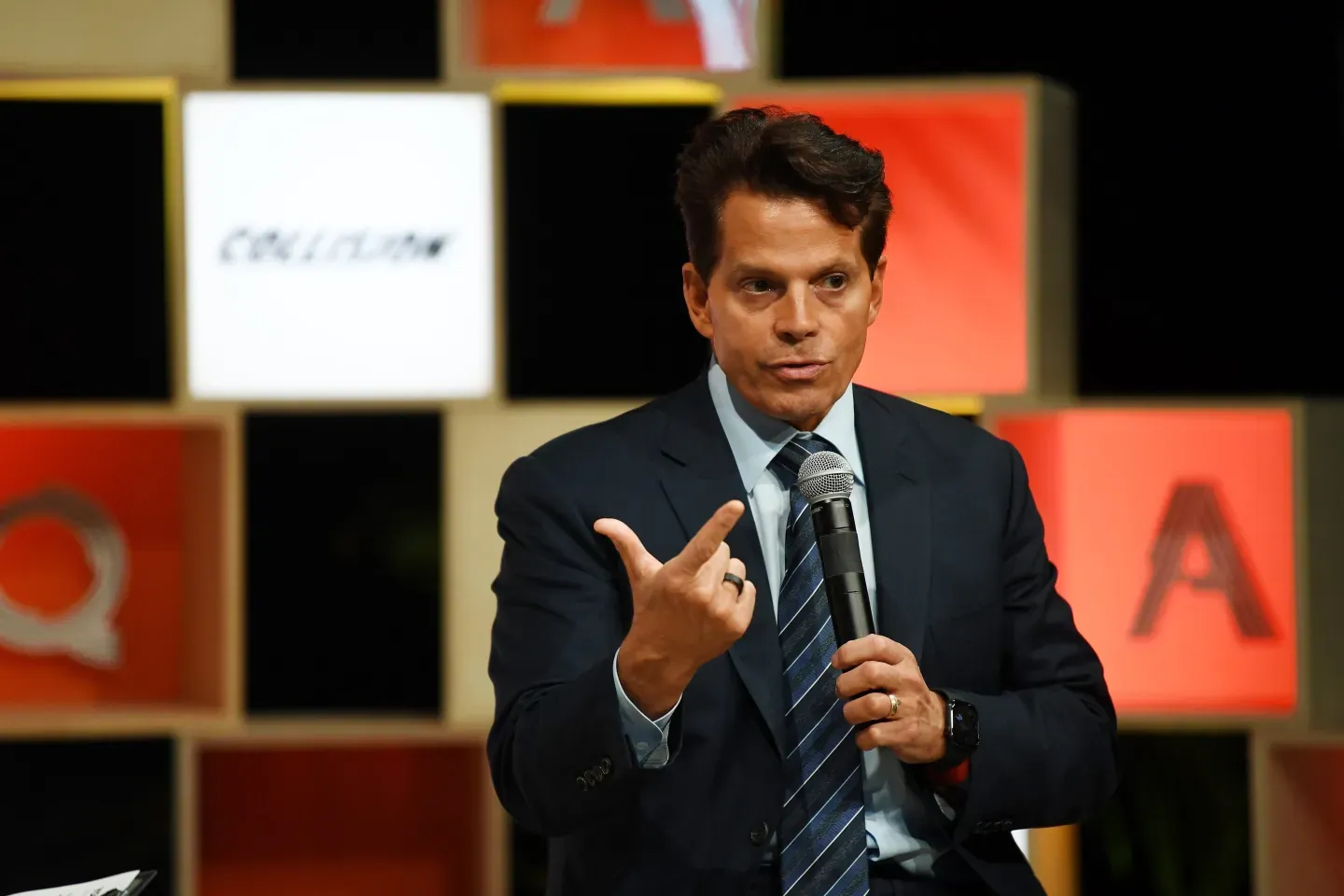
The broader financial market faces pressure as Federal Reserve Chair Kevin Warsh holds benchmark interest rates steady at 3.50% to 3.75% while US-Iran tensions over the Strait of Hormuz push capital toward traditional safe havens. Against this macroeconomic tightening, SkyBridge Capital founder Anthony Scaramucci outlined five structural reasons he maintains a long position on Bitcoin following the early June market crash.
Scaramucci and Galaxy Digital CEO Mike Novogratz both project the digital asset will reclaim the $70,000 level by July 2026. The revised target comes after a heavy 48-hour liquidation cascade between June 4 and June 6, where Bitcoin fell from roughly $67,000 to a cycle low of $59,100.
Scaramucci cited a code-enforced fixed supply, its utility as a hedge against fiat debasement, and lasting institutional infrastructure permanently built out since 2024. He argued the recent price correction was a mechanical result of forced selling rather than deteriorating fundamentals, noting the asset’s continued potential to capture market share from gold, according to a report by Pluang.
Over $3 billion in leveraged derivatives positions were forcibly closed across the broader cryptocurrency market during the event. Adding to the market pessimism, corporate holder Strategy broke its strict equity posture by selling 32 BTC to cover obligations, triggering further unease during the early June liquidations.
The U.S. central bank established a strictly hawkish policy stance under Warsh, who replaced Jerome Powell in May 2026. Warsh shortened the latest FOMC statement to just 130 words, prioritizing price stability and maintaining pressure on risk assets throughout his first FOMC meeting. Scaramucci admitted his previous cycle prediction of $170,000 to $200,000 by the end of 2026 is now less likely, but he views the current fear as a primary buying opportunity.
How the Shift in Federal Reserve Leadership Impacts Spot Bitcoin ETFs
The early June 2026 sell-off triggered the largest monthly ETF exodus of the year. This capital flight broke a continuous streak and turned year-to-date US spot ETF inflows negative for the first time in 2026.
The strict inflation controls implemented by Warsh fundamentally alter the institutional investment thesis that drove the initial ETF approvals in 2024. Capital allocators are recalibrating risk profiles as the Federal Reserve demonstrates no immediate intent to lower borrowing costs, forcing digital asset funds to compete directly with elevated Treasury yields.